



Iran’s Leadership Crisis: Questions Rise Over True Power Amid Shifts in Authority
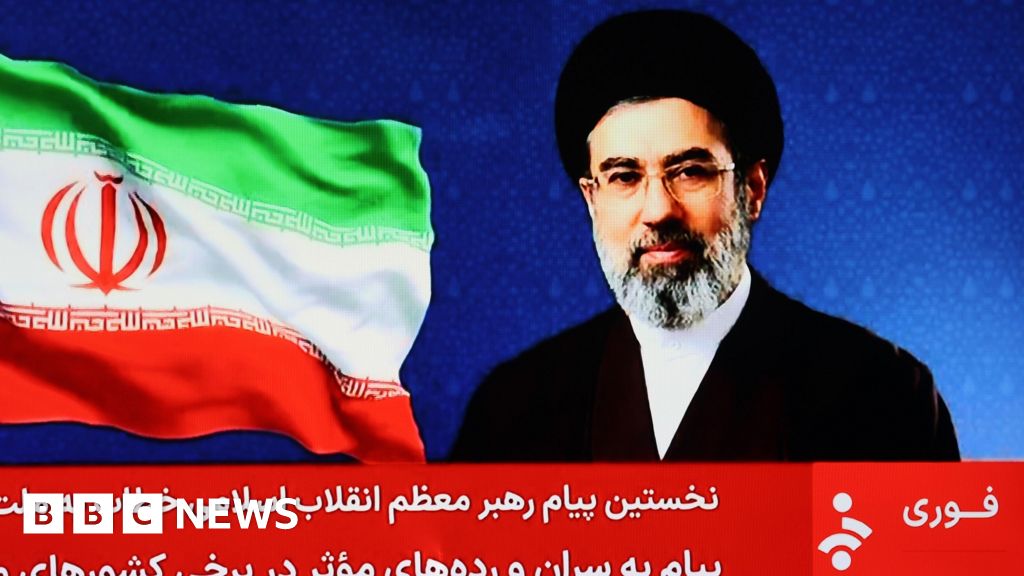
The Islamic Republic of Iran is facing mounting questions about who truly holds the reins of power, as Mojtaba Khamenei, the son of Supreme Leader Ayatollah Ali Khamenei, delivered his first public address in an unprecedented manner. Speaking through a state TV presenter rather than addressing the nation directly, Mojtaba’s appearance has ignited speculation about the inner workings of Iran’s opaque leadership structure and whether a quiet transition of authority is already underway. This development comes at a critical juncture for Iran, as the nation grapples with economic sanctions, regional tensions, and internal dissent—issues that have global implications for stability in the Middle East and beyond.
The Context: A Nation at a Crossroads
Iran has long been a focal point of geopolitical tensions, with its nuclear program, regional influence, and internal governance drawing scrutiny from global powers. Ayatollah Ali Khamenei, the country’s Supreme Leader since 1989, is the ultimate authority in Iran’s theocratic system, wielding significant influence over foreign policy, military strategy, and domestic affairs. However, at 84 years old and reportedly in declining health, questions about his succession have become increasingly urgent.
The role of Mojtaba Khamenei, 55, has been a subject of intense speculation for years. A religious scholar with deep ties to Iran’s elite Islamic Revolutionary Guard Corps (IRGC), Mojtaba is widely believed to be a leading contender to succeed his father. Yet, his public profile has been deliberately low-key, fueling rumors but leaving his exact role unclear. His recent address—though indirect—marks a significant shift and raises the possibility that he is being positioned to assume greater responsibilities.
The Address: A Symbolic or Strategic Move?
Mojtaba’s remarks, delivered by a state TV presenter during a ceremony commemorating the late Iranian General Qasem Soleimani, highlighted themes of national unity and resistance against external pressure. While the content itself was largely in line with Iran’s traditional rhetoric, the method of delivery has sparked debate. State-controlled media in Iran is tightly monitored, and such a high-profile appearance suggests careful orchestration from the highest levels of power.
Analysts argue that this move could signify an attempt to introduce Mojtaba to the public gradually, testing the waters for his eventual ascension. However, it also underscores the sensitivity of leadership transitions in Iran, where the Supreme Leader’s role is pivotal to the regime’s legitimacy. Any perceived instability or uncertainty could embolden opposition forces both within Iran and abroad, complicating the regime’s efforts to maintain control.
Global Implications: Stability in the Balance
The question of Iran’s leadership is not merely a domestic concern; it has far-reaching implications for global security and diplomacy. As a key player in the Middle East, Iran’s actions influence conflicts in Yemen, Syria, and Lebanon, as well as its strained relations with Israel and the United States. A leadership transition in Tehran could lead to shifts in Iran’s foreign policy, potentially destabilizing an already volatile region.
Moreover, Iran’s nuclear program remains a contentious issue on the global stage. The 2015 Joint Comprehensive Plan of Action (JCPOA), commonly known as the Iran nuclear deal, has been in limbo since the U.S. withdrew in 2018 under President Donald Trump. Efforts to revive the deal under President Joe Biden have yet to yield significant progress, and a new Supreme Leader with differing views on nuclear negotiations could further complicate matters.
For global powers, ensuring stability during Iran’s potential leadership transition is critical. Any power vacuum or internal discord could lead to unpredictable outcomes, including heightened military tensions or a resurgence of protests akin to the widespread demonstrations that rocked Iran in 2022 following the death of Mahsa Amini.
Why It Matters: A Test of Resilience for Iran’s Regime
At its core, the uncertainty surrounding Iran’s leadership highlights the fragility of its political system. The Islamic Republic has weathered decades of external pressure and internal dissent, but the question of succession poses a unique challenge. How the regime manages this transition will shape its future—and, by extension, the stability of the broader Middle East.
For ordinary Iranians, the issue resonates deeply. Years of economic hardship, fueled by sanctions and mismanagement, have eroded trust in the government. Many citizens are disillusioned with the status quo and skeptical of promises of continuity from the ruling elite. The regime’s ability to navigate this transition without sparking further unrest will be a critical test of its resilience.
Conclusion: Watching Iran’s Next Move
As Iran grapples with the complexities of leadership and succession, the world watches closely. Mojtaba Khamenei’s indirect address may be a tentative step toward a new era, but it also underscores the uncertainties that lie ahead. For a nation already under immense pressure, the stakes could not be higher. The question of who truly leads Iran is not just a matter of internal politics—it is a pivotal issue with global ramifications, one that will shape the geopolitical landscape for years to come.
In the coming weeks and months, Iran’s actions will be scrutinized both at home and abroad. Will the regime succeed in projecting strength and continuity, or will it falter under the weight of internal and external pressures? The answer will reverberate far beyond Iran’s borders, influencing the course of regional conflicts, global diplomacy, and the lives of millions. The world waits with bated breath for Iran’s next move—a decision that could redefine the future of the Middle East.
