



Ohio Primary Sets Stage for High-Stakes Governor and Senate Races in November
Ohio’s primary election on Tuesday marks a pivotal moment in the state’s political landscape, as voters determine candidates for key races, including the governor’s seat and a competitive U.S. Senate contest. The outcomes will shape a general election already heating up with high-profile candidates and significant national implications.
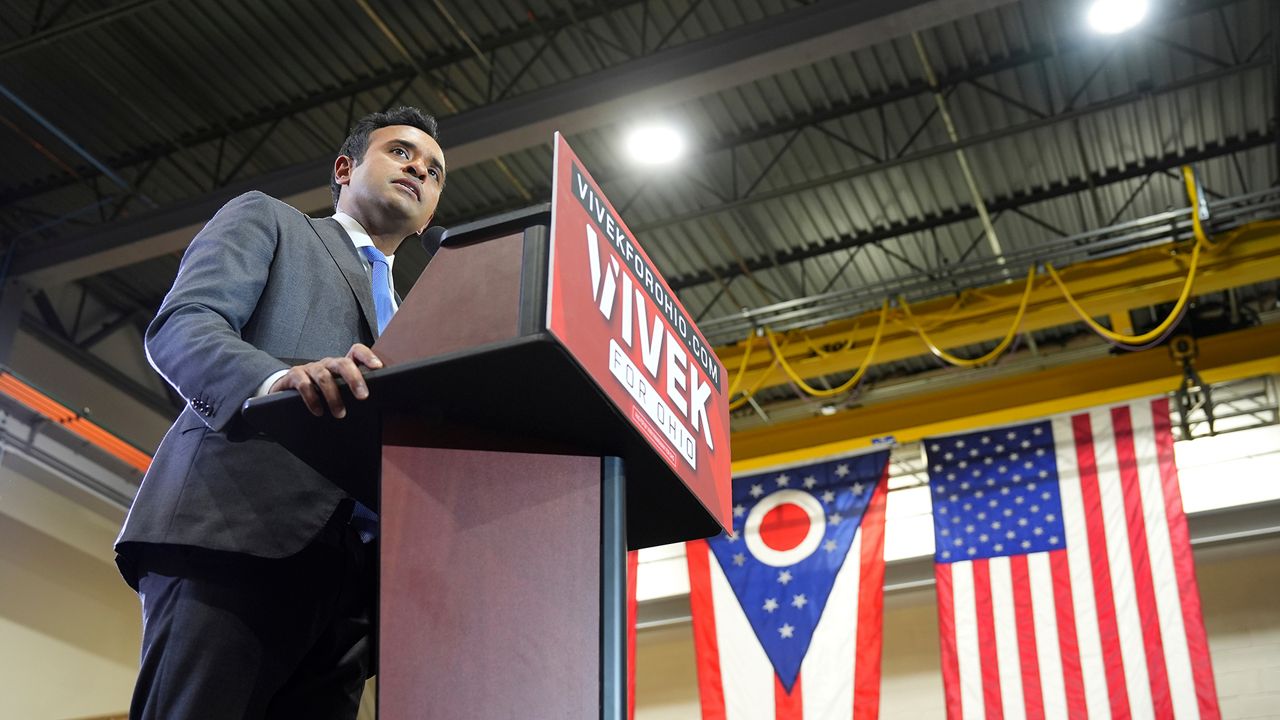
At the center of attention is the governor’s race, where Republican Vivek Ramaswamy, a biotech entrepreneur and former 2024 GOP presidential candidate, is poised to secure his party’s nomination. Backed by former President Donald Trump and endorsed by the Ohio Republican Party, Ramaswamy has leveraged his national profile and tech industry connections to dominate the primary. He faces a minimal challenge from Casey Putsch, an engineer and YouTube provocateur who has criticized Ramaswamy’s background and labeled him an out-of-touch “tech bro.”
On the Democratic side, Dr. Amy Acton, Ohio’s former state health director, is running unopposed. Acton became a household name during the COVID-19 pandemic, earning praise for her calm, reassuring presence alongside then-Governor Mike DeWine during daily briefings. However, her role in implementing strict pandemic measures, including business closures and school shutdowns, also drew criticism and protests, some of which escalated to her home. Ramaswamy’s campaign has sought to capitalize on lingering frustrations over pandemic policies, framing Acton as emblematic of government overreach.
The governor’s race is just one of several high-stakes contests on the horizon. Ohio’s U.S. Senate primary will determine candidates for a special election to fill the seat vacated by J.D. Vance, who ascended to the vice presidency. Republican Jon Husted, Ohio’s lieutenant governor, is running unopposed and is expected to face Democrat Sherrod Brown, a former three-term senator who narrowly lost his seat in 2024. The Senate race promises to be fiercely competitive, with both parties pouring millions into what could be one of the most expensive campaigns in Ohio history.
Meanwhile, congressional primaries across the state are heating up, fueled by a recent redistricting process that slightly favored Republicans. In northwestern Ohio’s 9th District, a crowded GOP primary features five candidates vying to challenge Democratic U.S. Rep. Marcy Kaptur, the longest-serving woman in Congress. Among them is Derek Merrin, who narrowly lost to Kaptur in 2024.
In Cincinnati’s 1st District, Democratic incumbent Greg Landsman faces a primary challenge from Damon Lynch IV, grandson of a prominent civil rights leader, while Republicans vie for the chance to take him on in November. Similarly, in northeast Ohio’s 14th District, former state Supreme Court Justice William O’Neill is among three Democrats seeking to unseat Republican U.S. Rep. Dave Joyce.
Ohio’s primary also reflects broader national trends, as both parties grapple with shifting voter sentiments and the lingering impact of pandemic-era policies. Early voting began on April 7 under new election laws, including citizenship checks and the elimination of a four-day grace period for mailed ballots. So far, no significant voting issues have been reported.
As Ohio prepares for November’s general election, the state’s political dynamics underscore its continued importance in national politics. Once a bellwether, Ohio has trended increasingly Republican in recent years, but Democrats see opportunities in key races, particularly as economic concerns and dissatisfaction with Trump-era policies persist.
With the governor’s mansion, a Senate seat, and multiple congressional districts up for grabs, Ohio’s primary is a critical first step in what promises to be a closely watched and fiercely contested election season.
— Reported by Nexio News
