



Surge in Violence in Lebanon Leaves Civilians Caught in the Crossfire
By [Your Name], Global War and Security Correspondent
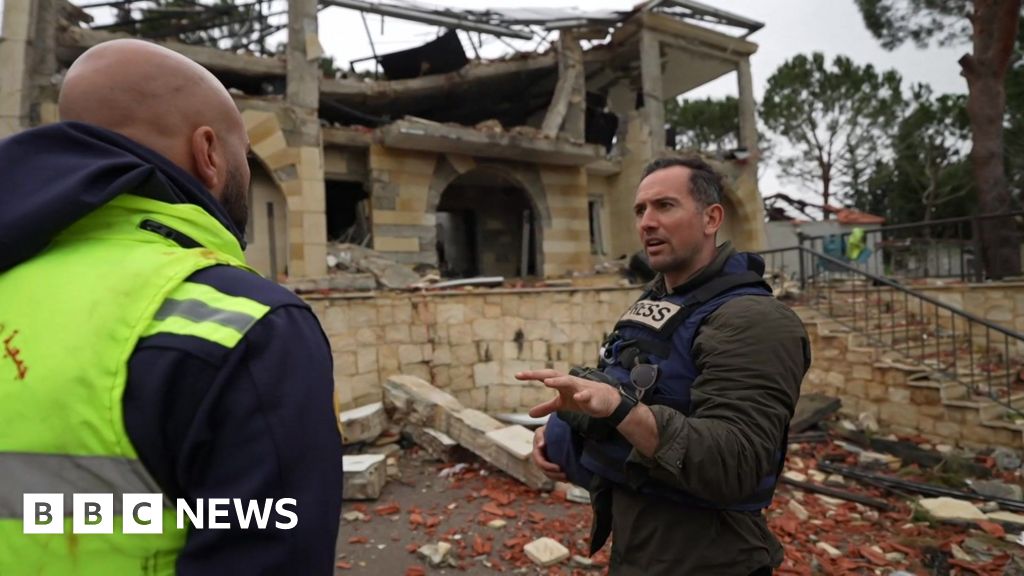
A City in Ruins: Nabatieh’s Descent Into Desolation
Once a bustling hub of commerce and culture, Nabatieh, a southern Lebanese city near the Israeli border, now stands as a haunting symbol of the escalating conflict between Israel and Hezbollah. Streets once filled with laughter and life are eerily silent, save for the distant hum of drones and the occasional crack of gunfire. The city’s residents, who once thrived in this vibrant community, have fled en masse, leaving behind hollowed-out buildings and shattered dreams. According to recent reports, one in five Lebanese has been displaced since violence erupted in March, underscoring the devastating human toll of this protracted conflict.
For those who remain—paramedics, aid workers, and the occasional journalist—the dangers are relentless. In a poignant reminder of the risks faced by those on the frontlines, a paramedic in Nabatieh recounted the tragic death of a colleague who was killed by an Israeli airstrike while speaking to his wife on the phone. The incident took place at a ruined ambulance station, now a stark monument to the peril faced by humanitarian workers.
Claims and Counterclaims: The Battle Over Hospitals and Ambulances
The tragedy in Nabatieh is just one example of a broader pattern of violence targeting medical facilities and personnel. Israel has accused Hezbollah of using ambulances and health facilities as cover for military operations, a claim vehemently denied by Lebanese paramedics and authorities. “There is no evidence to support these allegations,” one paramedic told reporters, emphasizing that their work is purely humanitarian.
The dispute escalated over the weekend when the Israel Defense Forces (IDF) reported killing more than 20 Hezbollah fighters operating from a hospital compound in Bint Jbeil, a town that was a focal point of the 2006 Israel-Hezbollah war. The IDF claimed the fighters were using the hospital as a base, a tactic Israel has long accused Hezbollah of employing.
Lebanon’s health ministry swiftly denied the allegations, accusing Israel of deliberately targeting civilians and medical facilities. “These claims are baseless and serve as a pretext for the indiscriminate bombing of our healthcare infrastructure,” a ministry spokesperson said. The conflicting narratives highlight the deep mistrust and misinformation that fuel this conflict, making it increasingly difficult to distinguish between military targets and civilian casualties.
Global Context: A Widening Regional Crisis
The violence in southern Lebanon is not an isolated incident but part of a broader regional crisis that threatens to destabilize the Middle East. Tensions between Israel and Hezbollah have simmered for decades, but the recent escalation comes against the backdrop of heightened hostilities in Gaza, where Israeli forces have been engaged in a protracted conflict with Hamas.
The spillover effects are already being felt across the region. In Lebanon, the conflict has exacerbated an already dire economic crisis, pushing the country to the brink of collapse. Meanwhile, neighbouring countries like Syria and Jordan are grappling with the influx of refugees fleeing the violence. Internationally, the conflict has drawn condemnation from human rights organizations and calls for de-escalation from world leaders, but diplomatic efforts have so far failed to yield meaningful results.
The stakes are high not only for the Middle East but for the global community. A full-scale war between Israel and Hezbollah could draw in regional powers like Iran and Saudi Arabia, potentially sparking a broader conflict with far-reaching consequences. Moreover, the targeting of medical facilities and civilian infrastructure sets a dangerous precedent that undermines international humanitarian law, raising concerns about the erosion of global norms.
Why It Matters: A Humanitarian Crisis Unfolding
At its core, the conflict in Lebanon is a humanitarian crisis. Thousands of families have been displaced, livelihoods destroyed, and essential services crippled. Hospitals, already stretched thin by years of economic hardship, are struggling to cope with the influx of casualties. Aid organizations are sounding the alarm, warning that the situation could worsen if the international community fails to intervene.
The targeting of medical facilities is particularly alarming. Hospitals and ambulances are supposed to be safe havens, protected under international law, but in Lebanon, they have become battlegrounds. This not only endangers the lives of patients and healthcare workers but also undermines the principle of impartial humanitarian aid, making it harder for organizations to operate in conflict zones worldwide.
A Grim Outlook: The Need for Immediate Action
As the violence continues to escalate, the prospects for peace seem increasingly remote. Both Israel and Hezbollah appear entrenched in their positions, with neither side willing to back down. Meanwhile, civilians bear the brunt of the conflict, their lives upended by forces beyond their control.
The international community must act swiftly to prevent further bloodshed. Diplomatic efforts, however challenging, are essential to de-escalate tensions and address the root causes of the conflict. Humanitarian aid must be prioritized to ensure that civilians have access to food, shelter, and medical care. Above all, the targeting of medical facilities and civilian infrastructure must be condemned unequivocally, with those responsible held accountable.
As the sun sets over Nabatieh, the city’s empty streets serve as a grim reminder of the cost of war. Until the cycle of violence is broken, the people of Lebanon—and indeed the wider region—will continue to suffer. The world cannot afford to look away.
End of Report
