


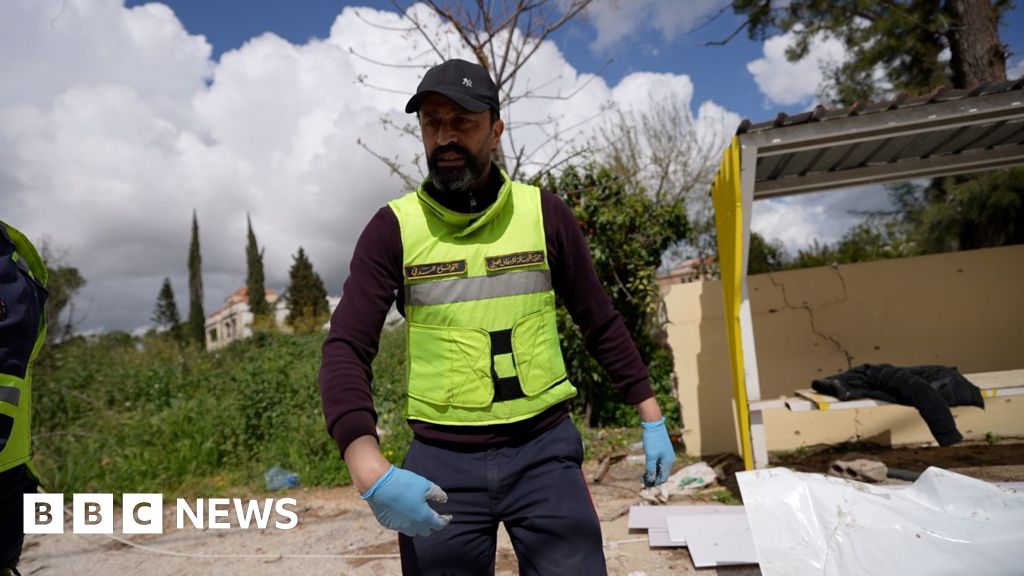

Paramedics Under Fire: Escalating Violence in Southern Lebanon Threatens Medical Neutrality
By [Your Name], Global Security Correspondent
A Deadly Pattern Emerges
The crackle of gunfire shattered the tense silence in southern Lebanon as a second medical team raced toward the wounded—only to become targets themselves. In a series of brutal attacks over 24 hours, at least two paramedics were killed and six others injured while attempting to evacuate casualties near the Israeli border. The assaults, which struck multiple ambulance crews from the Islamic Health Association, Risala Scout Association, and Nabatieh Ambulance Service, mark one of the most flagrant violations of medical neutrality in the region this year. As global powers warn of a widening conflict, the targeting of first responders raises urgent questions about the erosion of humanitarian protections in modern warfare.
The Attacks: A Timeline of Violence
According to Lebanon’s Health Ministry, the violence began when an initial medical team responding to reports of injuries was forced to retreat under fire. When a second team from the Islamic Health Association advanced, they too were attacked, leaving three paramedics wounded. Moments later, ambulances from the Risala Scout Association and Nabatieh Ambulance Service were struck—killing two and injuring three more. While no group has claimed responsibility, the strikes occurred in a volatile border zone where Hezbollah and Israeli forces have exchanged near-daily fire since the outbreak of the Israel-Hamas war in October 2023.
Global Context: A Fracturing Red Line
The targeting of medical personnel violates the Geneva Conventions, which mandate protection for humanitarian workers in conflict zones. Yet such attacks are becoming alarmingly common. In 2023, the World Health Organization documented over 1,300 assaults on healthcare workers globally, including in Ukraine, Sudan, and Gaza. “This isn’t just a Lebanese crisis—it’s a symptom of the unraveling of international humanitarian law,” says Dr. Rohini Haar of UC Berkeley’s School of Public Health. “When paramedics are seen as legitimate targets, it sets a precedent that endangers every conflict zone.”
Southern Lebanon, a Hezbollah stronghold, has been a flashpoint since hostilities reignited last fall. Over 200 Hezbollah fighters and 20 Israeli soldiers have died in cross-border clashes, displacing 60,000 Lebanese civilians. The latest ambulance attacks suggest a dangerous escalation: either deliberate targeting by combatants or the breakdown of communication channels that once spared medical teams.
Why It Matters: The Ripple Effects
The implications extend far beyond Lebanon’s borders. First, the attacks undermine ceasefire efforts brokered by the U.S. and France, which hinge on de-escalation. Second, they risk provoking Hezbollah into broader retaliation, potentially dragging Israel into a full-scale war. Third, they erode trust in medical neutrality, making it harder for organizations like the Red Cross to operate in other conflicts. “If this becomes normalized, we’ll see more deaths from preventable causes—bleeding out because ambulances can’t reach them,” warns a UN official speaking anonymously due to sensitivity.
The Human Toll
Behind the statistics are stories of ordinary heroes. One of the slain paramedics, 32-year-old Ali Hassan, had volunteered for years with the Risala Scout Association. “He texted me ‘I’m on my way to the injured’—that was the last message,” his brother told Reuters. Local hospitals, already strained by economic collapse, now face staff shortages as medics weigh the risks of responding to calls. “We’re not soldiers; we’re here to save lives,” said a Nabatieh nurse, her voice shaking.
International Reactions
The UN’s Lebanon coordinator condemned the attacks as “unconscionable,” while Human Rights Watch called for an independent investigation. Israel’s military denied targeting ambulances but acknowledged “intense combat activity” in the area. Hezbollah, meanwhile, vowed retaliation, accusing Israel of “war crimes.” The lack of clear attribution highlights the fog of war—and the difficulty of holding perpetrators accountable.
A Warning for the Future
As night falls over southern Lebanon, the wreckage of ambulances serves as a grim reminder: the rules of war are only as strong as those willing to enforce them. With global attention fractured by multiple crises, the assault on medical workers risks becoming another footnote in a decade of eroded norms. But for the families of the dead and the communities now without emergency care, the consequences are immediate—and irreversible. In a world where conflict grows ever more complex, the protection of those who heal may be the clearest measure of our humanity.
— Reporting contributed by diplomatic and regional security analysts. Last updated [current date/time].
