


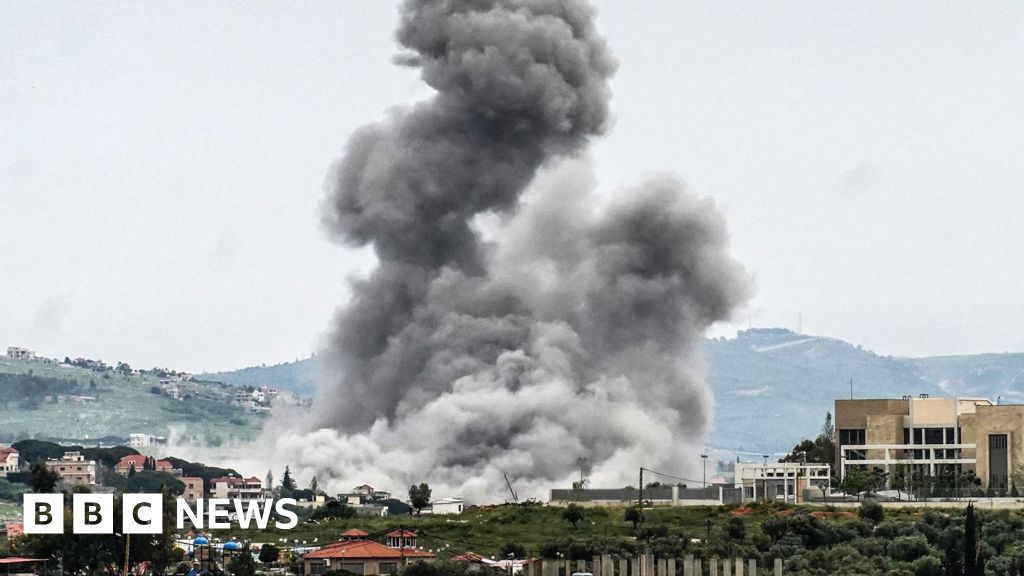

Escalating Tensions in the Middle East: Israel Signals Broader Military Strategy Amid Regional Threats
A Dangerous New Phase in the Middle East Conflict
The Middle East stands on the brink of a widening conflict as Israel signals a more aggressive military stance against perceived threats from Lebanon and beyond. In a stark declaration, a senior Israeli official emphasized that the nation reserves the right to act “vigorously” against emerging dangers, underscoring a shift toward preemptive strikes rather than reactive measures. The statement comes amid heightened cross-border clashes with Hezbollah and growing fears of a full-scale regional war—one that could draw in global powers and destabilize an already volatile geopolitical landscape.
Israel’s Strategic Shift: Preemption Over Reaction
The unnamed official’s remarks highlight a critical evolution in Israel’s defense doctrine. While retaliation for attacks has long been a cornerstone of Israeli policy, the new approach suggests a willingness to strike first against “emerging threats”—potentially expanding the scope of military operations beyond immediate retaliation.
This shift follows months of escalating hostilities with Hezbollah in southern Lebanon, where near-daily exchanges of rocket fire and airstrikes have displaced tens of thousands on both sides of the border. Israel has repeatedly warned that it will not tolerate a repeat of Hezbollah’s 2006 war, which saw thousands of rockets launched into Israeli territory.
The Lebanon Factor: A Tinderbox Waiting to Ignite
Lebanon, already mired in economic collapse and political paralysis, now faces the specter of another devastating conflict. Hezbollah, backed by Iran, has entrenched itself as a dominant force in Lebanese politics and a persistent threat to Israel. Recent skirmishes have pushed the region closer to all-out war, with both sides testing the limits of their long-standing, U.S.-mediated understandings.
The Biden administration has sought to prevent a full-scale escalation, dispatching senior envoys to Beirut and Tel Aviv in an attempt to broker de-escalation. However, Israel’s latest rhetoric suggests that diplomatic efforts may be faltering—raising concerns that a single miscalculation could trigger a broader confrontation.
Global Implications: A War With Far-Reaching Consequences
The stakes extend far beyond the Middle East. A full-blown Israel-Hezbollah war would:
- Disrupt global energy markets, particularly if Iran—Hezbollah’s primary patron—intervenes directly or through proxy attacks on oil infrastructure.
- Strain U.S.-Israel relations, as Washington seeks to avoid another costly entanglement while maintaining its alliance with Jerusalem.
- Destabilize Europe, already grappling with the fallout from Ukraine, by triggering a new wave of refugees from Lebanon and Syria.
- Empower extremist factions, including Hamas and other Iran-backed groups, who could exploit the chaos to launch further attacks.
The conflict also risks pulling in Iran, which has repeatedly threatened retaliation if Israel strikes Hezbollah decisively. Such a scenario could spiral into a direct confrontation between Tehran and Washington—a nightmare scenario for global security.
Why This Matters Now
The Middle East is no stranger to conflict, but the current dynamics are uniquely perilous. With wars raging in Gaza and Ukraine, and rising tensions between nuclear-armed powers, the world can ill afford another major war. Israel’s pivot toward preemptive action suggests that the rules of engagement are changing—and with them, the risk of uncontrolled escalation.
A Fragile Calm Before the Storm?
As diplomats scramble to avert disaster, the question remains: Can cooler heads prevail, or is the region hurtling toward another catastrophic war? The coming days will test whether deterrence and diplomacy can hold—or whether the Middle East is about to enter its most dangerous chapter in decades. One thing is certain: The world will be watching closely, knowing that the fallout could be felt far beyond the borders of Israel and Lebanon.
