



Historic Trial in Damascus Sparks Hope and Doubt for Justice in Syria
A Courtroom Drama Years in the Making
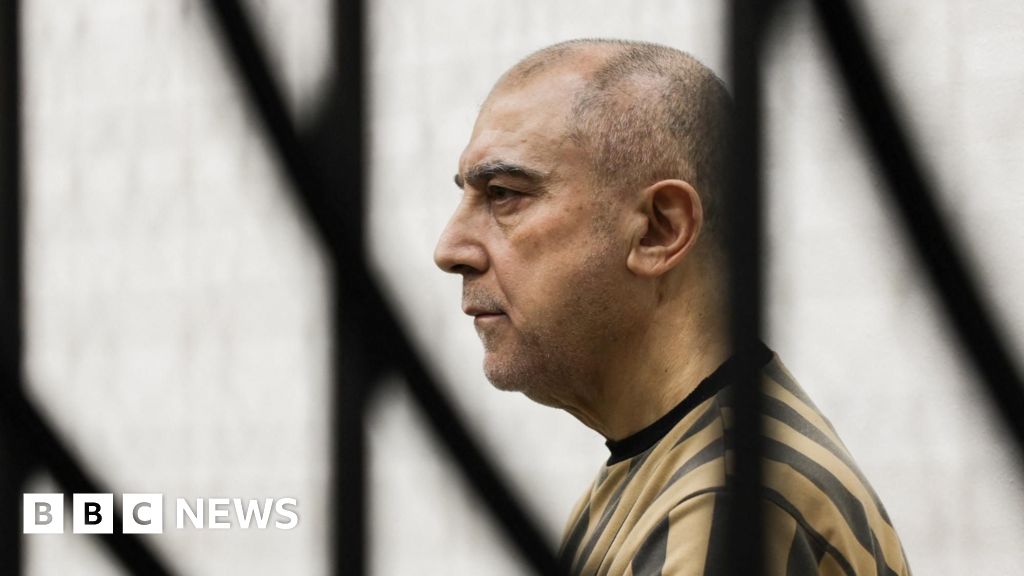
The air inside the Damascus courtroom was thick with tension as the first high-ranking official from Bashar al-Assad’s former regime stood trial on Sunday. For the families of Syria’s countless war victims, the moment was both cathartic and agonizing—a long-delayed reckoning that many feared would never come. Yet even as the proceedings unfolded, questions lingered over whether this trial marked the beginning of true accountability or merely a symbolic gesture by Syria’s new authorities.
The defendant, whose identity has not been publicly disclosed due to security concerns, faces charges related to atrocities committed during Syria’s brutal 13-year civil war. The conflict, which began in 2011, has left over half a million dead, displaced millions more, and reshaped the geopolitical landscape of the Middle East. For survivors, this trial represents a fragile hope—one that could either restore faith in justice or deepen their disillusionment.
A Fractured Quest for Justice
Syria’s war has been marked by widespread atrocities, including chemical attacks, mass executions, and systematic torture. Human rights organizations estimate that tens of thousands of civilians were detained and killed under the Assad regime, with many cases still unresolved. The trial in Damascus is the first of its kind within Syria, though international courts and foreign jurisdictions have pursued cases against Syrian officials for war crimes.
Critics argue that domestic trials lack impartiality, given the new government’s ties to former regime elements. “This trial must not be a show,” said one human rights advocate, speaking on condition of anonymity. “Without independent oversight, it risks being seen as selective justice—a way to placate international pressure rather than deliver real accountability.”
Meanwhile, global powers remain divided. Russia and Iran, key backers of the Assad regime, have dismissed calls for broader prosecutions, while Western nations and the United Nations demand a comprehensive judicial process. The lack of consensus underscores the difficulty of achieving justice in a conflict where geopolitical rivalries often overshadow humanitarian concerns.
Why This Trial Matters Beyond Syria
The Damascus proceedings are being closely watched as a litmus test for transitional justice in post-conflict societies. If conducted fairly, they could set a precedent for other war-torn nations grappling with legacies of state-sponsored violence. Conversely, a flawed or politically motivated trial could embolden authoritarian regimes worldwide, reinforcing the notion that impunity prevails.
The case also highlights the broader struggle for accountability in an era where war crimes often go unpunished. From Myanmar to Ukraine, governments and militias accused of atrocities have frequently evaded justice due to diplomatic shielding or lack of enforcement mechanisms. Syria’s trial—however limited—could either challenge or confirm this troubling trend.
For Syrian refugees and diaspora communities, the trial carries deep personal significance. Many have spent years documenting abuses, hoping that one day their testimonies would lead to prosecutions. “We need more than one trial,” said a survivor now living in Turkey. “Every torturer, every commander who gave orders—they must answer for what they did.”
A Global Failure to Act?
The international community’s inability to hold Syria’s war criminals accountable has been a recurring point of criticism. Despite overwhelming evidence of atrocities, the UN Security Council has been paralyzed by vetoes from Russia and China, blocking referrals to the International Criminal Court (ICC). Instead, prosecutions have been left to European courts under universal jurisdiction laws, resulting in scattered convictions but no systemic reckoning.
Legal experts warn that without a coordinated global effort, justice for Syria will remain piecemeal. “Domestic trials are important, but they cannot replace an international mechanism,” said a former UN war crimes investigator. “The world cannot afford to look away simply because the conflict has faded from headlines.”
A Long Road Ahead
As the Damascus trial continues, its outcome will reverberate far beyond Syria’s borders. Should it lead to more prosecutions, it could galvanize efforts to address wartime atrocities elsewhere. If it fails to meet legal standards, it may further erode trust in post-conflict justice systems.
For now, the families of victims cling to cautious optimism. “This is just the beginning,” said the sister of a man who disappeared in a regime prison a decade ago. “But until every perpetrator is held accountable, none of us can truly move on.”
The world, too, must decide whether to treat this trial as an isolated event or a call to action. In a time when conflicts rage from Sudan to Gaza, Syria’s pursuit of justice—however imperfect—serves as a stark reminder that without accountability, there can be no lasting peace. The courtroom in Damascus may be small, but the questions it raises are immense: Who gets to decide what justice looks like? And who will ensure it is delivered?
For now, the answers remain as elusive as justice itself.
