



Robot Rescues Elderly Woman in War-Torn Ukraine: A Glimpse of Humanity Amidst Conflict
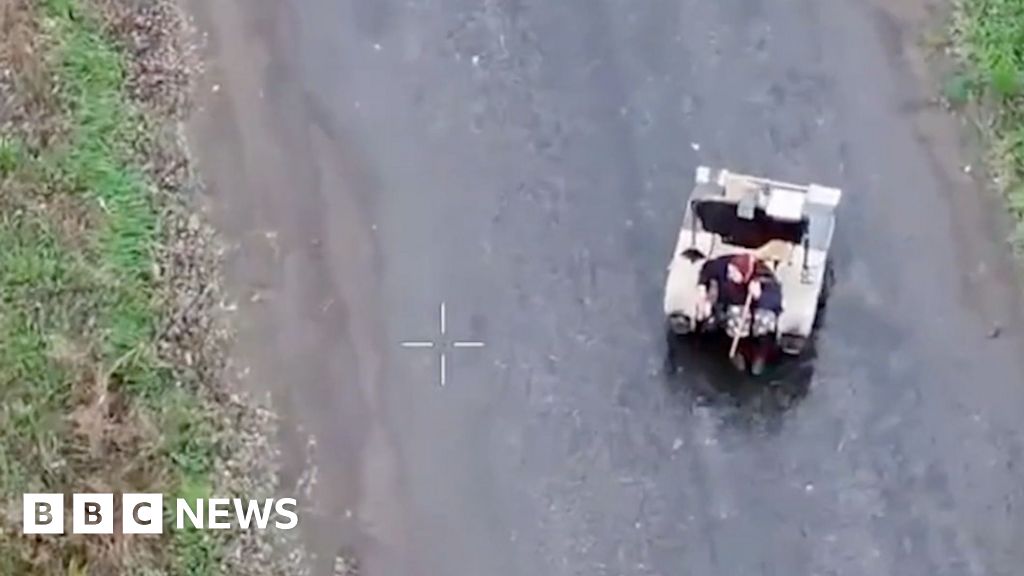
In the midst of the relentless devastation wrought by Russia’s invasion of Ukraine, a glimmer of hope emerged last Saturday when a robotic device became an unlikely savior for an elderly woman trapped in her devastated village. Drone footage released by Ukraine’s 3rd Army Corps captured the dramatic rescue, showcasing the intersection of human ingenuity and compassion in the throes of war. This incident underscores not only the human toll of the conflict but also the evolving role of technology in mitigating its horrors.
The Rescue: A Technological Lifeline
The rescue operation unfolded in a village heavily damaged by ongoing hostilities. Antonina Horuzha, an elderly resident, found herself stranded and exhausted amidst the wreckage. “I thought I wouldn’t make it and didn’t have the strength,” she later recounted to BBC correspondent Jessica Parker. Ukrainian forces, using aerial drones to scout the area, identified her plight and swiftly deployed a ground robot to assist her.
The machine, emblazoned with the reassuring message “grandma, sit down,” navigated the perilous terrain to reach her. With precision and care, it provided her with a practical means of escape from the danger zone. The entire operation was captured on video, offering a rare glimpse into the innovative methods Ukraine has adopted to protect its civilians amidst the chaos of war.
The Role of Drones and Robotics in Modern Warfare
Ground drones and robotic devices have become indispensable tools for Ukraine’s military, particularly in situations where human intervention would be too risky. These machines are routinely used to transport supplies, evacuate injured soldiers, and even neutralize threats on the battlefield. Their deployment highlights a broader shift in warfare, where technology is increasingly leveraged to minimize casualties and enhance operational efficiency.
This incident is emblematic of Ukraine’s resourcefulness in the face of adversity. With a population that has endured over two years of relentless conflict, the country has adapted by integrating cutting-edge technology into its defense strategy. The use of drones and robots not only saves lives but also demonstrates Ukraine’s determination to innovate in its fight for survival.
Global Context: A Humanitarian Crisis Unfolding
The war in Ukraine, which began with Russia’s full-scale invasion in February 2022, has precipitated one of the most severe humanitarian crises of the 21st century. Millions of civilians have been displaced, countless lives lost, and entire communities reduced to rubble. The conflict has also strained global food supplies, disrupted energy markets, and deepened geopolitical divides.
Against this backdrop, the rescue of Antonina Horuzha serves as a poignant reminder of the human cost of war. While global headlines often focus on strategic victories or political maneuvers, it is the stories of ordinary individuals caught in the crossfire that truly encapsulate the tragedy of armed conflict.
Moreover, the incident underscores the urgent need for international efforts to protect civilians in war zones. Humanitarian organizations and governments worldwide have repeatedly called for adherence to international humanitarian law, which mandates the safeguarding of non-combatants during conflicts. Yet, as the war in Ukraine demonstrates, such principles are often ignored, leaving civilians vulnerable to unimaginable suffering.
Why This Matters Globally
Beyond its immediate impact, the use of robotics in Ukraine has far-reaching implications for the future of warfare and humanitarian response. As conflicts become increasingly complex and technology more advanced, nations around the world are closely monitoring how Ukraine’s innovations could shape military strategies elsewhere.
Additionally, this incident highlights the potential for technology to play a pivotal role in humanitarian efforts. Robots and drones could be deployed in disaster zones or areas affected by armed conflict to assist with search-and-rescue operations, deliver aid, or evacuate vulnerable populations. The lessons learned in Ukraine could pave the way for broader applications of such technology, potentially saving lives on a global scale.
A Symbol of Resilience and Hope
As Antonina Horuzha’s rescue demonstrates, even in the darkest moments of war, humanity finds ways to persevere. The Ukrainian military’s use of a robot to save her life is a testament to the resilience of a nation that refuses to succumb to despair. It is also a reminder that innovation, compassion, and determination can shine through even in the most dire circumstances.
The story of this rescue resonates far beyond Ukraine’s borders. It serves as a call to action for the international community to prioritize civilian protection in conflicts and to harness technology for the greater good. As the war in Ukraine continues to unfold, such moments of humanity amidst devastation offer a glimmer of hope that, ultimately, compassion and ingenuity will prevail over destruction and despair.
In a world increasingly defined by conflict and division, the rescue of Antonina Horuzha stands as a powerful symbol of what is possible when humanity and technology unite in the face of adversity.
