



Biometric Checks Suspended for UK Nationals: A New Chapter in Post-Brexit Relations?
The Tension Mounts
In a surprising turn of events, reports emerged this week suggesting that several European Union (EU) member states might suspend biometric checks for UK nationals, following Greece’s recent decision to adopt a more lenient approach. This development has reignited debates over the complexities of post-Brexit travel and security protocols, raising questions about the future of UK-EU relations. As tensions simmer and negotiations continue, the global implications of this decision cannot be ignored, particularly in an era of heightened border security concerns and shifting geopolitical alliances.
The Background: Brexit and Border Control
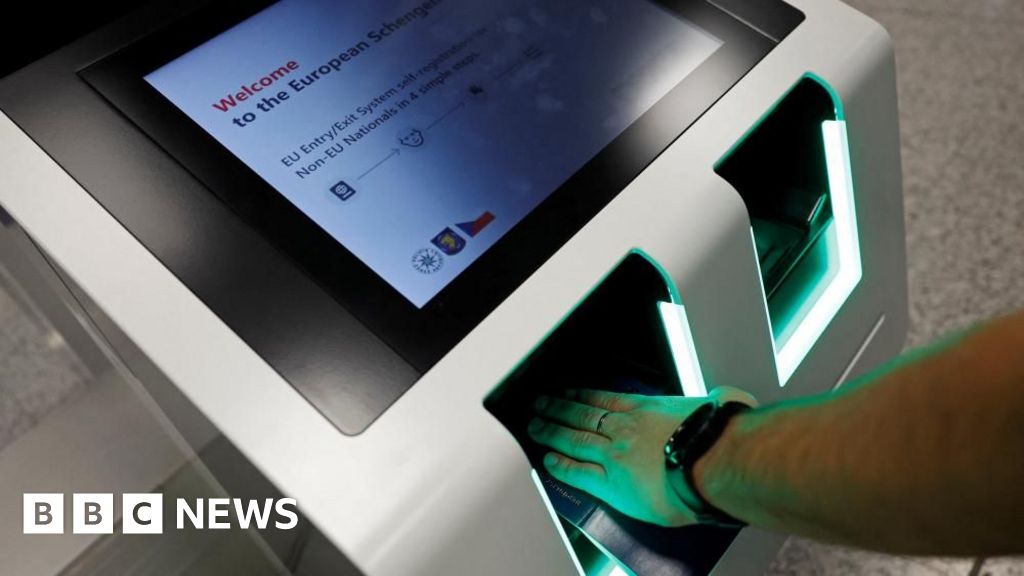
The UK’s departure from the EU in 2020 marked the beginning of a new era in cross-border relations. One of the most contentious issues has been the implementation of stringent biometric checks, including fingerprinting and facial recognition, for UK nationals entering the Schengen Area. These measures were introduced as part of the EU’s Entry/Exit System (EES), designed to enhance security and monitor the movement of non-EU citizens. However, the process has been criticized for causing delays, confusion, and frustration for travelers.
Greece’s decision to effectively suspend these checks for UK nationals, reportedly due to technical and logistical challenges, has set a potential precedent. Other EU countries, including Portugal and Spain, are rumored to be considering similar measures. While these reports remain unconfirmed, the possibility has sparked significant discussion about the balance between security and convenience in international travel.
Global Context: Security vs. Efficiency
The debate over biometric checks extends far beyond the UK and the EU. Globally, countries are grappling with how to implement advanced security measures without compromising the efficiency of border control. The COVID-19 pandemic accelerated the adoption of biometric technologies, with many nations investing heavily in systems to streamline immigration processes and enhance safety. However, the challenges faced by EU member states highlight the limitations of these technologies, particularly when dealing with high volumes of travelers from non-member countries.
The potential suspension of biometric checks for UK nationals also raises broader questions about reciprocity and international cooperation. If EU countries adopt divergent approaches, it could undermine the uniformity of the Schengen Area’s border policies. This, in turn, might weaken the EU’s ability to present a united front on security issues, a critical concern in an increasingly volatile global landscape marked by terrorism, cyber threats, and geopolitical tensions.
Why This Matters: A Fragile Balance
The implications of this development are far-reaching. For UK nationals, a relaxation of biometric checks would undoubtedly ease the burden of travel, potentially boosting tourism and business exchanges between the UK and EU. However, it also raises concerns about the erosion of security standards, particularly in the face of evolving threats such as identity fraud and human trafficking.
For the EU, the decision to suspend biometric checks could set a dangerous precedent, encouraging other non-EU countries to seek similar concessions. This could weaken the bloc’s negotiating position and complicate efforts to maintain a cohesive approach to border security. The situation also underscores the broader challenges of managing post-Brexit relations, which remain fraught with uncertainty and mistrust.
Globally, this issue serves as a case study in the delicate balance between security and convenience. As countries continue to adopt advanced technologies to safeguard their borders, they must also consider the practical realities of implementation and the potential impact on international relations. The EU’s experience with biometric checks highlights the complexities of this task, offering valuable lessons for other nations navigating similar challenges.
A Human Perspective: The Cost of Complexity
Behind the headlines and policy debates lies a human story. For travelers, the introduction of biometric checks has often meant longer queues, missed connections, and increased stress. Families reuniting, business professionals attending meetings, and tourists exploring new destinations have all felt the impact of these new requirements. While security is paramount, the efficiency and user-friendliness of border control systems are equally important.
The potential suspension of biometric checks for UK nationals offers a glimmer of hope for smoother travel experiences. However, it also serves as a reminder of the ongoing challenges faced by individuals navigating an increasingly complex global landscape. As policymakers weigh their options, they must not lose sight of the human element, ensuring that security measures are implemented in ways that respect the needs and dignity of travelers.
The Road Ahead: Uncertainty and Opportunity
As the situation continues to evolve, the future of UK-EU relations remains uncertain. The potential suspension of biometric checks for UK nationals could signal a shift toward greater flexibility and cooperation. However, it could also highlight the fragility of post-Brexit agreements, exposing the difficulties of maintaining a unified approach to border security.
For the EU, this moment represents an opportunity to reassess its policies and address the challenges posed by the EES. For the UK, it offers a chance to strengthen ties with European partners and demonstrate a commitment to mutual cooperation. For the rest of the world, it provides valuable insights into the complexities of managing cross-border travel in an era of heightened security concerns.
Conclusion: A Turning Point in Global Security
The debate over biometric checks for UK nationals is more than a technical issue; it is a reflection of the broader challenges facing global security and international relations. As countries seek to balance the demands of safety and efficiency, they must navigate a complex web of political, logistical, and humanitarian considerations. The EU’s response to this situation will have far-reaching implications, shaping the future of border control and setting precedents for other nations.
In a world increasingly defined by uncertainty, the need for thoughtful, cooperative solutions has never been greater. The potential suspension of biometric checks for UK nationals is a reminder that security measures must evolve in tandem with practical realities, ensuring that the pursuit of safety does not come at the expense of human dignity and global cooperation. As the international community watches this story unfold, one thing is clear: the stakes are high, and the path forward is anything but simple.
