


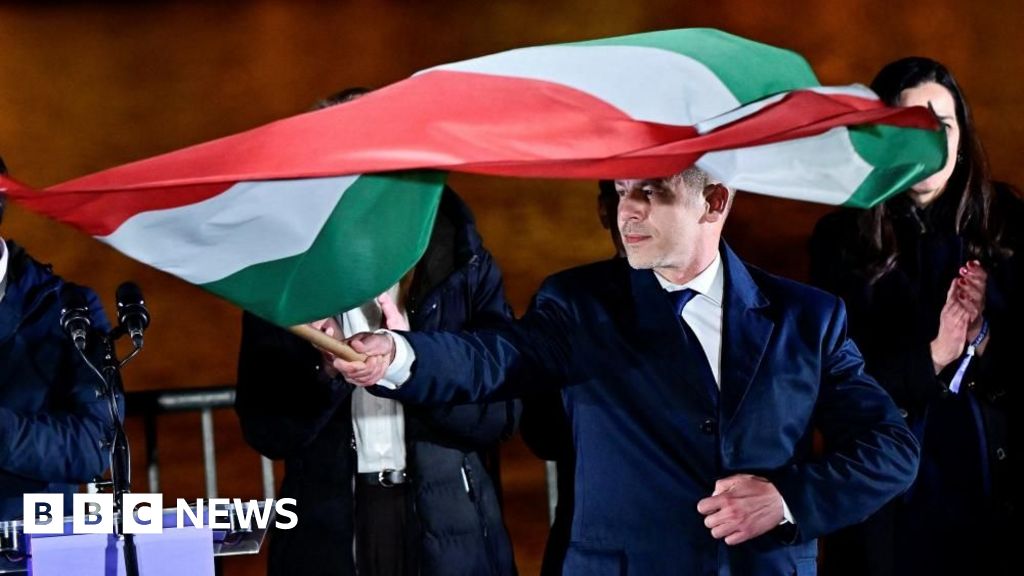

A New Era in Hungary: Péter Magyar’s Political Revolution Shakes Europe
In the heart of Central Europe, a seismic shift has occurred. After 16 years of uninterrupted rule by Viktor Orbán, Hungary’s political landscape has been dramatically transformed. Péter Magyar, the charismatic leader of the Tisza Party, has steered his movement to a landslide victory, sweeping aside Orbán’s Fidesz party in a stunning electoral upset. This historic moment not only marks the end of an era for Hungary but also sends ripples across the European Union (EU) and the broader geopolitical stage, raising questions about the future of democracy, EU unity, and regional security.
The End of Orbán’s Dominance
Viktor Orbán, Hungary’s longest-serving prime minister, had become a symbol of autocratic populism in Europe. His rule was characterized by a strong nationalist agenda, clashes with EU institutions over democratic norms, and a close alliance with Russia and China. Orbán’s policies often put him at odds with Brussels, particularly on issues such as media freedom, judicial independence, and immigration. His “illiberal democracy” model inspired other populist leaders across Europe, making Hungary a focal point of ideological battles within the EU.
Péter Magyar’s rise, however, has upended this narrative. A former insider within Orbán’s government, Magyar broke ranks to form the Tisza Party, positioning himself as a reformist committed to transparency, EU integration, and democratic renewal. His campaign resonated with Hungarians disillusioned by corruption, economic stagnation, and Orbán’s authoritarian tendencies. The landslide victory, with Tisza securing a commanding majority in parliament, represents a clear mandate for change.
Global Context: A Turning Point for Europe
Magyar’s victory comes at a pivotal moment for Europe. The continent is grappling with rising tensions over Russia’s war in Ukraine, economic uncertainty, and the resurgence of far-right movements in countries like France and Germany. Hungary’s shift away from Orbán’s pro-Russia stance could strengthen EU unity, particularly in supporting Ukraine and countering Moscow’s influence.
Magyar has already signaled his intention to realign Hungary with EU values, emphasizing the need for closer cooperation with Brussels. This could pave the way for Hungary to unblock critical EU decisions, such as aid packages for Ukraine, which Orbán had previously obstructed. For the EU, Magyar’s victory is a welcome development, offering a chance to heal internal divisions and reinforce collective security.
Why It Matters Globally
The geopolitical implications of Magyar’s rise extend far beyond Europe’s borders. Hungary under Orbán had become a key ally for Vladimir Putin’s Russia and Xi Jinping’s China, often serving as a disruptor within NATO and the EU. Magyar’s pro-Western stance could realign Hungary’s foreign policy, reducing Russia’s influence in Central Europe and bolstering NATO’s eastern flank.
Moreover, Hungary’s political transformation could inspire similar movements in other countries where populist leaders have eroded democratic institutions. From Poland to Italy, activists and reformers may look to Magyar’s success as a blueprint for challenging entrenched authoritarianism.
Challenges Ahead
Despite the euphoria surrounding Magyar’s victory, significant challenges loom. Orbán’s Fidesz party remains a formidable force, and many of its loyalists still hold key positions in government and the judiciary. Magyar will need to navigate a deeply polarized society, where Orbán’s nationalist rhetoric still resonates with a significant portion of the population.
Economically, Hungary faces pressing issues, including high inflation, energy dependence, and a sluggish recovery from the COVID-19 pandemic. Magyar’s ability to deliver on his promises of reform will be closely watched by both Hungarians and international observers.
A Message of Hope and Caution
Magyar’s victory is a testament to the enduring power of democracy. It shows that even in the face of entrenched authoritarianism, citizens can demand change and hold their leaders accountable. However, the road ahead is fraught with challenges, and Magyar’s success will depend on his ability to unite a divided nation and deliver tangible improvements.
For the global community, this moment serves as a reminder of the importance of defending democratic values. As the world grapples with rising authoritarianism and geopolitical instability, Hungary’s transformation offers a glimmer of hope—a reminder that change is possible, even in the most unlikely of places.
Conclusion: A New Chapter for Hungary and Beyond
Péter Magyar’s triumph is more than a domestic political upset; it is a watershed moment for Hungary, Europe, and the world. By ending Orbán’s 16-year rule, Magyar has opened the door to a new era of democratic renewal and geopolitical realignment. Yet, the true test of this revolution lies in its ability to deliver lasting change. As Hungary embarks on this uncharted path, the eyes of the world will be watching, hopeful for a future defined not by division and autocracy, but by unity, transparency, and progress.
