


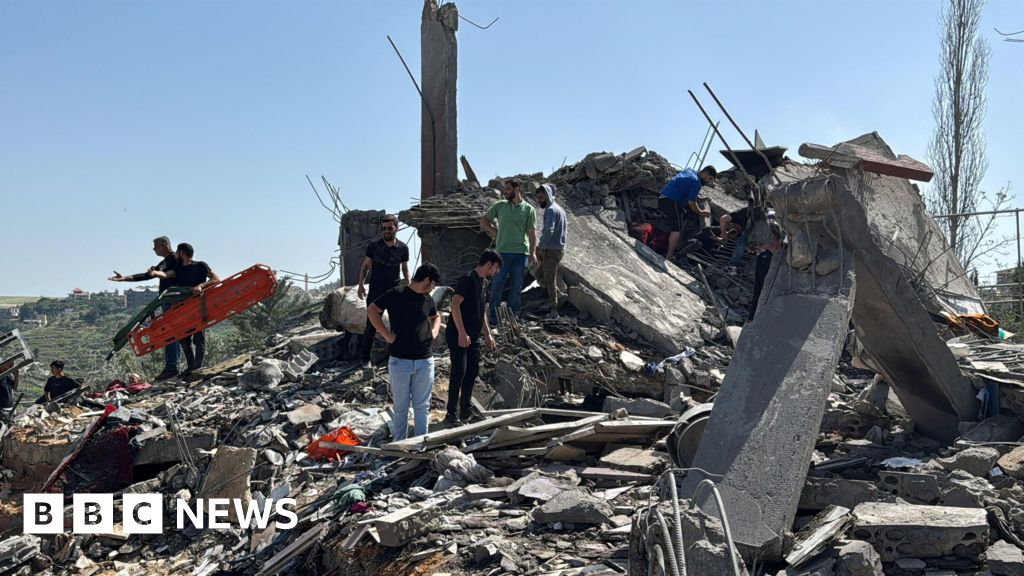

Middle East on the Brink: Israel-Hezbollah Clashes Defy Ceasefire, Threatening Regional Escalation
The fragile calm in the Middle East is unraveling once again. Despite a tentative ceasefire agreement announced last month, Israel and Hezbollah have resumed cross-border exchanges of rocket and artillery fire, reigniting fears of a broader regional conflict. The persistent violence underscores the deep-seated tensions between the two adversaries, with neither side willing to back down—raising the specter of a wider war that could draw in global powers and destabilize an already volatile region.
Ceasefire in Name Only: Renewed Hostilities Defy Diplomacy
Last month’s ceasefire, brokered amid cautious optimism, was meant to halt weeks of escalating clashes between Israel and the Iran-backed Lebanese militant group Hezbollah. Yet within days, both sides accused each other of violations, and sporadic rocket fire has since intensified into sustained exchanges. Israeli airstrikes have targeted Hezbollah positions in southern Lebanon, while the militant group has retaliated with rocket barrages aimed at northern Israeli towns.
The failure to sustain the truce highlights the deep mistrust between the two foes. Hezbollah, a key player in Lebanon’s political and military landscape, has long positioned itself as a resistance force against Israel. Meanwhile, Israeli officials have vowed to prevent any threat from Lebanon, warning of a “devastating response” if attacks continue.
Global Stakes: Why the Conflict Matters Beyond the Middle East
The Israel-Hezbollah conflict is not an isolated regional dispute—it carries significant implications for global security.
-
Risk of Wider War – Hezbollah is Iran’s most powerful proxy, and any full-scale conflict could drag Tehran into direct confrontation with Israel. Given Iran’s nuclear ambitions and Israel’s determination to counter them, the situation could spiral into a broader Middle Eastern war, potentially involving the U.S. and other Western powers.
-
Energy Markets at Risk – The Eastern Mediterranean has become a critical energy corridor, with recent gas discoveries off Israel and Lebanon’s coasts. A prolonged conflict could disrupt supply chains, sending shockwaves through global oil and gas markets already strained by the Ukraine war.
-
Humanitarian Fallout – Southern Lebanon and northern Israel, already scarred by past wars, face renewed displacement and destruction. Civilians on both sides are bearing the brunt of the violence, with thousands fleeing border villages.
-
U.S. and Russia’s Competing Interests – Washington has reaffirmed its support for Israel, while Moscow maintains ties with both Hezbollah and Iran. The conflict could exacerbate great-power rivalries, complicating diplomatic efforts to de-escalate tensions.
Historical Context: A Cycle of Violence with No End in Sight
The Israel-Hezbollah rivalry dates back decades, rooted in Lebanon’s civil war and Israel’s 1982 invasion. The 2006 war between the two sides left over 1,000 dead and devastated southern Lebanon, but it ended without a clear victor. Since then, Hezbollah has grown stronger, amassing an arsenal of over 100,000 rockets and deepening ties with Iran and Syria.
Israel, meanwhile, has conducted numerous covert strikes against Hezbollah in Syria and Lebanon, aiming to prevent the group from acquiring advanced weapons. The current clashes suggest that the uneasy status quo—where neither side wants all-out war but neither will concede—is becoming increasingly untenable.
Diplomatic Efforts Stalling as Tensions Rise
International mediators, including the U.N. and U.S., have called for restraint, but diplomatic efforts have so far failed to secure a lasting truce. The U.N. Interim Force in Lebanon (UNIFIL), tasked with monitoring the border, has warned that the situation is “dangerously volatile.”
Hezbollah insists it will only halt attacks if Israel stops its operations in Gaza and the West Bank—linking the Lebanon front to the broader Palestinian struggle. Israel, however, refuses to negotiate under fire, setting the stage for a prolonged standoff.
What Comes Next?
With both sides digging in, the risk of miscalculation is high. A single errant strike or escalation could trigger a rapid descent into full-blown war. Analysts warn that Israel might launch a preemptive campaign to degrade Hezbollah’s capabilities, while the militant group could unleash its vast rocket arsenal in response.
For now, the world watches nervously, hoping that diplomacy can avert another catastrophic conflict. But as history has shown, in the Middle East, peace is often just the pause between wars.
As the rockets continue to fly and the rhetoric hardens, the Israel-Hezbollah conflict stands as a stark reminder of how quickly regional tensions can escalate into global crises. In an era of interconnected security threats, the world cannot afford to look away—because the next spark could ignite far more than just another border war.
