


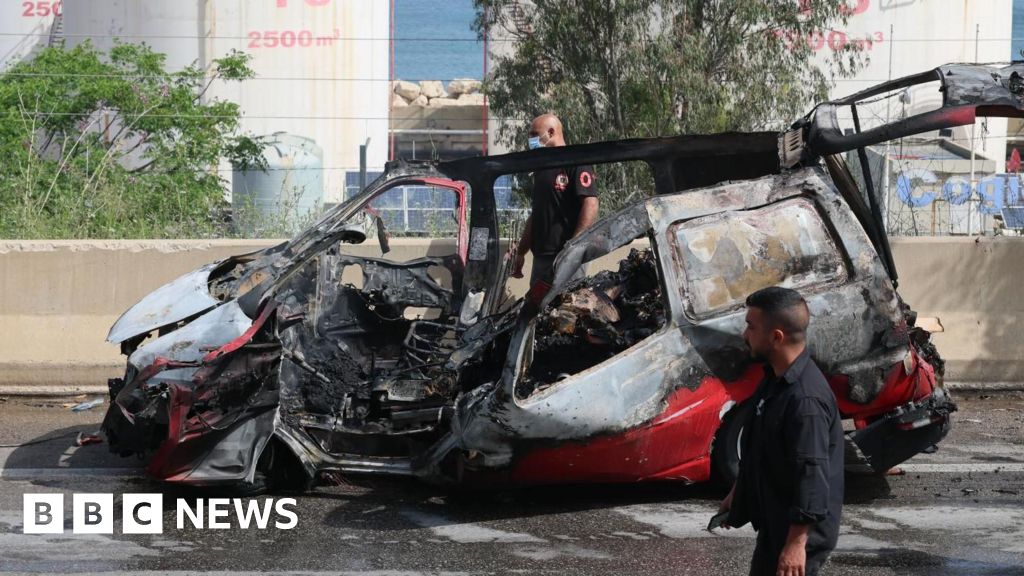

Tragedy Strikes South of Beirut as Cars Targeted in Separate Attacks; Two Children Among Dead
In a chilling escalation of violence, southern Beirut was engulfed in chaos on Tuesday as multiple cars were targeted in separate attacks, leaving a trail of devastation. Among the dead were two children, a grim reminder of the human toll of unrest in the region. The attacks, which struck seven vehicles, have sent shockwaves through Lebanon and beyond, raising fears of deepening instability in a country already grappling with economic collapse, political paralysis, and regional tensions.
The exact circumstances surrounding the incidents remain unclear, with no immediate claim of responsibility. However, the targeted nature of the strikes has prompted speculation about potential links to ongoing conflicts involving Hezbollah, Israel, and other regional actors. As Lebanon teeters on the brink, the international community watches with growing concern, wary of the potential for spillover effects in an already volatile Middle East.
A Region on Edge: Lebanon’s Precarious Position
Lebanon’s southern suburbs, particularly areas like Dahieh, have long been a flashpoint for violence. The area is a stronghold of Hezbollah, the Iran-backed Shia militant group, which has been embroiled in escalating clashes with Israel in recent months. The attacks on Tuesday came amid heightened tensions, with cross-border exchanges between Hezbollah and Israeli forces intensifying since the onset of the Israel-Hamas conflict in Gaza.
The timing of the strikes has fueled suspicion that they may be part of a broader strategy to pressure Hezbollah or destabilize its support base. However, the lack of clarity surrounding the perpetrators and their motives has left locals and analysts alike searching for answers. What is certain is that the attacks have further strained Lebanon’s fragile security apparatus, which has struggled to maintain order amid mounting economic and political crises.
Global Implications: A Microcosm of Broader Conflicts
The violence in southern Beirut is not an isolated incident but rather a microcosm of the broader geopolitical struggles shaping the Middle East. Lebanon’s location at the crossroads of regional power dynamics makes it a focal point for competing interests. The country’s economic collapse, exacerbated by corruption and mismanagement, has created fertile ground for external actors to exert influence.
Hezbollah’s role as a key player in Lebanon and its alignment with Iran place it at odds with Israel and its Western allies. The group’s involvement in conflicts across the region, from Syria to Yemen, has made it a target for adversaries seeking to curb its influence. The attacks on Tuesday underscore the risks of Lebanon becoming a battleground for proxy wars, with devastating consequences for its civilian population.
Moreover, the involvement of children in the casualty count highlights the humanitarian dimension of the crisis. Innocent lives are increasingly caught in the crossfire of conflicts driven by geopolitical ambitions, raising urgent questions about the morality and sustainability of such strategies.
Why It Matters: A Warning for the International Community
The events south of Beirut serve as a stark reminder of the interconnectedness of global security challenges. Lebanon’s instability is not merely a local issue but one with far-reaching implications. The country’s collapse could trigger a humanitarian catastrophe, exacerbating refugee flows and straining neighboring states already dealing with their own crises.
For the international community, the attacks are a call to action. Diplomatic efforts to de-escalate tensions in the region must be prioritized, particularly as conflicts in Gaza and along the Israel-Lebanon border threaten to spiral out of control. The United Nations and other stakeholders have a critical role to play in mediating disputes and providing humanitarian aid to those affected.
At the same time, the attacks highlight the need for accountability. The targeting of civilians, particularly children, is a violation of international law and must be met with condemnation and investigation. Failure to address such acts risks emboldening perpetrators and perpetuating cycles of violence.
A Grim Reminder: Innocence Lost Amidst Conflict
The deaths of two children in the attacks south of Beirut serve as a poignant reminder of the human cost of conflict. Their lives, cut short by violence, symbolize the broader tragedy unfolding in Lebanon and across the Middle East. As families mourn their loved ones and communities grapple with fear and uncertainty, the world cannot afford to look away.
The attacks underscore the urgent need for collective action to address the root causes of instability and protect vulnerable populations. In a region plagued by decades of conflict, the stakes have never been higher. The international community must rise to the challenge, lest the flames of violence consume yet more innocent lives.
As Lebanon stands at a crossroads, the world watches with bated breath. Will this tragedy serve as a turning point, galvanizing efforts to restore peace and stability? Or will it be another chapter in a seemingly endless cycle of violence? The answer lies in the choices made by leaders, both regionally and globally, in the days and weeks to come.
