



Bulgaria Celebrates Eurovision Victory Amid Rising Geopolitical Tensions
A Nation’s Pride Shines Through as Pop Star Dara Returns Home
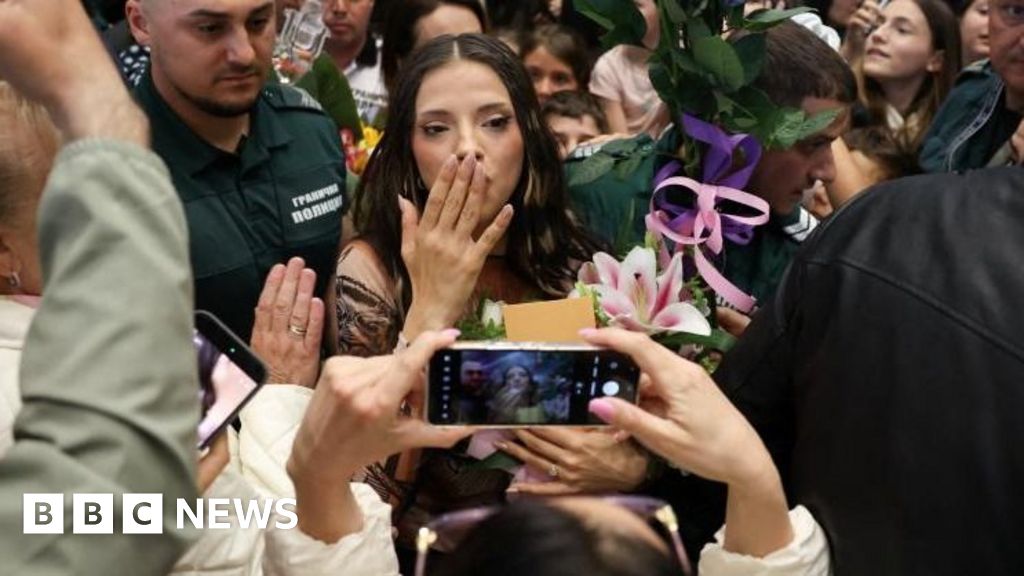
SOFIA, BULGARIA – In a rare moment of national unity, thousands of ecstatic fans swarmed Sofia Airport on Sunday to welcome home pop sensation Dara, whose historic Eurovision win has given Bulgaria a much-needed morale boost. The 27-year-old’s electrifying performance of Bangaranga secured the country its first-ever victory in the prestigious song contest, sparking jubilant celebrations across the capital. Yet beneath the surface of this cultural triumph, Bulgaria—like much of Europe—grapples with deepening political divisions and the specter of regional instability.
A Symbolic Victory in Divided Times
Dara’s win comes at a pivotal moment for Bulgaria, a nation caught between its European Union commitments and historical ties to Russia. The government recently expelled a Russian diplomat over alleged espionage, further straining relations with Moscow. Meanwhile, Bulgaria remains a key transit point for arms shipments to Ukraine, making it a focal point in the broader NATO-Russia confrontation.
Against this tense backdrop, Dara’s success offers a fleeting escape. “Thank you for being here,” she told the roaring crowd, visibly moved by the reception. “I cannot wait to dip my toes in this atmosphere.” Her words resonated beyond mere celebration—they underscored a collective yearning for normalcy in a region increasingly defined by conflict.
Eurovision: More Than Just a Song Contest
The Eurovision Song Contest has long been a barometer of European cultural and political currents. While ostensibly a music competition, it frequently reflects deeper geopolitical undercurrents. This year’s event, held in Sweden, saw heightened security amid fears of Russian interference and pro-Palestinian protests over Israel’s participation.
Bulgaria’s victory is particularly significant given its recent struggles with corruption, economic stagnation, and a wave of anti-government protests. The win provides a rare opportunity for national pride, uniting a country often fractured along political lines. Analysts suggest that such moments of cultural diplomacy can soften Bulgaria’s image abroad, potentially strengthening its position within the EU.
Why This Matters Globally
In an era where soft power is increasingly vital, Bulgaria’s Eurovision breakthrough could have far-reaching implications. The country has historically been overshadowed by its larger neighbors, but Dara’s success puts it firmly on the cultural map. This could bolster tourism, foreign investment, and even diplomatic leverage at a time when Eastern Europe faces mounting pressures from Russia.
Moreover, the contest’s global viewership—over 160 million this year—ensures that Bulgaria’s moment in the spotlight reaches far beyond its borders. For a nation often associated with political turmoil, this is a chance to redefine its narrative.
A Temporary Respite or Lasting Change?
While the celebrations continue, questions linger about whether this victory will translate into tangible benefits. Bulgaria remains one of the EU’s poorest members, with emigration and demographic decline posing long-term challenges. The government has already seized on Dara’s win as proof of the country’s potential, but skeptics argue that without structural reforms, the euphoria will fade as quickly as it arrived.
Still, for now, the streets of Sofia pulse with an energy not seen in years. Bars and cafes blast Bangaranga, while social media floods with tributes to Dara. In a world where headlines are dominated by war and division, Bulgaria’s Eurovision triumph serves as a reminder of the unifying power of music—and the enduring human need for hope.
Conclusion: A Brief Escape in Troubled Times
As Dara’s victory tour begins, Bulgaria stands at a crossroads. Will this moment of unity spark lasting change, or will it be remembered as a fleeting diversion from deeper crises? For now, the nation savors the win—a rare bright spot in an increasingly uncertain world. In the grand theater of global politics, where conflict and competition dominate, sometimes a song can still bring people together, if only for a night.
