



Revolutionizing the Fragrance Industry: Patina Raises $2 Million to Pioneer a Universal Code of Smell
In a world where scent has long been described in subjective terms like “floral” or “woody,” one ambitious startup is poised to transform the fragrance industry by decoding the science of smell. Patina, a New York-based fragrance technology company, has secured $2 million in funding from prominent investors such as Betaworks and True Ventures to advance its groundbreaking mission. The company aims to create a universal language for scent by leveraging cutting-edge molecular design, machine learning, and olfactory research. This innovation could not only redefine how we understand smell but also disrupt a centuries-old industry dominated by a handful of specialized labs and corporate giants.
The fragrance industry has remained largely stagnant for decades, relying on traditional methods of scent creation. Today, a select group of laboratories develops the majority of scent molecules used in consumer products, which are then sold to fragrance houses and cosmetics brands. These companies transform the molecules into perfumes, candles, and flavored products. Patina is challenging this model by introducing a novel approach: designing scent molecules at the biological level, using advanced technology to mimic natural ingredients and create entirely new olfactory experiences.
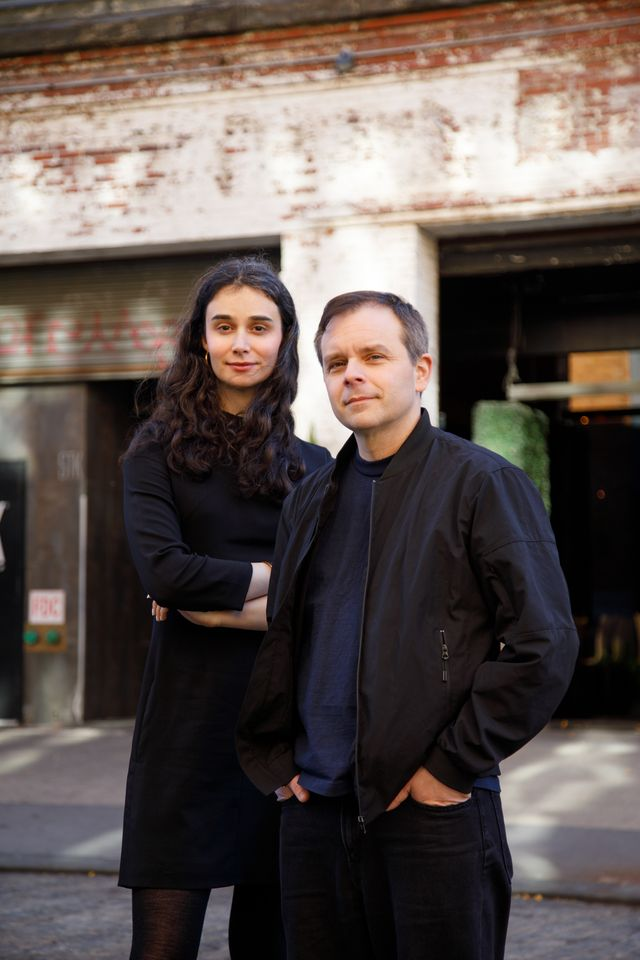
Founded in 2023 by Sean Raspet and Laura Sisson, Patina represents a unique fusion of art, science, and technology. Raspet, an artist and perfumer, became captivated by the science of human senses and began experimenting with scent and flavor molecules as a creative pursuit. Sisson, a seasoned food and software engineer, stumbled upon the scientific field of sensory modeling and was instantly intrigued. The duo met at a scent art gallery in New York in 2024, where Raspet was showcasing his molecular creations and Sisson was developing olfactory learning models. Their collaboration quickly evolved into a business venture.
“We started working on research together, and it became clear that the timing was right to finally build the tools to understand scent at the biological level,” Raspet told TechCrunch. “That felt like a company.”
Decoding the Science of Scent
At the heart of Patina’s mission is Sense1, a foundational model designed to replicate the scent receptors in the human nose. This technology aims to create what the company describes as “the first universal code of smell and taste.” Currently, researchers rely on subjective descriptors like “citrusy” or “earthy” to classify scents, a system that often leads to inconsistencies across languages and cultures. By operating at the receptor level, Patina can design never-before-smelled molecules and reconstruct rare natural ingredients with precision.
This innovation arrives at a pivotal moment for the fragrance industry. Consumers are increasingly demanding unique, safe, and expressive perfumes, while supply chain challenges are driving up the cost of natural ingredients like rose oil. Patina’s synthetic alternatives offer a sustainable solution, replicating the scent of natural materials without the environmental toll of plant extraction. “These replications are less carbon-intensive than the original plant extract, consuming significantly less water and petrochemicals,” Raspet explained.
The company is already in discussions with top fragrance houses and fashion brands to develop custom scents. By leveraging its technology, Patina aims to empower perfumers and flavorists of all scales to create and protect their signature styles. This is particularly significant given the current intellectual property landscape in the fragrance industry. While scent molecules can be patented, formulas themselves cannot, making it easy for competitors to replicate popular fragrances. Patina’s AI-driven approach democratizes access to custom scent creation, enabling smaller companies to compete with industry giants.
The Role of AI in Olfactory Innovation
Artificial intelligence is playing a transformative role across the fragrance industry, from reducing reliance on animal testing to unlocking new insights into how scents function at the molecular level. Raspet noted that AI models can now predict human-skin reactions with near-accuracy, offering a more ethical alternative to traditional testing methods. Moreover, breakthroughs in sensory research that once seemed unattainable are now within reach, thanks to advancements in AI technology.
Patina’s funding has already enabled the company to expand its operations, moving from Raspet’s backyard to a dedicated office in Bushwick, Brooklyn. The team, which includes a small group of chemists, is focused on launching new molecules and forging partnerships with startups and academic labs to gather receptor activation data. “All models need data to learn from,” Raspet said. “We believe more computationally detailed simulation of interactions between molecules and odor receptors will be a huge unlock for scaling.”
A Vision for the Future: A Pantone for Scent
The ultimate goal for Patina is ambitious yet attainable: to create what Raspet calls a “Pantone for scent.” Drawing inspiration from the universal color-matching system used in design and manufacturing, Patina aims to establish a standardized library of primary scent molecules that can be combined to create any smell or flavor imaginable. “The information has been there the whole time, waiting for the technology to catch up and a team with the right combination of expertise and obsession to unlock it,” Raspet said. “These ideas can now be made real, with Patina as the underlying intelligence layer.”
Patina’s journey represents a bold step forward in an industry ripe for innovation. By marrying art and science, the company is not only redefining how we experience fragrance but also addressing pressing challenges like sustainability and accessibility. As it continues to grow, Patina’s impact could extend far beyond the realm of perfumes and candles, influencing everything from food flavorings to therapeutic aromas. In a world increasingly driven by technology, the age-old art of scent-making is finally getting a modern upgrade—one molecule at a time.
The fragrance industry may never smell the same again.
