


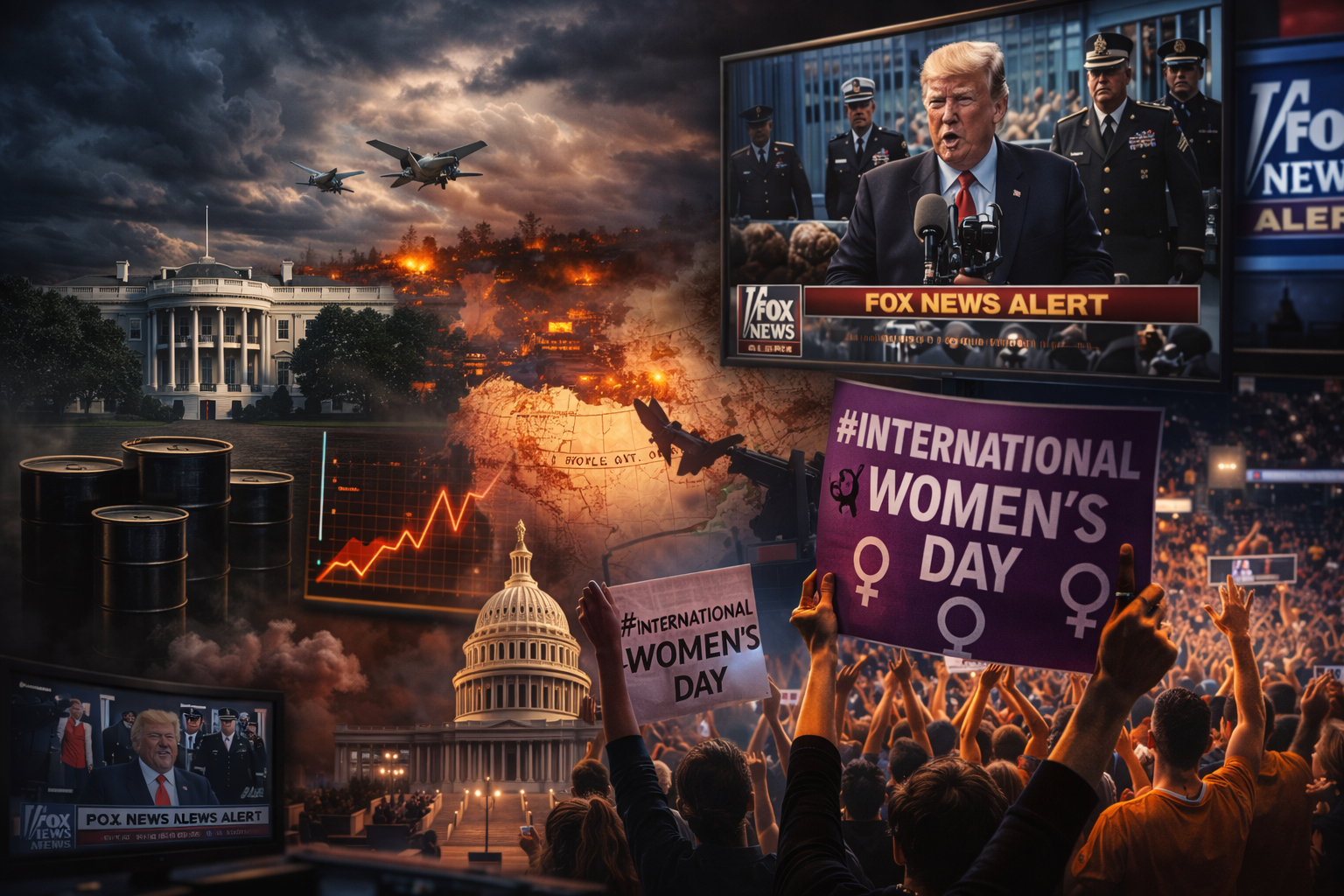

America in the Last 24 Hours
The United States experienced another intense and layered news cycle over the past 24 hours as geopolitical tensions, domestic politics, media controversy, and social observances converged to dominate the national conversation.
From the escalating conflict involving Iran to a fresh debate about media coverage of a solemn military ceremony, the country found itself once again navigating the intersection of global events and domestic scrutiny.
At the center of international developments remains the evolving confrontation between Iran and the alliance of the United States and Israel. Military strikes targeting Iranian infrastructure and strategic facilities have continued, with Washington insisting that the operations are aimed at weakening Tehran’s ability to threaten American allies and destabilize the region.
President Donald Trump said Iran’s military capabilities have been “significantly degraded,” but he acknowledged that the situation remains unpredictable. While emphasizing that air operations remain the primary strategy, Trump also suggested that additional military options could remain on the table if Iran escalates further.
The conflict has already prompted retaliatory actions across parts of the Middle East, raising concerns among international observers that the confrontation could expand into a broader regional crisis. Analysts say any widening of the conflict could have far-reaching consequences for global security and economic stability.
Energy markets have already begun responding to the tension. Oil prices have fluctuated amid fears that disruptions to Middle Eastern supply routes could affect global energy markets. For American consumers, such disruptions could translate into higher gasoline prices and added pressure on household budgets.
Security concerns tied to the crisis have also prompted precautionary steps by the U.S. government. Officials ordered some nonessential American personnel to temporarily leave certain facilities in Saudi Arabia, reflecting concerns that Iranian retaliation could extend beyond its borders and threaten U.S. assets or allies across the Gulf region.
While the Middle East crisis dominated international headlines, the domestic political landscape also saw a fresh controversy involving the American media.
The cable network Fox News found itself at the center of debate after critics noticed that coverage of a solemn military ceremony did not include the full original video remarks delivered by President Trump.
The ceremony in question involved the transfer of fallen American service members whose remains were returned to the United States after military operations abroad. These ceremonies, known as dignified transfers, are among the most solemn traditions in the American military.
They typically take place at Dover Air Force Base, where military honor guards receive the remains while family members and officials pay tribute to the fallen.
During its coverage of the event, Fox News aired footage from the ceremony but used an edited version of Trump’s remarks rather than the full original video. The decision sparked discussion among media observers and viewers, with some questioning whether the network should have aired the president’s complete statement given the gravity of the event.
Supporters of the network argued that editing presidential remarks for broadcast time is common practice in television news. Critics, however, said that altering the context of remarks during such a sensitive military ceremony raises questions about editorial judgment.
The debate quickly spread across social media platforms and political commentary programs, highlighting the intense scrutiny that media organizations face when covering presidential statements and military events.
The controversy also illustrates the complicated relationship between political figures and news networks in an era where media coverage is constantly analyzed and debated in real time.
Beyond the political and media spheres, economic concerns also surfaced as analysts examined new data suggesting that parts of the American economy may be facing headwinds.
Recent labor market figures indicate that job growth may be slowing compared with earlier projections. Economists point to several factors that could influence the trajectory of the U.S. economy, including rising interest rates, global uncertainty, and potential disruptions to energy markets caused by geopolitical tensions.
Although the economy remains relatively strong in many sectors, the latest numbers have sparked renewed discussion about whether growth could soften later in the year if global instability continues.
Despite these challenges, the past day also included moments of reflection and celebration across the country.
Communities nationwide marked International Women’s Day, an annual event dedicated to recognizing the contributions of women and advocating for gender equality.
Events across the United States included rallies, community forums, cultural celebrations, and educational programs highlighting the progress women have made in politics, business, science, and social activism.
The observance also falls within Women’s History Month, a time when schools, universities, and organizations across the country highlight the stories and achievements of women who have shaped American history.
For many advocates, International Women’s Day serves both as a celebration of progress and as a reminder that challenges remain in areas such as pay equity, workplace representation, and access to healthcare.
Meanwhile, attention in the world of sports is beginning to shift toward the postseason excitement of college basketball. Conference tournaments across the country are set to determine which teams will advance to the national championship competition.
Among the most anticipated events is the tournament organized by the Big Ten Conference, which will bring together some of the nation’s top college basketball programs as they compete for conference titles and favorable positions heading into March Madness.
Taken together, the developments of the past 24 hours illustrate the complex environment in which the United States continues to operate.
International tensions highlight the fragile balance of global security. Domestic controversies remind Americans of the intense scrutiny surrounding political leaders and media institutions. Economic indicators raise questions about the future trajectory of growth. And cultural observances provide moments for reflection on the nation’s progress and aspirations.
In a single day, the United States has once again experienced the convergence of global responsibility, political debate, and social reflection that defines the modern American experience.
