



Escalation in the Golan Heights: Israel Strikes Syrian Targets Amid Rising Tensions
A Deadly Strike Ignites Regional Tensions
In a dramatic escalation along the volatile Israel-Syria border, Israeli forces launched airstrikes targeting Syrian military positions in the Golan Heights late Wednesday. The attack, which reportedly killed several Syrian soldiers, marks the latest flare-up in a long-running shadow war between Israel and Iran-backed militias operating in Syria. The strikes come amid heightened regional instability, with fears growing that the conflict could spill over into a wider confrontation involving Hezbollah, Iran, and other regional actors.
Why Israel Targeted Syria
Israeli officials have framed the operation as a defensive measure aimed at preventing Iranian entrenchment near its borders. According to military sources, the strikes targeted artillery units and observation posts linked to Syria’s 4th Division—a force closely allied with Iran’s Islamic Revolutionary Guard Corps (IRGC). Israel has repeatedly warned that it will not tolerate Iranian military buildup in Syria, particularly near the Golan Heights, a strategic plateau captured from Syria in the 1967 Six-Day War and later annexed by Israel—a move unrecognized by most of the international community.
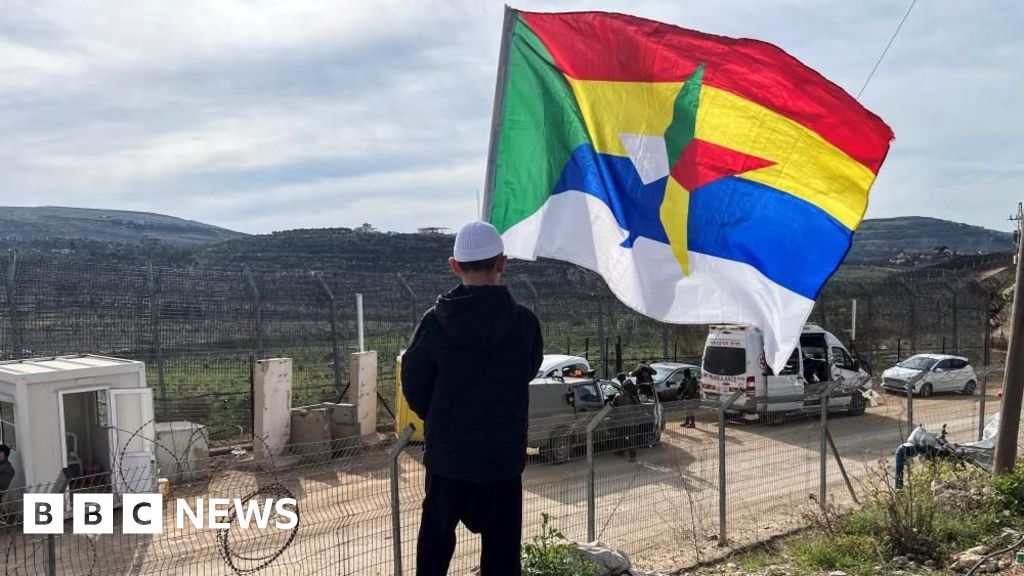
The Druze minority, which straddles the Israel-Syria border, has often been caught in the crossfire. Israel has previously justified strikes in Syria as necessary to protect Druze communities from spillover violence. The Druze, a distinct religious group with roots in Shia Islam but a unique identity, hold significant populations in Syria, Lebanon, and Israel, making them a sensitive factor in regional security calculations.
Global Implications: A Proxy War with Wider Risks
The latest strikes underscore the broader geopolitical struggle playing out in Syria, where Israel, Iran, Russia, and the U.S. all have competing interests. Israel’s campaign against Iranian proxies—primarily Hezbollah and IRGC-backed militias—has intensified since the start of Syria’s civil war in 2011. With Iran seeking to establish a permanent military presence in Syria, Israel has conducted hundreds of airstrikes to disrupt weapons transfers and infrastructure development.
The situation is further complicated by Russia’s military presence in Syria, where it backs the Assad regime. While Moscow has generally turned a blind eye to Israeli operations, recent friction between Israel and Russia over Ukraine-related tensions could strain this tacit understanding. Meanwhile, the U.S. continues to support Israel’s right to self-defense while cautiously avoiding direct involvement in Syria’s conflict.
Why This Matters Beyond the Middle East
The Golan Heights is more than just a regional flashpoint—it is a microcosm of global power struggles. Any major escalation here risks drawing in Hezbollah, which could open a second front against Israel from Lebanon. Given Hezbollah’s vast missile arsenal, such a conflict could quickly spiral into a devastating war, disrupting global energy markets and triggering refugee crises.
Additionally, with Iran’s nuclear program remaining a contentious issue, any miscalculation in Syria could derail diplomatic efforts. The Biden administration has sought to revive the 2015 nuclear deal, but hardline factions in Tehran and Jerusalem remain opposed, raising the risk of further military confrontations.
What Happens Next?
For now, both sides appear to be calibrating their responses to avoid all-out war. Syria’s government, weakened by years of conflict, is unlikely to retaliate directly, but Iranian-backed groups may stage attacks in the coming days. Israel, meanwhile, has signaled it will continue preemptive strikes to keep Iranian forces at bay.
The international community, including the UN, has called for restraint, but with no peace process in sight, the cycle of violence shows no signs of abating. As global powers jockey for influence, the Golan Heights remains a tinderbox—one spark away from igniting a wider conflagration.
A Region on the Brink
The latest Israeli strikes in Syria are not an isolated incident but part of a dangerous, years-long struggle for dominance in the Middle East. With Iran’s ambitions unchecked and Israel unwilling to cede ground, the risk of a broader conflict looms larger than ever. As the world watches, the question remains: How long can this fragile status quo hold before another explosion reshapes the region—and beyond?
