


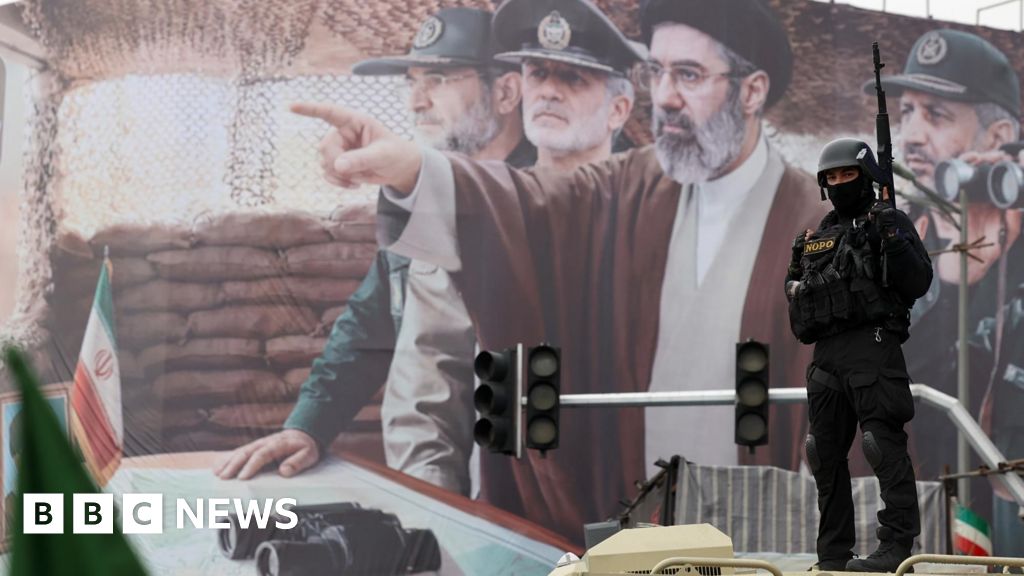

The Escalating Shadow War: Israel and Iran’s Tense Confrontation Reaches a Critical Moment
The Middle East, a region long defined by its volatility and complex geopolitics, has once again been thrust into the international spotlight. Israeli Prime Minister Benjamin Netanyahu has framed the ongoing conflict as a “War of Redemption,” a term that has its roots in the devastating Hamas attacks of October 7, 2023, but has since expanded to encompass a broader ideological and strategic struggle. At its core lies Israel’s escalating confrontation with Iran, a conflict that has simmered for years but now threatens to explode into a full-scale regional war.
In recent days, analysts and policymakers have warned that this confrontation could represent not just another chapter in the Middle East’s turbulent history, but potentially a defining moment for the region’s future. As Neri Zilber, a Tel Aviv-based journalist and policy advisor to the Israel Policy Forum, explains, “This is the culmination of what Netanyahu has tried to rebrand as the War of Redemption, which in his mind started on October 7, 2023. And this is—if not the last war—then the big war against Iran.” The stakes are immense, with global implications that extend far beyond the region’s borders.
The Roots of the Conflict
The tensions between Israel and Iran are decades old, shaped by ideological, religious, and geopolitical rivalries. Iran’s support for proxy groups such as Hezbollah in Lebanon and Hamas in Gaza has long been a source of concern for Israel, which views these groups as direct threats to its security. The October 7 Hamas attacks, which killed over 1,200 Israelis and triggered a devastating war in Gaza, were a turning point in this dynamic.
Since then, Israel has increasingly framed its actions as part of a broader struggle against Iran, which it accuses of orchestrating much of the violence targeting its territory. Tehran, meanwhile, denies direct involvement but continues to support anti-Israel militias across the region. This proxy warfare has created a volatile environment, with both sides engaging in a shadow war that has included cyberattacks, assassinations, and targeted strikes.
The Global Context
The Israel-Iran conflict is not unfolding in isolation. It is deeply intertwined with global power dynamics, particularly the rivalry between the United States and China, as well as Russia’s growing influence in the Middle East. The United States has historically been Israel’s closest ally, providing military and diplomatic support, while Iran has increasingly aligned itself with Beijing and Moscow.
This global dimension adds layers of complexity to the conflict. For instance, any escalation between Israel and Iran could draw in major powers, potentially destabilizing international trade routes and energy supplies. The Strait of Hormuz, a critical chokepoint for global oil shipments, is particularly vulnerable, as Iran has previously threatened to close it in response to military pressure.
Moreover, the conflict has significant implications for nuclear proliferation. Iran’s nuclear program remains a flashpoint, with Israel repeatedly warning that it will take military action if Tehran moves closer to developing a nuclear weapon. Such a scenario could trigger a broader arms race in the region, further destabilizing an already fragile security environment.
Why This Matters
The escalating tensions between Israel and Iran matter for several reasons. First, they have the potential to ignite a wider regional war, drawing in neighboring countries such as Lebanon, Syria, and even Saudi Arabia. Such a conflict would likely result in massive humanitarian suffering and displacement, exacerbating the already dire refugee crisis in the Middle East and Europe.
Second, the conflict has implications for global security. A direct confrontation between Israel and Iran could disrupt international trade, impact energy markets, and destabilize geopolitical alliances. It could also embolden extremist groups, providing them with new opportunities to exploit the chaos.
Finally, the conflict underscores the challenges of diplomacy in an increasingly polarized world. Efforts to mediate between Israel and Iran have thus far been unsuccessful, and the absence of meaningful dialogue increases the risk of miscalculation and unintended escalation.
The Human Cost
Behind the geopolitical maneuvering lies a deeply human story. The ongoing violence has taken a heavy toll on civilians, both in Israel and across the Middle East. Families have been torn apart, communities displaced, and entire cities reduced to rubble. The psychological scars of this conflict will linger for generations, shaping the region’s social and political fabric.
In Gaza, the humanitarian crisis continues to deepen, with aid organizations warning of widespread hunger and inadequate medical supplies. In Lebanon, where Hezbollah dominates much of the political landscape, the threat of renewed conflict looms large, threatening to plunge the country into further chaos. And in Iran, economic sanctions and internal repression have left many citizens struggling to meet their basic needs.
Looking Ahead
As the Israel-Iran conflict enters what many analysts describe as a critical phase, the risks of escalation are higher than ever. Both sides appear increasingly unwilling to back down, and the absence of effective diplomatic channels raises the possibility of a catastrophic confrontation.
The international community faces a daunting challenge: how to prevent this conflict from spiraling out of control while addressing the underlying issues that fuel it. This will require not only diplomatic creativity but also a renewed commitment to dialogue and cooperation.
For now, the world watches anxiously as Israel and Iran edge closer to a potential tipping point. The consequences of this confrontation will reverberate far beyond the Middle East, shaping the course of global politics for years to come. In a world already grappling with multiple crises, the stakes could not be higher.
The “War of Redemption” may be Netanyahu’s framing, but its outcome will be felt by millions—not just in the region, but across the globe. History has shown that wars in the Middle East rarely remain localized, and this one is no exception. The question now is whether the international community can rise to the occasion and prevent yet another chapter of bloodshed and destruction.
