


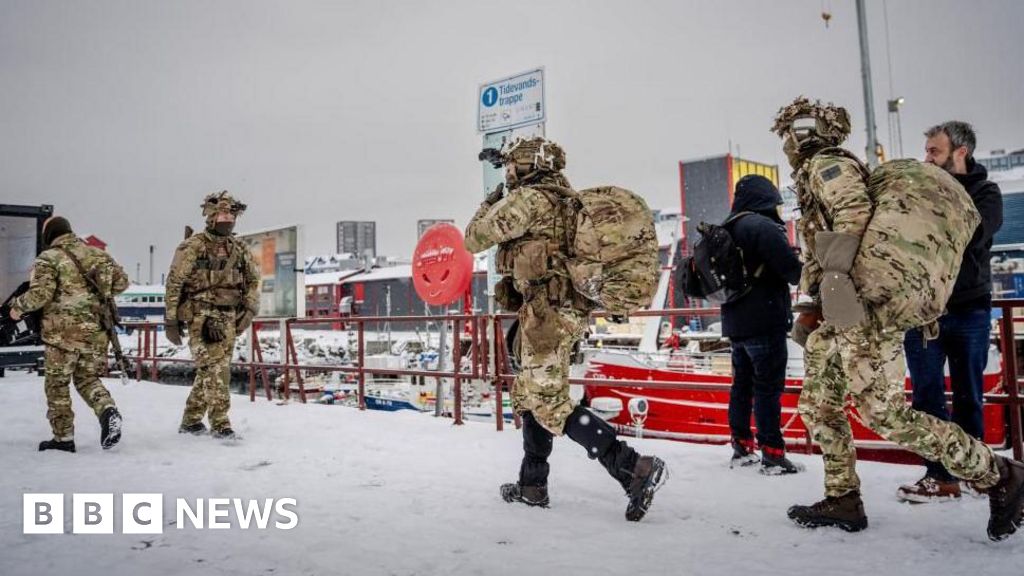

US Operation to Seize Venezuelan Leader Raises Global Fears Over Greenland’s Sovereignty
The shadow of geopolitical tension loomed ominously over the Arctic Circle as Denmark’s public broadcaster revealed alarming details of a covert US operation aimed at Venezuelan leadership—a move that sparked concerns about Washington’s potential ambitions toward Greenland. Amid rising global uncertainty, the revelation has reignited debates about sovereignty, military strategy, and the future of contested territories in a rapidly shifting geopolitical landscape.
The Operation Unveiled: A Global Context
According to reports by Denmark’s state broadcaster, DR, the United States had allegedly planned a high-stakes operation to seize Venezuela’s leader, Nicolás Maduro, earlier this year. While the specifics of the operation remain classified, the disclosure raised eyebrows in Copenhagen due to fears that similar tactics could be employed against Greenland, an autonomous territory of Denmark.
The backdrop to this revelation is a complex web of international relations. Venezuela has been a focal point of US foreign policy for years, particularly under the Trump administration, which ramped up pressure on Maduro’s regime over allegations of corruption, human rights abuses, and anti-democratic practices. However, the reported operation underscores the lengths to which the US might go to assert its influence in Latin America—a strategy that has broader implications for global security.
Greenland, though geographically distant, has become a flashpoint in global geopolitics due to its strategic location and vast natural resources. The Arctic region, long considered a neutral frontier, is now a contested space as climate change opens up new shipping routes and access to untapped oil and gas reserves. Denmark has maintained sovereignty over Greenland since 1721, but the US has repeatedly expressed interest in the territory, most notably in 2019 when then-President Donald Trump floated the idea of purchasing it.
The report’s timing is significant, coming amidst escalating tensions between NATO allies and Russia in the Arctic. As global powers vie for dominance in this resource-rich region, Greenland’s strategic importance has only grown, making it a potential target for geopolitical maneuvering.
Why Greenland Matters
Greenland’s significance extends far beyond its icy landscapes. As the world’s largest island, it serves as a critical gateway to the Arctic, a region increasingly vital for global trade and energy security. The melting ice cap has unlocked new shipping routes, reducing travel time between Asia, Europe, and North America. Additionally, Greenland is believed to hold vast deposits of rare earth minerals, essential for modern technologies like smartphones, electric vehicles, and renewable energy systems.
The US has long viewed Greenland as a strategic asset, with Thule Air Base serving as a key military installation for Northern Hemisphere defense. However, Denmark’s sovereignty over the territory has been a sticking point in bilateral relations, particularly as Washington seeks to counter China and Russia’s growing influence in the Arctic.
The fears sparked by the Venezuela operation highlight a broader concern: that the US might prioritize its strategic interests over the sovereignty of smaller nations. For Denmark, this represents a delicate balancing act—maintaining strong ties with Washington while safeguarding Greenland’s autonomy.
Global Implications: Sovereignty and Security
The report has sent ripples across the international community, raising questions about the limits of US interventionism. If the US is willing to orchestrate such operations in Venezuela, could similar tactics be employed elsewhere, particularly in contested regions like Greenland?
This revelation comes at a precarious moment in global politics. The Arctic is no longer a remote frontier but a battleground for resource competition and military strategy. Russia has significantly expanded its military presence in the region, while China has labeled itself a “near-Arctic state” and invested heavily in Arctic infrastructure. NATO allies, including the US and Denmark, have responded with increased military exercises and strategic partnerships.
The potential for conflict in the Arctic underscores the need for robust international governance. However, the US’s reported actions in Venezuela cast doubt on its commitment to multilateralism and respect for sovereignty—principles that are essential for maintaining stability in contested regions.
A Delicate Balance: Denmark’s Response
Denmark’s reaction to the report has been measured but firm. While the Danish government has not publicly criticized the US, officials have emphasized the importance of respecting Greenland’s autonomy and territorial integrity. The incident serves as a reminder of the challenges smaller nations face in navigating the geopolitical ambitions of global powers.
For Greenland, the report is a wake-up call. The territory has long sought greater independence from Denmark, but the prospect of external intervention adds a layer of complexity to its aspirations. Greenland’s leaders must now grapple with the dual challenges of self-determination and global security.
Conclusion: A World on Edge
The revelation of the US operation aimed at Venezuela’s leadership has far-reaching implications, particularly in the context of Greenland’s strategic significance. As global powers jockey for dominance in the Arctic, the lines between sovereignty, security, and resource competition are becoming increasingly blurred.
This incident underscores the fragility of international relations in an era of heightened geopolitical tension. For Denmark and Greenland, it is a stark reminder of the challenges posed by global power struggles. For the world, it is a call to reexamine the principles that underpin global security and cooperation.
In an interconnected world, the actions of one nation can reverberate across continents, shaping the futures of distant territories and their people. As the Arctic becomes the next frontier of global competition, the stakes for sovereignty, security, and stability have never been higher.
