



Escalating Violence in the West Bank: A Global Flashpoint Amid Rising Tensions
The Killing of Mohammad al-Malhi and the Wider Crisis
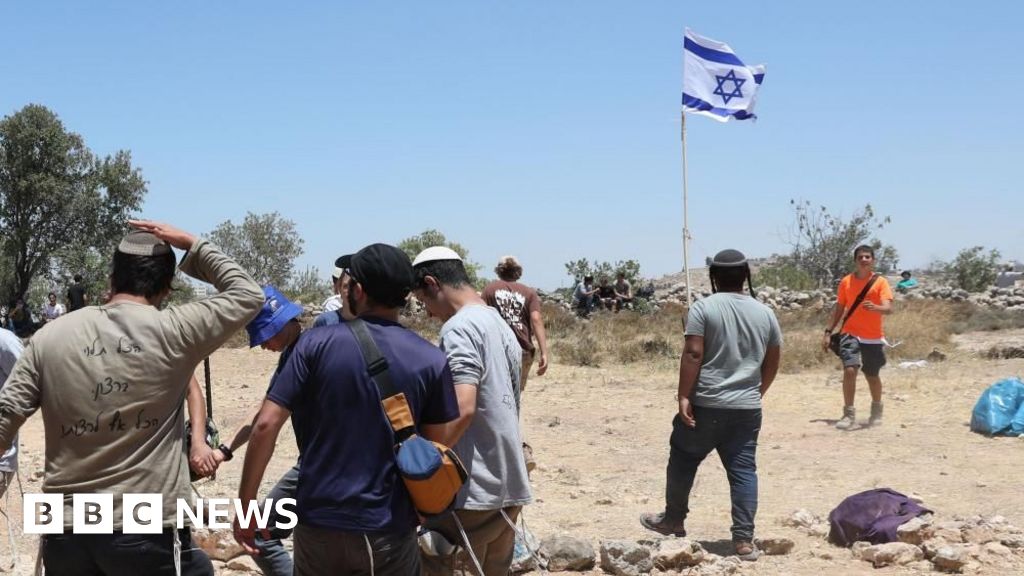
The bullet-riddled body of Mohammad al-Malhi, a 32-year-old Palestinian farmer, was found near the West Bank village of Huwara early Tuesday morning, marking the seventh Palestinian killed by Israeli settlers in a surge of violence since the outbreak of war between Israel and Iran. His death underscores a rapidly deteriorating security situation in the occupied territories, where tit-for-tat attacks between settlers and Palestinian communities risk igniting a broader regional conflagration. As global powers scramble to contain the fallout, the West Bank has become a tinderbox—one spark away from exploding into full-scale conflict.
A Deadly Trend in the West Bank
Since Israel’s war with Iran began last month, settler violence against Palestinians has surged, with at least seven fatalities recorded in the past three weeks alone. Al-Malhi’s killing follows a familiar pattern: witnesses report he was ambushed by armed settlers while tending to his olive groves, a lifeline for his family. Israeli authorities have launched an investigation, but rights groups accuse the government of failing to hold perpetrators accountable, emboldening further attacks.
The United Nations has documented over 120 settler-related incidents since the war’s onset, including arson, shootings, and forced displacements. Meanwhile, Palestinian armed factions have retaliated with roadside bombs and shootings, deepening the cycle of violence.
Global Context: A Region on the Edge
The West Bank’s unrest cannot be divorced from the wider Middle Eastern crisis. Israel’s military campaign against Iran—sparked by Tehran’s alleged support for militant groups—has sent shockwaves across the region. Hezbollah in Lebanon and Houthi rebels in Yemen have escalated attacks, while the U.S. and European allies bolster naval patrols to secure shipping lanes.
For Palestinians, the war has amplified long-standing grievances. The West Bank, already fractured by Israeli settlements deemed illegal under international law, now faces a security vacuum as the Israeli military diverts resources to the Iran front. Settler groups, some linked to far-right factions in Netanyahu’s government, have exploited the chaos, further destabilizing the territory.
Why This Matters Globally
The West Bank is more than a local conflict—it’s a geopolitical fault line. Here’s why the world should pay attention:
- Risk of Wider War – If violence spirals, it could draw in Hezbollah or other Iran-backed proxies, forcing Israel into a multi-front war.
- U.S. and EU Diplomatic Strain – Western nations, already divided over Israel’s Gaza campaign, now face pressure to condemn settler violence while supporting their ally.
- Humanitarian Fallout – Over 500 Palestinians have been displaced this month, per UN data, worsening a crisis in a region with scarce resources.
- Radicalization Threat – Escalating repression fuels recruitment for armed groups, undermining long-term peace efforts.
The Human Toll
Behind the statistics are shattered lives. Al-Malhi’s widow, Amina, told reporters, “They killed him for olives. What justice is there?” Nearby, Jewish settlers argue they’re defending their homes from Palestinian militants. Caught in the middle are Israeli soldiers, stretched thin by dual threats.
International monitors warn that without urgent de-escalation, the West Bank could descend into an intifada-like uprising, with dire consequences for civilians on both sides.
A Test for Global Powers
The U.S. and EU have called for restraint, but critics say their responses lack teeth. While Washington approved additional military aid to Israel last week, it also sanctioned three settler groups—a move seen as too little, too late. The UN Security Council remains deadlocked, with Russia and China vetoing Western-backed resolutions.
Meanwhile, regional players like Egypt and Jordan fear spillover violence could destabilize their own borders. “This isn’t just Israel’s problem,” a Jordanian official said anonymously. “It’s a threat to every neighbor.”
Conclusion: A Powder Keg Waiting to Ignite
The killing of Mohammad al-Malhi is not an isolated tragedy—it’s a symptom of a system teetering on collapse. As the world focuses on Israel-Iran hostilities, the West Bank’s crisis risks being overlooked until it’s too late. Without decisive international intervention, the cycle of retaliation will continue, dragging the region closer to an abyss from which there may be no return. For now, all eyes remain on the next casualty, the next spark, and whether diplomacy can douse the flames before they consume the Middle East.
