


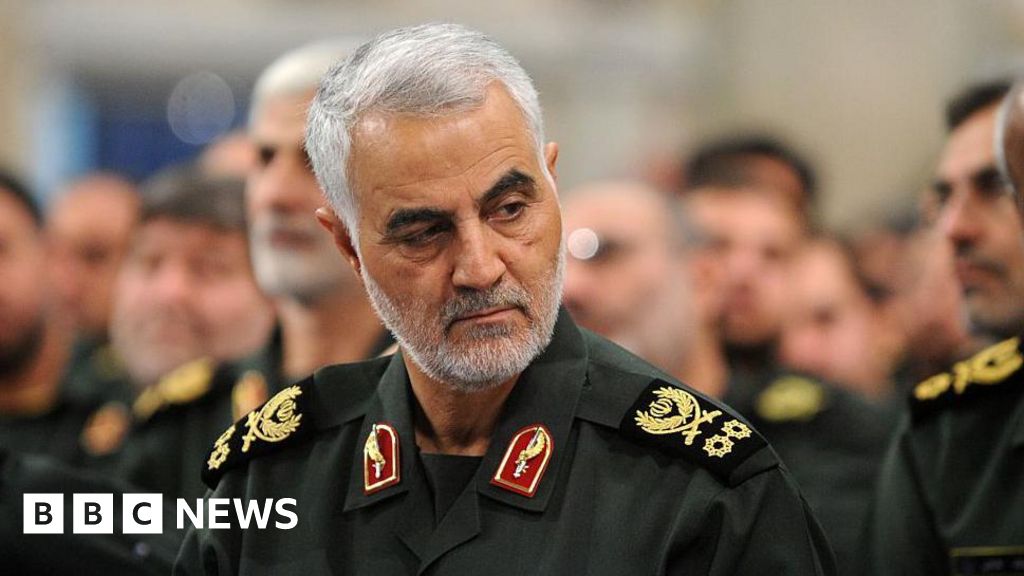

US Detains Relatives of Slain Iranian General Qasem Soleimani, Escalating Tensions in Global Security Landscape
In a dramatic turn of events that underscores the enduring tensions between the United States and Iran, the niece and grand-niece of the late Iranian military commander Qasem Soleimani have been detained by US Immigration and Customs Enforcement (ICE). The arrests, confirmed by officials earlier this week, have sent shockwaves through diplomatic circles and reignited fears of escalating hostilities between the two nations. Coming just months before the fourth anniversary of Soleimani’s assassination by a US drone strike in January 2020, the detentions highlight the fragile state of US-Iran relations and the broader implications for global security.
The Background: Who Was Qasem Soleimani?
Qasem Soleimani, the former commander of Iran’s elite Quds Force, was one of the most powerful figures in the Middle East before his death in January 2020. Revered as a national hero in Iran and reviled as a terrorist by the US and its allies, Soleimani was a central figure in Iran’s regional influence operations, overseeing support for proxy groups in Iraq, Syria, Lebanon, and Yemen. His assassination marked a critical juncture in US-Iran relations, bringing the two countries to the brink of war and setting off a chain of retaliatory actions, including a missile strike by Iran on a US base in Iraq.
Soleimani’s death has remained a deeply sensitive issue in Iran, where his legacy is celebrated as a symbol of resistance against Western influence. His family members, including those now detained by ICE, have become symbolic figures in their own right, often appearing at public events to honor his memory.
The Detentions: What We Know So Far
Details surrounding the arrests of Soleimani’s relatives remain scarce, but ICE officials confirmed that the niece and grand-niece were taken into custody earlier this week. While the exact reasons for their detention have not been disclosed, sources suggest it may be related to immigration violations rather than directly tied to Soleimani’s legacy. However, given the high-profile nature of the family, the detentions have sparked widespread speculation about potential political motivations.
Iran has yet to issue an official statement, but the detentions are likely to provoke outrage within the country, where Soleimani’s family enjoys considerable public support. The incident could also complicate ongoing efforts to revive the 2015 Iran nuclear deal, known as the Joint Comprehensive Plan of Action (JCPOA), which has been in limbo since the US withdrew under the Trump administration in 2018.
Global Context: Why This Matters
The detentions occur against a backdrop of heightened geopolitical tensions between the US and Iran. Recent months have seen a series of provocative actions, including Iran’s enrichment of uranium to near-weapons-grade levels and the seizure of commercial ships in the Persian Gulf. Meanwhile, the US has maintained a firm stance, deploying additional military assets to the region and imposing new sanctions on Iranian officials.
The timing of the arrests is particularly significant. With the anniversary of Soleimani’s assassination approaching, Iranian leaders often use the occasion to rally public support and reaffirm their commitment to confronting US influence. The detentions could serve as a rallying cry for hardliners in Iran, potentially derailing diplomatic efforts aimed at easing tensions.
Moreover, the incident underscores broader concerns about the use of immigration enforcement as a tool of geopolitical leverage. Critics argue that such actions risk undermining international norms and could provoke retaliatory measures by other nations. In an era of increasing global instability, the detention of high-profile individuals linked to state adversaries raises questions about the role of law enforcement in foreign policy.
Humanitarian Concerns and Diplomatic Fallout
Beyond the geopolitical implications, the detentions raise important humanitarian questions. Family members of high-ranking officials are often caught in the crossfire of international conflicts, facing scrutiny and reprisals simply by virtue of their lineage. In this case, the niece and grand-niece of Soleimani have become unwitting symbols of the broader US-Iran rivalry, their personal circumstances now entangled with the larger narrative of geopolitical strife.
The incident also highlights the challenges of navigating diplomacy in an increasingly polarized world. As the US and Iran continue to posture and clash, incidents like these risk deepening mistrust and making meaningful dialogue even more difficult. For international observers, the detentions serve as a reminder of the fragile state of US-Iran relations and the potential for seemingly minor events to escalate into major crises.
Conclusion: A Precarious Moment in US-Iran Relations
The detention of Qasem Soleimani’s relatives marks a precarious moment in the fraught relationship between the United States and Iran. While the immediate circumstances remain unclear, the broader implications are undeniable. The incident has the potential to reignite long-standing animosities, complicate diplomatic efforts, and heighten tensions in an already volatile region.
As the world watches closely, the detentions serve as a stark reminder of the human cost of geopolitical conflict. In an era of global uncertainty, the actions of one nation can reverberate far beyond its borders, shaping the course of international relations in ways that are often unpredictable and far-reaching. The question now is whether this incident will serve as a turning point toward escalation or an opportunity for renewed dialogue. Either way, the stakes could not be higher.
