


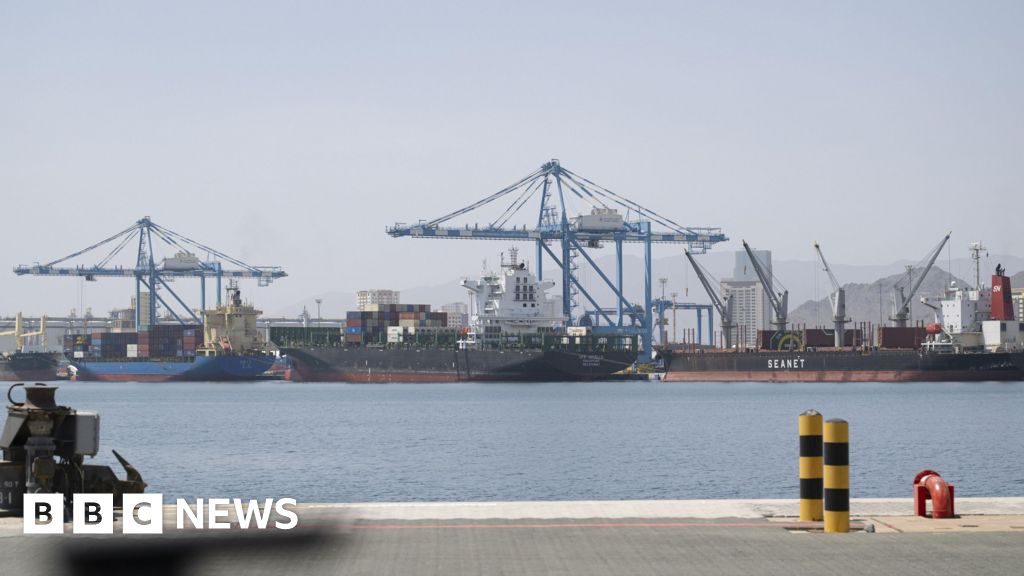

Maersk Ship Navigates Strait of Hormuz Under US Military Escort Amid Rising Tensions
A Tense Passage in One of the World’s Most Critical Waterways
A US-flagged commercial vessel operated by shipping giant Maersk has successfully transited the Strait of Hormuz under US military protection, marking another high-stakes maneuver in a region teetering on the edge of broader conflict. The operation underscores the escalating risks to global trade as geopolitical tensions between Western powers and Iran reach a boiling point.
The narrow strait—a vital artery for nearly 20% of the world’s oil supply—has become a flashpoint in recent months, with Iran repeatedly threatening to disrupt shipping in retaliation for US and allied sanctions. This latest transit highlights the fragile balance between deterrence and escalation, with the potential to send shockwaves through energy markets and global supply chains.
Why the Strait of Hormuz Matters
The Strait of Hormuz, a 21-mile-wide chokepoint between Oman and Iran, is the most critical maritime passage for global energy supplies. Over 17 million barrels of oil pass through daily, along with vast quantities of liquefied natural gas (LNG). Any sustained disruption could trigger fuel shortages, price spikes, and economic instability worldwide.
Iran has long used the strait as leverage in its standoff with the West. In recent years, it has seized commercial ships, harassed vessels, and allegedly supported Houthi attacks on Red Sea shipping. The US and its allies have responded with increased naval patrols, but each transit risks a miscalculation that could spiral into open conflict.
The Maersk Operation: A Test of US-Iran Deterrence
The Maersk vessel’s passage under US military escort signals Washington’s commitment to safeguarding freedom of navigation. The Pentagon has not disclosed operational details, but such missions typically involve warships or aircraft monitoring for Iranian fast-attack boats or drones.
This is not the first time Maersk has required military assistance in the region. In January, the company suspended Red Sea transits due to Houthi attacks, rerouting ships around Africa—a costly detour that disrupts global trade. The fact that a US-flagged ship now requires armed protection in the Persian Gulf underscores how rapidly security conditions are deteriorating.
Global Implications: Trade, Energy, and Escalation Risks
The incident has far-reaching consequences:
- Energy Markets: Any prolonged closure of the strait would send oil prices soaring, exacerbating inflation and straining economies still recovering from pandemic shocks.
- Supply Chains: Major shipping firms, already avoiding the Red Sea, may further reroute vessels, increasing costs and delays for consumer goods.
- Military Escalation: A single misstep—whether an accidental collision or an intentional strike—could ignite a broader regional war, drawing in the US, Iran, and Gulf states.
The Biden administration faces mounting pressure to prevent Iranian aggression without triggering direct conflict. Meanwhile, Tehran’s calculus hinges on whether it can pressure the West into easing sanctions while avoiding a devastating military response.
A Fragile Status Quo with No Easy Solutions
As the Maersk ship exits the danger zone, the bigger question remains: How long can the world rely on military escorts to keep trade flowing? Diplomatic solutions appear distant, with nuclear talks stalled and Iran’s regional proxies escalating attacks.
For now, the US and its allies are playing a high-stakes game of brinkmanship, hoping deterrence holds. But in the Strait of Hormuz—where geopolitics, energy security, and military posturing collide—the next incident could be the one that tips the scales toward war.
The world is watching, and the stakes have never been higher.
