


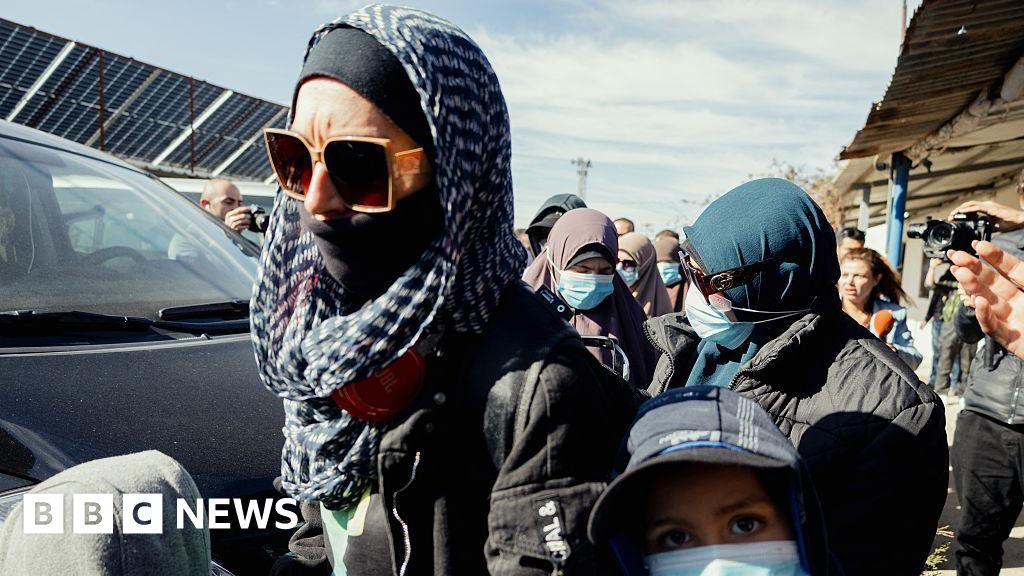

Breaking Free: The Fate of IS-Linked Women and Children in Syrian Camps Sparks Global Debate
In the shadow of war-torn Syria, a humanitarian crisis simmers dangerously close to boiling. For years, four women and nine children with ties to the Islamic State (IS) have languished in a sprawling camp, their lives punctuated by uncertainty, despair, and international indecision. Their plight, emblematic of a broader global dilemma, has reignited fraught debates over justice, security, and the moral obligations of nations to address the fallout of terrorism. As the world grapples with their fate, these individuals stand at the intersection of geopolitics and human rights, a stark reminder of the unresolved legacy of IS.
The Camps: A Living Limbo
Al-Hol and Roj, two camps in northeastern Syria, have become synonymous with the aftermath of IS’s territorial defeat. Housing over 60,000 detainees, mostly women and children, these camps are overcrowded, under-resourced, and rife with suffering. The four women and nine children at the center of this story are among thousands of foreign nationals stranded in these facilities, their lives indefinitely suspended.
These camps were never intended as permanent solutions. Initially established to house displaced families fleeing IS-controlled areas, they quickly transformed into de facto prisons for those linked to the terror group. Conditions are dire: inadequate medical care, limited access to education, and rampant violence plague daily life. Reports of radicalization within the camps have further fueled fears that these enclaves could become breeding grounds for future extremism.
Global Context: A Shared Burden?
The detainees’ predicament underscores a broader global challenge. Many countries have been reluctant to repatriate their citizens with IS ties, citing security concerns and political backlash. Critics argue that this reluctance has created a humanitarian catastrophe, leaving vulnerable individuals—many of whom are children—trapped in limbo.
The issue is particularly acute for Western nations. Countries like France, the UK, and the US have faced intense scrutiny for their handling of IS-linked nationals. Some have repatriated small numbers of citizens, but many more remain in Syrian camps, their fate uncertain. Meanwhile, governments in the Global South, grappling with their own IS-affiliated populations, confront similar dilemmas.
International organizations and human rights groups have repeatedly called for the repatriation of detainees, emphasizing the need for fair trials and rehabilitation. “These camps are not a sustainable solution,” warned a recent United Nations report. “Leaving individuals in such conditions risks perpetuating cycles of violence and extremism.”
The Human Cost: Stories from the Camps
Behind the statistics lie deeply personal stories of loss and survival. Many of the women in these camps were lured to IS-controlled territories by promises of utopia, only to find themselves trapped in a nightmare. Their children, born into a world of conflict, have known little beyond the confines of the camp.
One mother, speaking anonymously through an aid worker, described her daily struggle. “We live in constant fear,” she said. “No one knows what will happen to us. My children deserve a chance at a normal life, but where can we go?”
For the children, the stakes are even higher. Growing up in such an environment often leaves lasting scars, both physical and psychological. Aid workers report high rates of malnutrition, trauma, and developmental delays among camp residents. Without intervention, these children risk being condemned to a future devoid of hope.
Why This Matters: Global Implications
The fate of IS-linked detainees is more than a regional issue; it is a litmus test for global security and justice. Allowing individuals to remain in these camps indefinitely undermines international efforts to combat terrorism and promote human rights. Experts warn that failure to address this crisis could have far-reaching consequences.
First, the radicalization risk within the camps cannot be ignored. Desperation and isolation create fertile ground for extremist ideologies, potentially reigniting the very threat these camps were meant to neutralize.
Second, the humanitarian crisis in Syria highlights the need for collective responsibility. The international community must find a balanced approach that upholds justice while safeguarding vulnerable populations. Failure to do so risks eroding trust in global institutions and exacerbating divisions between nations.
Finally, the issue underscores the complexities of addressing terrorism’s aftermath. Striking the right balance between security and humanity is no easy task, but it is one that cannot be avoided.
A Path Forward: Solutions and Challenges
Resolving this crisis requires bold action on multiple fronts. Repatriation must be accompanied by robust legal and rehabilitation frameworks to ensure accountability and prevent recidivism. Countries must work together to share the burden, recognizing that this is a global problem requiring global solutions.
Efforts are underway, albeit slowly. Some nations have begun repatriating citizens, often prioritizing women and children. International organizations are stepping up their advocacy, pressing governments to act. Yet progress remains uneven, hindered by political resistance and logistical challenges.
“We cannot afford to look the other way,” said a spokesperson for Human Rights Watch. “The longer these individuals remain in limbo, the greater the risk to everyone involved.”
A Call to Action
The story of the four women and nine children in a Syrian camp is a microcosm of a much larger crisis—one that demands urgent attention. Their plight challenges the world to confront uncomfortable truths about justice, security, and humanity. As the international community debates their fate, one thing is clear: inaction is not an option. The time to act is now. The world’s response will shape not only the future of these individuals but also the broader fight against extremism and the pursuit of global justice.
