


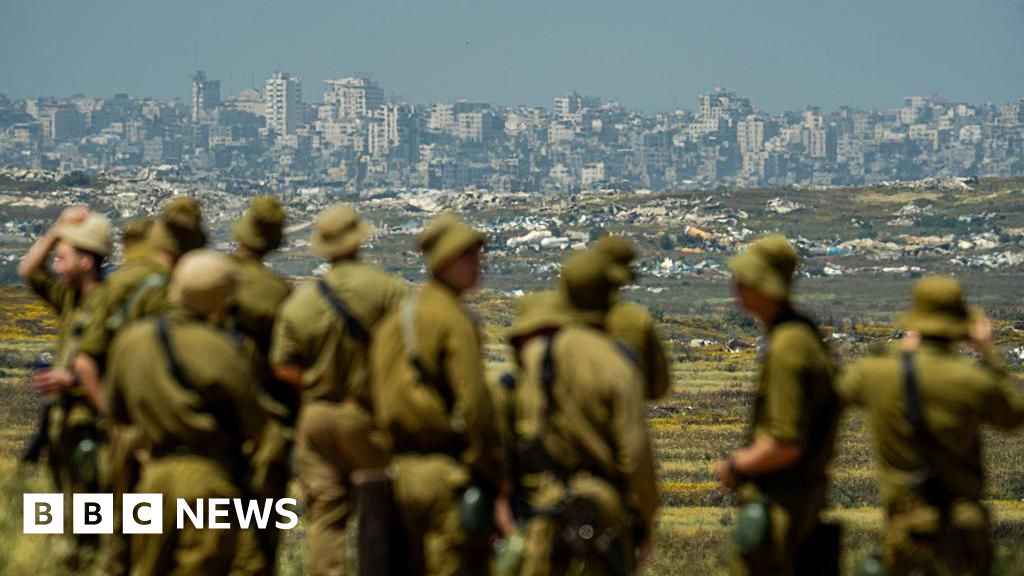

Israel Poised to Resume Gaza Offensive as Ceasefire Talks Collapse
The fragile truce between Israel and Hamas appears on the brink of collapse, with Israeli forces reportedly mobilizing for a renewed offensive in Gaza. As negotiations stall, fears mount of a return to large-scale violence that could destabilize the region and draw in global powers.
Ceasefire Talks Deadlocked
Israeli media outlets indicate that the government is preparing to restart military operations following a breakdown in discussions with Hamas. The militant group has reportedly rejected key Israeli demands, including the release of additional hostages and the disarmament of its fighters. The failure to extend the temporary ceasefire threatens to reignite a conflict that has already claimed thousands of lives and displaced over a million civilians.
The latest round of negotiations, mediated by Qatar and Egypt, had sought to prolong the pause in fighting and secure the release of more captives. However, Hamas’s refusal to provide a full list of remaining hostages has hardened Israel’s stance. Defense officials now warn that military pressure may be the only way to force concessions.
Global Implications of Escalation
A resumption of hostilities would have far-reaching consequences beyond Gaza. The U.S., European Union, and Arab states have been pushing for an extended truce to facilitate humanitarian aid and prevent regional spillover. If fighting resumes, it could derail diplomatic efforts and trigger retaliatory attacks by Iran-backed groups in Lebanon, Syria, and Yemen.
The conflict has already strained relations between Israel and Western allies, with growing criticism of civilian casualties in Gaza. A renewed offensive could deepen these divisions, complicating U.S. efforts to broker normalization deals between Israel and Arab nations. Meanwhile, Russia and China may exploit the instability to challenge U.S. influence in the Middle East.
Humanitarian Crisis Deepens
Even during the ceasefire, conditions in Gaza remain dire. The UN estimates that 1.7 million people—nearly 80% of the population—have been displaced, with shortages of food, clean water, and medical supplies. Aid agencies warn that a return to combat would cut off critical relief efforts, exacerbating famine and disease risks.
Hospitals, already overwhelmed, face further collapse if bombing resumes. The World Health Organization has documented over 350 attacks on healthcare facilities since the war began, leaving Gaza’s medical system in ruins. With winter approaching, displaced families sheltering in tents face exposure to cold and infectious diseases.
Historical Context: A Cycle of Violence
The current crisis traces back to Hamas’s October 7th attack, which killed approximately 1,200 Israelis and triggered Israel’s deadliest-ever assault on Gaza. Yet the roots of the conflict run deeper, shaped by decades of occupation, failed peace processes, and recurring clashes.
Previous wars in 2008, 2012, 2014, and 2021 followed similar patterns—brief ceasefires followed by renewed fighting. Each round has left Gaza more devastated, with reconstruction repeatedly stalled by blockades and political disputes. This time, however, the scale of destruction and civilian suffering has drawn unprecedented global scrutiny.
Why This Matters Worldwide
The Israel-Hamas war is not an isolated regional conflict. It has already impacted global energy markets, raised fears of a wider Middle East war, and inflamed tensions in Western cities where pro-Israel and pro-Palestinian protests have clashed. The U.S. has deployed naval forces to deter Iranian intervention, while Houthi rebels in Yemen have targeted commercial shipping in the Red Sea.
Economically, prolonged conflict could disrupt oil supplies and trade routes, further straining a world already grappling with inflation and post-pandemic recovery. Politically, it has become a flashpoint in U.S. and European domestic debates, testing alliances and fueling polarization.
What Comes Next?
With talks stalled, Israel appears ready to expand operations into southern Gaza, where over a million civilians have fled. Military analysts anticipate a protracted urban battle, with Hamas likely to exploit underground tunnels. The risk of high civilian casualties remains acute, potentially triggering international backlash.
Diplomatic efforts continue behind the scenes, but hopes for a lasting truce are fading. The UN Security Council remains divided, with the U.S. vetoing calls for a permanent ceasefire. Meanwhile, regional actors—from Hezbollah to Saudi Arabia—are weighing their next moves.
As the world watches, Gaza stands at a precipice. The coming days could determine whether diplomacy prevails or the conflict descends into even greater devastation—with repercussions that will echo far beyond the Middle East.
