



Russia’s Scaled-Back Victory Day Parade Signals a War Without Triumph
A Symbol of Stalemate
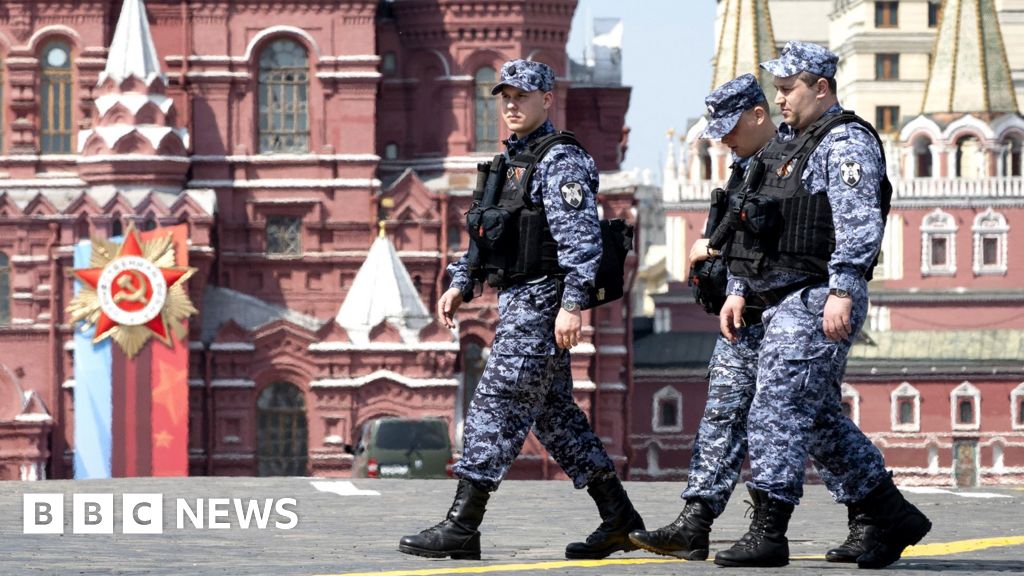
MOSCOW — Under leaden skies and a palpable sense of unease, Russia’s annual Victory Day parade on May 9th was a muted affair—fewer tanks, fewer troops, and none of the triumphant fanfare that once defined the celebration of Soviet victory over Nazi Germany. The scaled-back display was more than just a logistical adjustment; it was a tacit admission of a grim reality: after more than four years of war in Ukraine, Russia has little to celebrate.
For decades, Victory Day has been the Kremlin’s most sacred propaganda event, a moment to flex military might and glorify past conquests. But this year, the spectacle felt hollow. The war in Ukraine, once expected to be a swift operation, has dragged on longer than the Soviet Union’s fight against Nazi Germany—a conflict Russians still call the Great Patriotic War (1941-1945). The symbolism is impossible to ignore: a superpower that once defeated Hitler now struggles to subdue a much smaller neighbor.
A War Without End
Russia’s invasion of Ukraine in February 2022 was supposed to be a lightning campaign, a decisive strike to topple Kyiv’s government and bring Ukraine back into Moscow’s orbit. Instead, it has devolved into a grinding war of attrition, with neither side able to deliver a knockout blow. Ukrainian resistance, bolstered by Western arms and intelligence, has proven far more resilient than the Kremlin anticipated.
The battlefield has become a meat grinder. Russian forces have suffered staggering losses—estimates suggest over 300,000 casualties—while territorial gains have been incremental at best. The much-hyped winter offensive yielded minimal progress, and Ukraine’s recent strikes deep inside Russian territory, including drone attacks on oil refineries, have exposed vulnerabilities in Moscow’s defenses.
Global Repercussions
The war’s prolonged nature has sent shockwaves far beyond Eastern Europe. Global energy markets remain volatile, with Russia weaponizing gas supplies and Western sanctions reshaping trade flows. Food security in Africa and the Middle East has been destabilized by disruptions to Ukrainian grain exports. Meanwhile, NATO has expanded, with Finland and Sweden abandoning decades of neutrality to join the alliance—a direct consequence of Russian aggression.
Perhaps most critically, the war has hardened geopolitical divides. China, Iran, and North Korea have deepened ties with Moscow, supplying weapons and economic lifelines. The West, meanwhile, has doubled down on military aid to Ukraine, turning the conflict into a proxy struggle between authoritarian and democratic blocs. The risk of escalation—whether through a NATO-Russia confrontation or a catastrophic miscalculation—looms larger than ever.
Why This Matters
Russia’s inability to secure victory in Ukraine has far-reaching implications. A protracted war weakens Putin’s grip at home, where dissent, though suppressed, simmers beneath the surface. The economy, propped up by wartime spending and oil revenues, is increasingly fragile. Meanwhile, Ukraine’s survival as an independent state challenges the Kremlin’s long-standing doctrine of regional dominance.
For the rest of the world, the conflict serves as a stark reminder of the dangers of unchecked aggression. If a nuclear-armed power can wage war with impunity, what stops others from doing the same? The war has already rewritten security doctrines, with nations from Poland to Japan ramping up defense spending in anticipation of future threats.
The Road Ahead
As the war enters its fifth year, neither side shows signs of backing down. Ukraine vows to reclaim all occupied territory, while Russia, despite setbacks, remains committed to its maximalist goals. Peace talks seem distant, with both Moscow and Kyiv viewing compromise as surrender.
The world watches with bated breath. Will Russia escalate further, perhaps by declaring full mobilization? Will Western support for Ukraine hold amid political shifts in the U.S. and Europe? And most crucially—how many more lives will be lost before this war reaches its conclusion?
One thing is certain: the longer this conflict drags on, the more unpredictable its consequences become. Victory Day may come and go, but for Russia—and the world—there is no victory in sight.
