



Israeli Soldier’s Provocative Act Sparks Outrage Amidst Escalating Tensions
Dramatic Incident at a West Bank Church Fuels Religious and Political Backlash
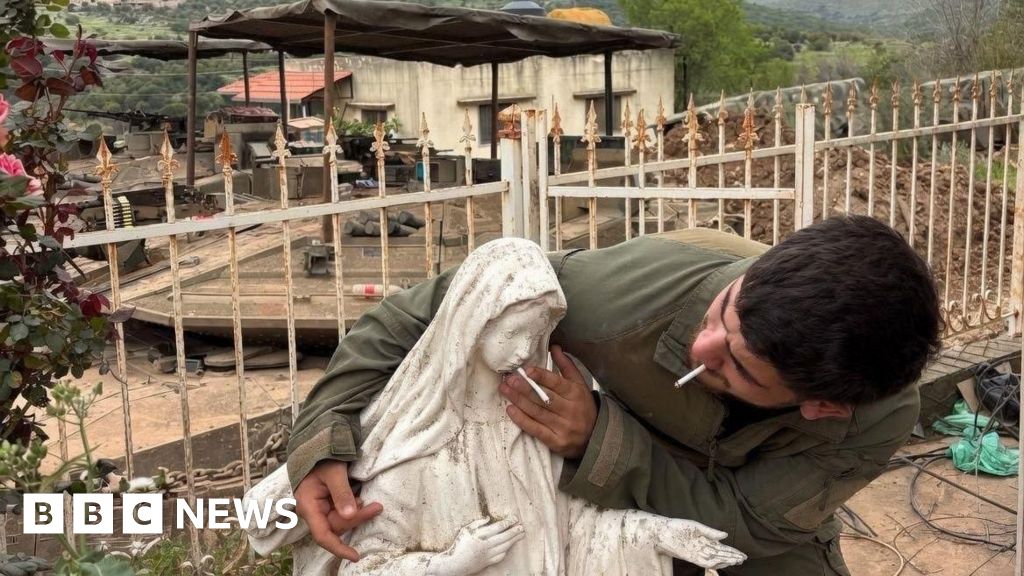
A photograph of an Israeli soldier placing a cigarette in the mouth of a statue of Jesus outside a West Bank church has ignited fury among Palestinian Christians and drawn condemnation from religious leaders worldwide. The act, perceived as a deliberate desecration, marks the second such incident targeting Christian symbols in recent weeks, raising concerns over escalating tensions in the occupied territories. The image, widely circulated on social media, has amplified existing grievances against Israeli forces at a time when global scrutiny of the Israel-Hamas war continues to intensify.
Details of the Incident
The incident occurred near the Church of the Flagellation in Jerusalem’s Old City, a site revered by Christians as part of the Via Dolorosa—the path Jesus walked before his crucifixion. The soldier, whose identity remains undisclosed, was photographed smirking while placing the cigarette between the statue’s lips, an act many interpret as mockery.
Local clergy swiftly denounced the behavior, with the Latin Patriarchate of Jerusalem calling it “a vile act of disrespect” that “fuels hatred and division.” Palestinian officials condemned it as part of a broader pattern of aggression, while Israeli military authorities announced an investigation, stating that the soldier’s actions do not reflect the army’s values.
Broader Context: Rising Tensions in the Holy Land
This incident follows another recent controversy in which a far-right Israeli activist vandalized a statue of the Virgin Mary in a Galilee church. Together, these acts have heightened fears of growing anti-Christian sentiment among extremist factions within Israel.
The West Bank, already a flashpoint for Israeli-Palestinian conflict, has seen increased violence since the October 7 Hamas attacks and Israel’s subsequent military campaign in Gaza. Clashes between settlers and Palestinians, along with military raids, have surged, creating a volatile atmosphere where religious symbols become political lightning rods.
Christian communities in the Holy Land, though small, hold significant symbolic weight. Many Palestinian Christians view themselves as caught between Israeli occupation and the rise of Islamist groups, making such acts of desecration particularly inflammatory.
Global Reactions and Diplomatic Fallout
The photograph has drawn sharp responses from international religious and political leaders:
- The Vatican expressed “deep sorrow” and called for respect toward sacred sites.
- Egypt and Jordan, key regional players, condemned the act as an affront to interfaith coexistence.
- U.S. State Department officials reiterated the importance of protecting religious freedoms in conflict zones.
Human rights groups warn that such incidents risk further alienating Palestinian Christians, many of whom have emigrated due to ongoing instability. The dwindling Christian presence in the Holy Land—a trend decades in the making—could accelerate if such provocations continue.
Why This Matters Beyond the Region
- Religious Sensitivity: Jerusalem is sacred to Judaism, Christianity, and Islam. Any perceived sacrilege risks inflaming tensions among billions of believers worldwide.
- Political Ramifications: The incident undermines Israel’s efforts to present itself as a guardian of religious coexistence, particularly as Western allies face pressure to reassess their support amid Gaza’s humanitarian crisis.
- Radicalization Risks: Mockery of religious symbols can fuel recruitment for extremist groups, exacerbating cycles of violence.
Conclusion: A Test for Accountability and Coexistence
As investigations unfold, the incident serves as a stark reminder of how quickly isolated acts can spiral into broader conflicts. In a region where history, faith, and politics are deeply intertwined, even a single photograph can deepen divides—or, if addressed with transparency, set a precedent for accountability. The world will be watching whether this moment becomes another footnote in the chronicles of Middle Eastern strife or a turning point toward restraint and mutual respect.
