


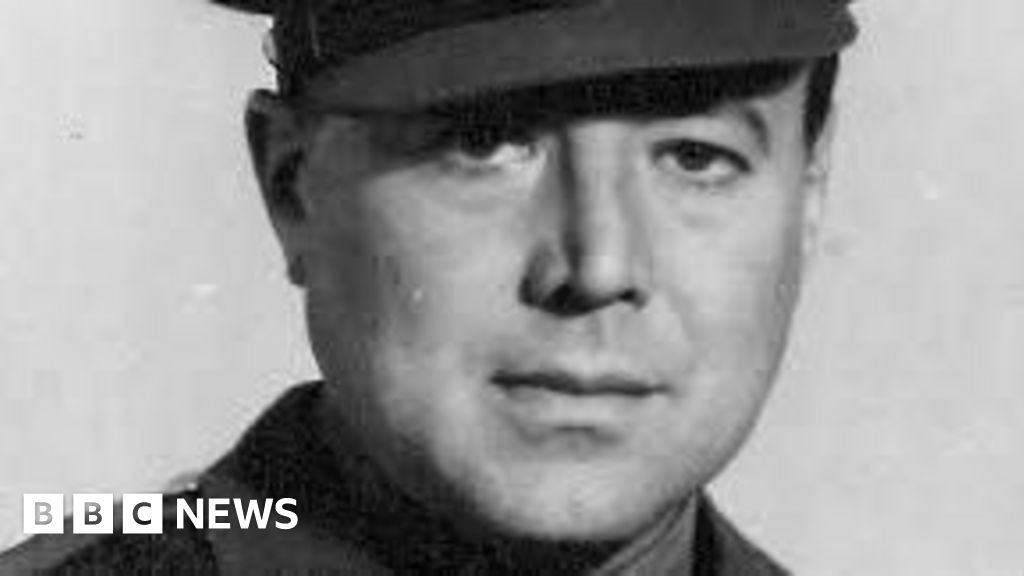

The Untold Sacrifice: A Spy’s Final Mission in the Shadow of Victory
On May 16, 1945, just eight days after the world celebrated Victory in Europe (VE) Day, a lone British spy met his tragic end in the shadow of the Flossenbürg concentration camp near what is now the Czech Republic border. His mission: to gather intelligence on the horrors of Nazi atrocities. His death: a cruel twist of fate, struck down by a car driven by a former German soldier from the very camp he sought to expose. This little-known story underscores the lingering dangers of a war thought to be over and serves as a poignant reminder of the sacrifices made in the pursuit of justice and truth, even as peace was declared.
The Context: A Fragile Peace in a Broken Europe
VE Day marked the formal end of World War II in Europe, a moment of jubilation and relief for millions. Yet, the war’s aftermath was far from stable. Across the continent, chaos reigned. Displaced persons, shattered cities, and the remnants of Nazi resistance created a volatile environment. Allied forces, including intelligence operatives, were tasked with uncovering the full extent of Nazi crimes, particularly the atrocities committed in concentration camps.
The spy’s mission was part of this broader effort. Flossenbürg, a site of unimaginable suffering, had been liberated by U.S. forces just weeks earlier. However, the camp’s secrets were not yet fully known. British intelligence sought to document the horrors, both to bring perpetrators to justice and to ensure such crimes could never be repeated. This mission was fraught with danger, as Germany remained a land of uncertainty and simmering tensions.
The Final Operation: A Race Against Time
The spy, whose name remains undisclosed in historical records, was operating in the vicinity of Flossenbürg on May 16, 1945. Details of his exact assignment are scarce, but it is believed he was collecting evidence and intelligence on the camp’s operations. His work was vital to piecing together the systematic genocide orchestrated by the Nazis.
Tragically, his mission ended abruptly. As he approached the camp, he was struck by a car driven by a German soldier, who had until recently been employed at Flossenbürg. The circumstances surrounding the incident remain unclear, but the irony is stark: a man seeking to expose the crimes of the Nazi regime was killed by one of its former enablers.
Why This Story Matters: Lessons for a Global Audience
This incident, though obscure, highlights the complexities of wartime and its aftermath. Even after official declarations of peace, the fight for justice and truth continued—and with it, the risks for those who dared to pursue it. The spy’s sacrifice is a testament to the ongoing efforts to hold perpetrators accountable and to document history’s darkest chapters.
In today’s world, where conflicts often linger long after ceasefires are declared, this story resonates profoundly. It underscores the importance of transitional justice, the need for thorough investigations into war crimes, and the bravery of those who risk everything to uncover the truth. Moreover, it serves as a reminder that peace is not instantaneous but a fragile process that demands vigilance and sacrifice.
Global Implications: A Legacy of Accountability
The spy’s death also reflects the global effort to address Nazi atrocities. Flossenbürg was one of many camps where countless lives were lost, and its liberation marked a step toward justice. The intelligence gathered by operatives like this British spy contributed to the Nuremberg Trials and other post-war efforts to hold Nazi leaders accountable.
Today, as nations grapple with modern conflicts and atrocities, the lessons of World War II remain relevant. The pursuit of justice, the documentation of crimes, and the courage of individuals who fight for truth continue to shape global efforts to prevent history from repeating itself.
Conclusion: A Hero’s Legacy in a World Seeking Peace
The story of this British spy is a poignant reminder of the human cost of war and the enduring quest for justice. His death, coming so soon after VE Day, serves as a stark illustration that peace is often accompanied by lingering dangers and unresolved struggles. As we reflect on this forgotten hero, we are reminded of the sacrifices made to ensure that the horrors of the past are never forgotten—and never repeated.
In an era where conflicts continue to plague our world, his story challenges us to honor the brave individuals who risk everything in the pursuit of truth and justice. It is a call to remember that peace is not merely the absence of war but the presence of accountability, resolution, and humanity.
