



Moscow’s Silent Red Square: A Striking Departure from Military Grandeur
September 29, 2023
In the heart of Moscow, Red Square stands eerily silent. Gone are the roaring engines of tanks, the deafening flyovers of fighter jets, and the rhythmic march of soldiers that have long defined Russia’s military parades. Instead, an unusual stillness pervades, leaving observers to wonder: What message is the Kremlin sending to the world? This sudden absence of military hardware, traditionally wielded as a tool of intimidation and projection of strength, marks a stark departure from Russia’s norm—a shift that has not gone unnoticed by global analysts and policymakers alike.
A Tradition of Power Projection
For decades, Red Square has served as the stage for Russia’s most elaborate displays of military might. From Victory Day celebrations marking the Soviet Union’s triumph in World War II to annual parades showcasing the latest in Russian weaponry, the Kremlin has used these events to assert its dominance on the global stage. These spectacles, often broadcast worldwide, have been a cornerstone of Russia’s strategy to project power and deter adversaries.
In recent years, these displays have only grown more elaborate. The introduction of advanced missile systems, stealth fighters, and hypersonic weapons has solidified Russia’s reputation as a formidable military power. Against the backdrop of escalating tensions with NATO, Ukraine, and other geopolitical rivals, these parades have taken on heightened significance—symbolizing Russia’s readiness to defend its interests, both at home and abroad.
The Unusual Silence: A Calculated Move?
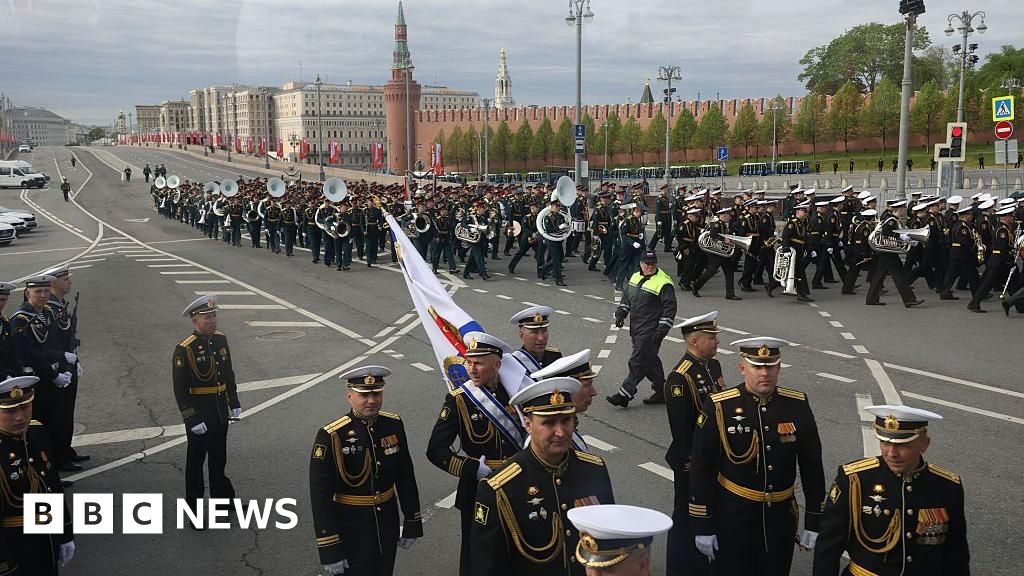
This year, however, Red Square tells a different story. The military hardware that once dominated the space is conspicuously absent. According to reports, the scaled-back event featured only a modest parade of troops and historical displays, omitting the heavy machinery and advanced weaponry that have become hallmarks of Russia’s military exhibitions.
Analysts are divided on the reasons behind this unexpected shift. Some suggest it may signal a pragmatic acknowledgment of the strains on Russia’s military and economy, both of which have been heavily taxed by the ongoing conflict in Ukraine. Others speculate that the Kremlin may be recalibrating its messaging, opting for a more subdued approach in the face of international scrutiny and mounting diplomatic pressure.
Whatever the rationale, the change has not gone unnoticed. Global leaders and defense experts are closely monitoring the Kremlin’s next moves, seeking clues to Russia’s evolving strategy. Amidst a backdrop of escalating global tensions, this departure from tradition raises critical questions about Russia’s priorities, capabilities, and intentions.
Global Context: A World on Edge
The timing of this shift is particularly significant. The world is grappling with a host of security challenges, from ongoing conflicts in Ukraine and the Middle East to rising tensions in the Indo-Pacific region. In this volatile environment, Russia’s actions carry profound implications, shaping the dynamics of international relations and influencing the strategies of its adversaries.
The absence of military hardware in Red Square comes at a moment when Russia’s global influence is under intense scrutiny. The war in Ukraine has exposed vulnerabilities in Russia’s military and strained its relationships with key allies. At the same time, Western nations have ramped up their support for Ukraine, bolstering Kyiv’s defenses and imposing sweeping sanctions on Moscow. These developments have fueled speculation that Russia may be reevaluating its approach to power projection, seeking to conserve resources and adapt to a rapidly changing geopolitical landscape.
Why This Matters: Implications for Global Security
The Kremlin’s decision to scale back its military display is more than a symbolic gesture—it has far-reaching implications for global security. For NATO and its allies, the shift raises questions about Russia’s military readiness and strategic intentions. Is Moscow signaling a willingness to de-escalate, or is this a tactical pause in a broader campaign of aggression?
For nations in Russia’s orbit, the change may carry different connotations. Neighboring countries, many of whom have long viewed Russia’s military parades with apprehension, may interpret the scaled-back event as a sign of vulnerability—a potential opening to assert their own sovereignty and independence.
Meanwhile, in the halls of global diplomacy, the Kremlin’s decision is likely to spark intense debate. As world leaders gather for high-stakes summits and negotiations, Russia’s shifting approach to power projection will undoubtedly influence the discourse, shaping alliances, rivalries, and the future of international security.
A Pivot Point in Global Politics
As the world watches Moscow’s silent Red Square, one thing is clear: This moment represents a pivot point in global politics. The Kremlin’s decision to forgo its traditional display of military might marks a departure from decades-old practices, signaling a potential shift in Russia’s approach to power projection.
Whether this change reflects strategic recalibration, resource constraints, or a broader reevaluation of Russia’s role on the global stage remains to be seen. But in a world increasingly defined by uncertainty and volatility, the Kremlin’s actions—and inactions—carry profound significance.
As global leaders and analysts grapple with the implications of this shift, one question looms large: What does Russia’s silent Red Square portend for the future of global security? In the months and years to come, the answer to that question will shape the trajectory of international relations, influencing everything from military strategy to diplomatic negotiations. For now, the world watches and waits, keenly aware that even in silence, Red Square speaks volumes.
