


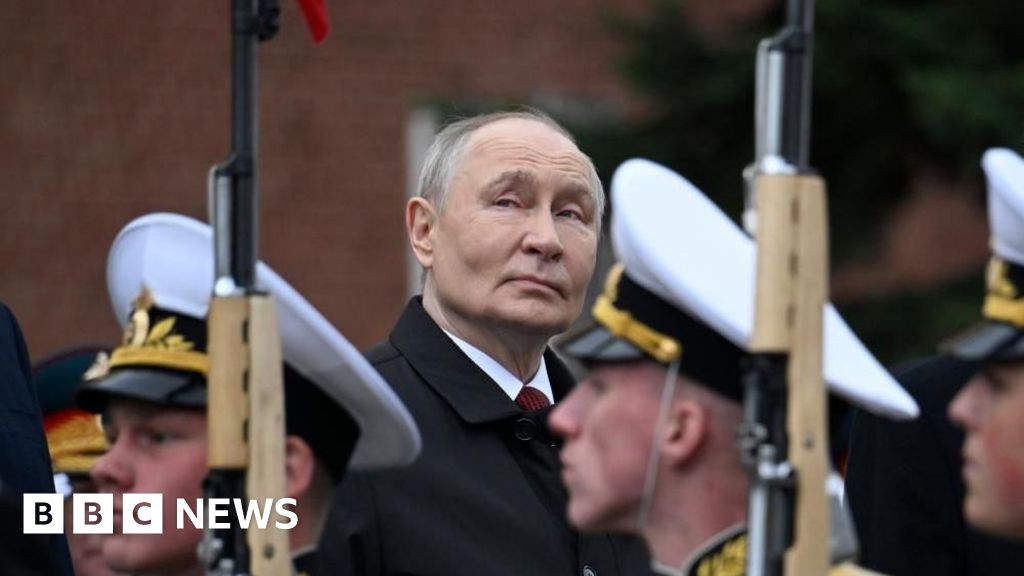

Putin’s Annual Speech Doubles Down on Ukraine War Justification Amid Global Tensions
A Defiant Address Escalates Geopolitical Strains
Russian President Vladimir Putin delivered his annual address to the nation on Thursday, reinforcing his justification for the ongoing war in Ukraine—framed by Moscow as a “special military operation”—while signaling no retreat from the conflict. The speech, closely watched by global leaders and analysts, comes as Ukraine struggles with ammunition shortages and Western military aid faces political delays. Meanwhile, Russia has made incremental battlefield gains, raising concerns over Kyiv’s ability to hold defensive lines. Against this backdrop, Putin’s rhetoric underscores a hardening stance, further complicating prospects for diplomacy and fueling fears of prolonged warfare.
Key Takeaways from Putin’s Address
Putin’s speech reiterated familiar themes: casting the war as a defensive struggle against Western aggression, accusing NATO of expansionist policies, and portraying Russia as a nation under existential threat. However, new elements emerged, including warnings of “consequences” for foreign interference and vague allusions to nuclear readiness—a tactic previously used to deter Western involvement.
Most notably, Putin framed the conflict as part of a broader civilizational clash, positioning Russia as a bulwark against a declining but still dangerous West. This narrative aligns with Kremlin propaganda aimed at sustaining domestic support despite mounting casualties and economic strain.
Global Reactions: Condemnation and Concern
International responses were swift. U.S. Secretary of State Antony Blinken dismissed Putin’s claims as “delusional,” while NATO Secretary-General Jens Stoltenberg reaffirmed support for Ukraine, stating, “Russia started this war, and only Russia can end it.” European leaders echoed these sentiments, with Germany’s Olaf Scholz warning against Kremlin “escalation tactics.”
China, however, maintained its cautious neutrality, reiterating calls for dialogue without outright condemning Moscow. This stance highlights Beijing’s delicate balancing act—supporting Russia economically while avoiding direct entanglement in Western sanctions.
Why This Speech Matters Now
The timing of Putin’s address is critical. With U.S. military aid to Ukraine stalled in Congress and European defense industries struggling to meet Kyiv’s demands, Russia senses an opportunity to press its advantage. Recent territorial gains near Avdiivka and mounting Ukrainian casualties have exposed vulnerabilities in Kyiv’s defenses.
Beyond the battlefield, the speech signals Moscow’s long-term commitment to its war aims, dashing hopes of a near-term negotiated settlement. It also serves as a rallying cry for domestic audiences ahead of Russia’s tightly controlled March presidential election, where Putin faces no credible opposition.
The Broader Implications for Global Security
The war in Ukraine remains the most destabilizing conflict in Europe since World War II, with ripple effects felt worldwide. Economically, it has disrupted energy markets, fueled inflation, and strained global supply chains. Militarily, it has prompted NATO’s largest expansion in decades, with Finland and Sweden joining the alliance.
Putin’s rhetoric also raises the specter of wider conflict. His nuclear posturing, though not new, keeps the world on edge, while his framing of the war as a stand against Western hegemony risks further entrenching divisions between Moscow and the West. For nations in the Global South, the conflict presents a dilemma: balancing condemnation of Russian aggression with economic dependencies and skepticism of U.S.-led alliances.
What Comes Next?
In the short term, Ukraine’s fate hinges on Western resolve. Delays in U.S. aid could prove disastrous, allowing Russia to exploit Kyiv’s dwindling resources. Conversely, sustained support may enable Ukrainian forces to stabilize the front lines—though a decisive victory remains unlikely without significant technological or tactical breakthroughs.
Diplomatically, prospects for peace appear bleak. Putin’s speech offered no concessions, instead doubling down on maximalist goals. Unless battlefield dynamics shift dramatically, the war seems poised to grind on, exacting a horrific human toll and keeping global markets on edge.
A World on Edge
As Putin reaffirms his commitment to a war with no end in sight, the international community faces a sobering reality: Ukraine’s struggle is not just a regional conflict but a defining crisis of 21st-century geopolitics. The choices made now—by Western capitals, Kyiv, and Moscow—will shape global security for decades. With stakes this high, the world cannot afford to look away.
