



Moscow’s Muted Victory Day Parade Reflects Russia’s Wartime Struggles
A Shadow Over Red Square
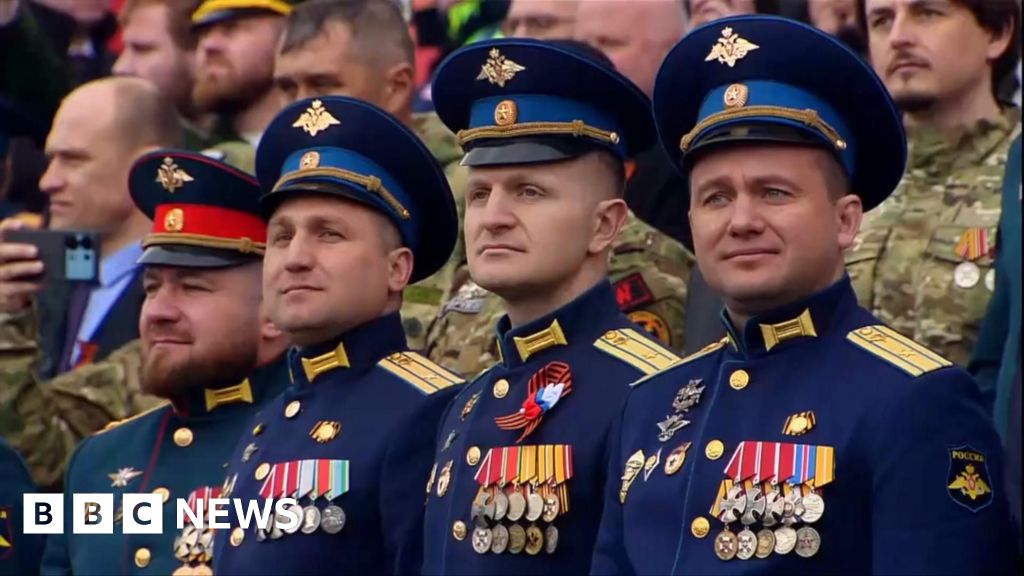
Red Square, the historic epicenter of Russian military grandeur, stood eerily subdued on Saturday as Moscow commemorated Victory Day—a celebration that traditionally showcases the nation’s military prowess. This year, however, the parade was stripped of its usual fanfare. Absent were the thunderous roars of tanks, the towering presence of ballistic missiles, and the throngs of foreign dignitaries and journalists. Instead, the event unfolded as a muted affair, overshadowed by the ongoing war in Ukraine and the palpable fear of a Ukrainian drone strike. The scaled-back ceremony underscores the challenges Russia faces as its invasion of Ukraine enters its second year, a conflict that has not only strained Moscow’s resources but also reshaped global perceptions of its military might.
Security Concerns Prompt Unprecedented Changes
Russian authorities attributed the pared-down event to heightened security risks, particularly the threat of a Ukrainian drone attack on Red Square. This fear reflects the evolving nature of modern warfare, where asymmetrical tactics—such as drone strikes—can disrupt even the most heavily fortified ceremonies. The decision to limit the parade’s scale marks a stark departure from previous years, when Victory Day was an opportunity for Russia to project its military dominance on the global stage.
Adding to the tension, a last-minute ceasefire brokered by US President Donald Trump averted a potential escalation. Kyiv, in a gesture of restraint, agreed not to target the parade, allowing the event to proceed without incident. While this diplomatic intervention provided a temporary reprieve, it also highlighted the precariousness of Russia’s position as it continues its campaign in Ukraine.
A Symbolic Blow to Russian Pride
Victory Day, celebrated annually on May 9, marks the Soviet Union’s triumph over Nazi Germany in World War II. For decades, it has served as a cornerstone of Russian national identity and a platform for showcasing military advancements. This year’s muted display, however, stands in stark contrast to the spectacle of previous parades, which featured cutting-edge weaponry and grandiose choreography.
The absence of tanks, ballistic missiles, and other military hardware sends a telling message: Russia’s war in Ukraine has not gone according to plan. The conflict has exposed vulnerabilities in Moscow’s military strategy, strained its economy, and isolated it diplomatically. The scaled-back parade serves as a visual reminder of these challenges, undermining the Kremlin’s narrative of strength and resilience.
Global Implications of a Weakened Russia
Russia’s struggles in Ukraine have far-reaching implications for global security and geopolitical stability. A protracted conflict not only destabilizes Eastern Europe but also exacerbates tensions between Russia and NATO, increasing the risk of a broader confrontation. Additionally, Moscow’s reliance on asymmetrical tactics and its apparent vulnerability to drone strikes underscore the shifting dynamics of modern warfare, prompting nations worldwide to reassess their defense strategies.
Economically, the war has disrupted global energy markets, triggered food shortages, and strained international supply chains. Russia’s diminished capacity to project power on the global stage has also emboldened other nations to challenge its influence in regions such as the Arctic, Central Asia, and the Middle East. This shift could reshape global alliances and reshape the balance of power in favor of Western-aligned nations.
A Rare Insider’s Perspective
Amid the heightened security measures, few foreign journalists were granted access to this year’s Victory Day parade. Among them was the BBC’s Russia editor, Steve Rosenberg, whose presence provided a rare glimpse into the event’s subdued atmosphere. Rosenberg’s reporting shed light on the stark contrast between this year’s pared-down ceremony and the grandiose displays of previous years, offering viewers a firsthand account of Russia’s wartime realities.
Why This Matters
The muted Victory Day parade is more than a symbolic setback for Moscow—it is a barometer of Russia’s diminishing influence on the global stage. As the war in Ukraine drags on, its consequences ripple across the world, affecting everything from energy prices to diplomatic relations. The event also serves as a reminder of the complexities of modern warfare, where technological advancements—such as drones—can level the playing field and disrupt traditional power dynamics.
For nations watching closely, Russia’s struggles underscore the importance of adaptability in defense planning and the need for robust international alliances to counter emerging threats. As the conflict continues, its outcomes will shape the geopolitical landscape for years to come, influencing everything from regional security to global economic stability.
Conclusion: A Pivot Point in Global Security
Moscow’s scaled-back Victory Day parade marks a pivotal moment in Russia’s war on Ukraine—and in the broader context of global security. It is a stark reminder that even the most formidable military powers are not immune to the pressures of prolonged conflict and the unpredictability of modern warfare. As the world watches Russia’s next moves, the lessons of this muted celebration will resonate far beyond Red Square, shaping the strategies and alliances of nations grappling with an increasingly complex and interconnected security landscape.
