


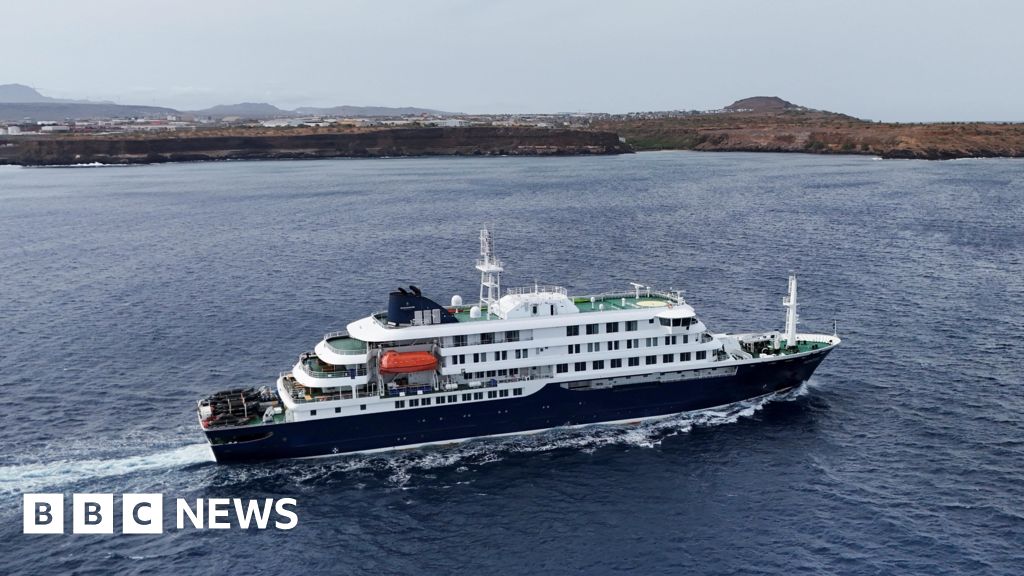

Global Health Alert: WHO Warns Against Misguided Comparisons Amid MV Hondius Docking
Date: October 2023
The world watched with bated breath as MV Hondius, a vessel carrying a mysterious ailment, approached its destination this Sunday. Dr. Tedros Adhanom Ghebreyesus, Director-General of the World Health Organization (WHO), issued a stark warning: “This is not another Covid.” His words, delivered to islanders ahead of the ship’s arrival, underscored the gravity of the situation while urging global citizens to avoid drawing premature parallels to the pandemic that reshaped the world. Yet, the incident has reignited fears of another global health crisis, raising questions about preparedness, misinformation, and the delicate balance between caution and panic.
The Incident: MV Hondius and the Emerging Concern
MV Hondius, a research and expedition vessel, made headlines when reports surfaced of an unidentified illness affecting some of its crew members. The ship, operated by Oceanwide Expeditions, was en route to a remote island when health concerns prompted authorities to issue alerts. While details remain sparse, initial reports suggest symptoms resemble those of a respiratory infection, though its origin and severity are still under investigation.
The timing of the event has amplified global anxiety. Just three years after the Covid-19 pandemic brought the world to a standstill, the mere hint of another infectious threat triggers alarm bells. Dr. Ghebreyesus’s statement was a calculated move to temper fears while acknowledging the potential risks. “We must remain vigilant but not reckless,” he emphasized, underscoring the need for accurate information and measured responses.
Global Context: Lessons from Covid-19
The Covid-19 pandemic left an indelible mark on global health systems, economies, and societies. Over 700 million confirmed cases and nearly 7 million deaths worldwide underscored the devastating consequences of a rapidly spreading virus. The pandemic also exposed vulnerabilities in global health infrastructure, from insufficient medical supplies to inequitable vaccine distribution.
Against this backdrop, the MV Hondius incident serves as a litmus test for the world’s ability to handle emerging health threats. While the situation remains localized and contained, it highlights the persistent challenges of managing infectious diseases in an interconnected world. Cross-border travel, climate change, and urbanization continue to create fertile ground for new and reemerging pathogens.
Moreover, the Covid-19 pandemic demonstrated the perils of misinformation and the politicization of health crises. False narratives, conspiracy theories, and vaccine hesitancy hampered efforts to curb the virus’s spread. Dr. Ghebreyesus’s preemptive statement aims to avoid a repeat of these pitfalls by setting a clear narrative: this is not Covid, but vigilance is essential.
Why This Matters: Implications for Global Security
Beyond its immediate health implications, the MV Hondius incident raises broader questions about global security. Infectious diseases are not merely health issues; they are geopolitical flashpoints that can destabilize nations, strain resources, and exacerbate inequalities.
For island nations like the one MV Hondius approached, the stakes are particularly high. These regions often lack the infrastructure to manage large-scale health crises, making them vulnerable to outbreaks. Additionally, the globalized nature of travel means that an isolated incident can quickly escalate into an international concern.
The incident also underscores the importance of robust surveillance and rapid response mechanisms. Early detection, transparent communication, and coordinated action are critical to preventing localized outbreaks from spiraling into global pandemics. The WHO’s role in this scenario highlights the organization’s continued relevance as a global health leader, despite recent criticisms and funding challenges.
Human Impact: The Faces Behind the Headlines
Behind the headlines and geopolitical analyses are the individuals directly affected by the MV Hondius incident. Crew members, island residents, and their families face uncertainty and fear, compounded by the lingering trauma of the Covid-19 pandemic.
For islanders, the arrival of MV Hondius represents both a potential health threat and an economic dilemma. Tourism and trade are lifelines for many remote communities, and any disruption can have devastating consequences. Balancing public health with economic survival is a delicate act, one that requires nuanced decision-making and international support.
The crew members, meanwhile, are at the center of a rapidly evolving situation. Their health and well-being are paramount, yet they also bear the burden of being the focal point of global scrutiny. Their experiences serve as a stark reminder of the human cost of health crises, often overshadowed by political and economic considerations.
Looking Ahead: A Test of Global Resilience
As MV Hondius docks and investigations unfold, the world faces a critical test of its resilience and preparedness. Will nations learn from the lessons of Covid-19 and respond with unity and clarity? Or will fear and misinformation once again cloud judgment?
Dr. Ghebreyesus’s admonition—“This is not another Covid”—is both a reassurance and a call to action. It reminds us that while history may not repeat itself exactly, its echoes demand attention. In a world fraught with uncertainty, the ability to navigate emerging threats with wisdom and collaboration will define our collective future.
Conclusion: A Moment of Reflection and Resolve
The MV Hondius incident is a microcosm of the challenges facing a post-pandemic world. It underscores the fragility of global health systems, the power of timely communication, and the resilience of communities in the face of uncertainty. Above all, it serves as a poignant reminder that behind every health crisis are individuals whose lives hang in the balance.
As the world watches and waits, one thing is clear: the lessons of Covid-19 must not be forgotten. In the words of Dr. Ghebreyesus, vigilance, not panic, will guide us through the unknown. The question now is whether the world will rise to the occasion—or risk repeating the mistakes of the past.
