


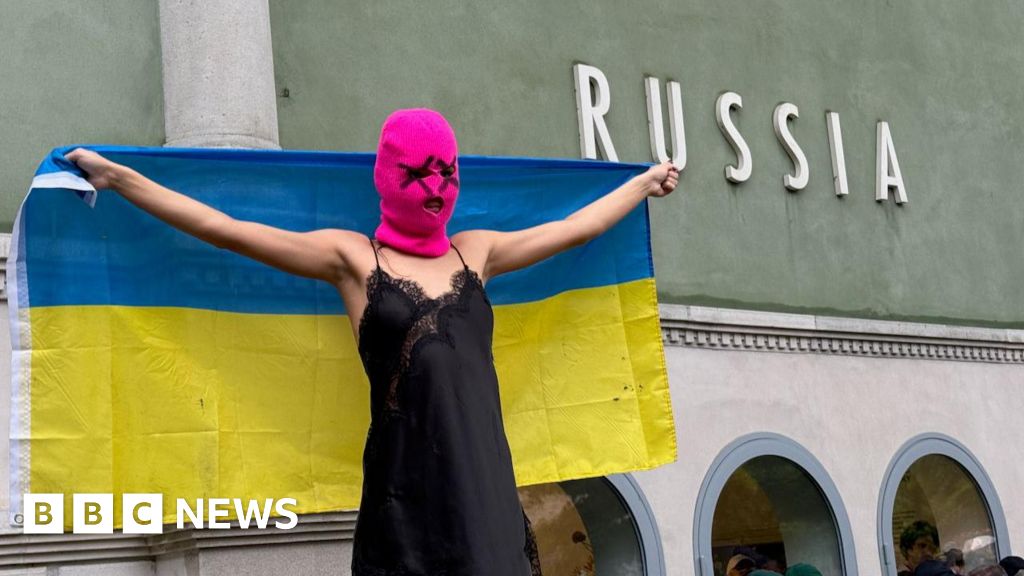

Venice Biennale Controversy Sparks Global Debate on Art, Politics, and Censorship
VENICE, Italy—The Venice Biennale, one of the world’s most prestigious art exhibitions, has been plunged into controversy after its president abruptly walked out of a press conference following cryptic remarks about “passports over visions.” The incident has reignited debates over artistic freedom, geopolitical tensions, and whether cultural institutions should take sides in global conflicts.
With tensions rising over wars in Ukraine and Gaza, as well as deepening East-West divides, the Biennale’s leadership now faces mounting scrutiny. Artists, curators, and diplomats are questioning whether the event can remain a neutral platform—or if it risks becoming another battleground in an increasingly polarized world.
A Sudden Exit and a Lingering Mystery
The controversy erupted when Roberto Cicutto, president of the Venice Biennale, made an unexpected statement during a press briefing: “If the Biennale began to select not works but affiliations, not visions but passports, it would cease to be what it has always been: the place where the world meets.”
Before journalists could press for clarification, Cicutto left the room, leaving behind a wave of speculation. Was this a veiled criticism of political interference in art? A warning against boycotts based on nationality? Or a response to growing pressure over the participation of artists from conflict zones?
The Biennale’s press office has since declined to elaborate, only reiterating its commitment to “artistic dialogue without borders.”
Global Backlash and the Weaponization of Culture
The art world has long prided itself on transcending politics, but recent years have seen increasing demands for cultural institutions to take moral stands. The war in Ukraine led to Russian artists being excluded from major exhibitions, while the conflict in Gaza has triggered protests demanding boycotts of Israeli-linked events.
Some argue that art must remain independent. “If we start judging artists by their governments, we lose the whole point of creativity,” said Maria Kowalski, a Berlin-based curator. Others, like Palestinian artist Samir El-Hadad, counter: “Silence is complicity. Cultural platforms must acknowledge oppression.”
The Biennale’s dilemma reflects a broader struggle: as wars rage and alliances shift, can global art institutions stay neutral—or will they inevitably be drawn into ideological battles?
Historical Precedent: When Art and Politics Collide
This is not the first time the Venice Biennale has faced political turmoil. During the Cold War, the U.S. and Soviet pavilions became propaganda tools. In 2019, the event was rocked by protests over its ties to fossil fuel sponsors.
Yet the current moment is uniquely volatile. With rising nationalism, digital misinformation, and cultural boycotts gaining traction, the stakes are higher than ever. “Art is being weaponized,” noted Dr. Elena Moretti, a cultural historian at Oxford. “Governments now see exhibitions as extensions of soft power—or even warfare.”
Why This Matters Beyond the Art World
The Venice Biennale’s struggle is a microcosm of a fractured global order. As institutions from sports federations to film festivals face pressure to pick sides, the erosion of neutral spaces could deepen divisions.
For artists in conflict zones, exclusion can mean losing vital platforms. For audiences, it risks narrowing the range of voices they encounter. And for diplomacy, the politicization of culture may further erode already strained international relations.
A Test for the Future of Global Culture
As the 2024 Biennale approaches, the world will be watching. Will it uphold its tradition as a meeting place for diverse perspectives? Or will geopolitics dictate who gets a seat at the table?
The answer could shape not just the future of art—but the fragile bridges between nations in an increasingly divided world.
—Reporting by [Your Name], with contributions from Venice, London, and New York
