



High Representative in Bosnia Faces Uncertain Future Amid Shifting Global Alliances
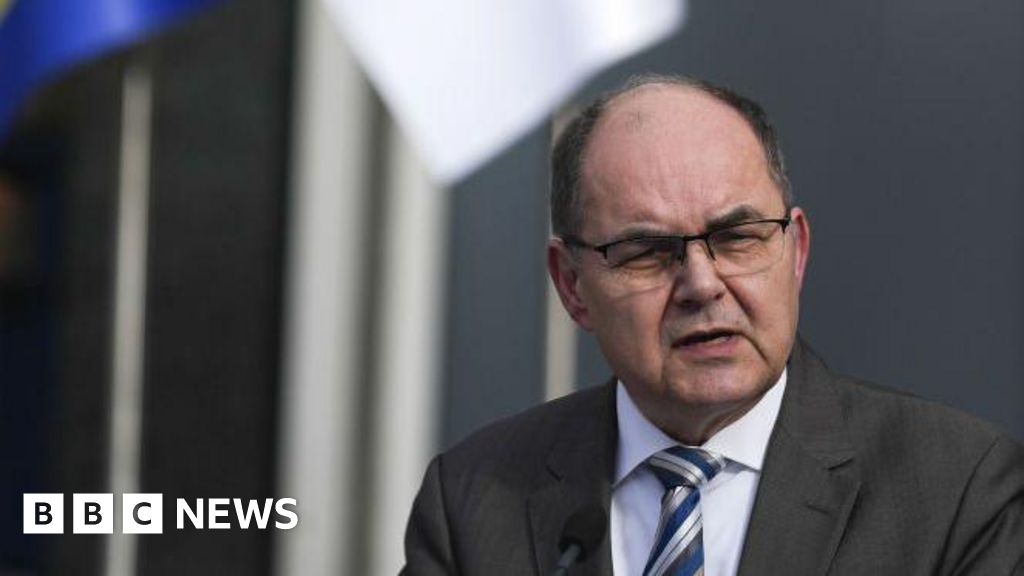
The political stability of Bosnia and Herzegovina hangs in the balance as the international community’s support for the country’s High Representative appears to crumble. Christian Schmidt, the German diplomat appointed to oversee Bosnia’s peace process, finds himself increasingly isolated after losing backing from the United States, following Russia’s longstanding refusal to recognize his role. This crisis not only undermines Schmidt’s authority but also raises profound questions about the future of the Office of the High Representative (OHR) itself—a cornerstone of Bosnia’s post-war governance. With geopolitical tensions escalating globally, the implications of this development extend far beyond Bosnia’s borders, threatening to destabilize an already fragile region and challenging the international community’s ability to enforce peace agreements.
The Role of the High Representative and Its Origins
The Office of the High Representative was established under the 1995 Dayton Peace Agreement, which ended the brutal Bosnian War that claimed over 100,000 lives and displaced millions. The OHR was tasked with overseeing the implementation of the agreement, ensuring political stability, and preventing a return to ethnic conflict. Until now, it has been a symbol of international commitment to Bosnia’s peace process, with the High Representative wielding significant powers to intervene in the country’s political affairs.
Christian Schmidt assumed the role in August 2021, succeeding Austrian diplomat Valentin Inzko. However, his appointment was fraught with controversy from the outset. Russia, a member of the Peace Implementation Council—the international body overseeing Bosnia’s peace process—refused to endorse Schmidt, arguing that the selection process lacked transparency and consensus. This dissent sowed early doubts about Schmidt’s legitimacy and the OHR’s future.
The Withdrawal of US Support: A Critical Blow
The United States, historically a staunch supporter of Bosnia’s peace process, recently signaled a shift in its stance. While the exact reasons for the withdrawal of support remain unclear, analysts speculate that changing geopolitical priorities and internal policy debates within the Biden administration may be contributing factors. The US decision marks a significant blow to Schmidt’s authority, as American backing had been instrumental in sustaining the OHR’s influence.
This development comes at a precarious time for Bosnia, where ethnic tensions between Bosniak, Croat, and Serbian factions remain high. Bosnian Serb leader Milorad Dodik has increased his rhetoric advocating for the secession of Republika Srpska, the Serb-majority entity within Bosnia, further destabilizing the country’s fragile unity. Without unified international support, the OHR’s ability to mediate such conflicts is severely diminished.
Global Context: A Shifting Geopolitical Landscape
The crisis surrounding the High Representative’s role is emblematic of broader shifts in global geopolitics. The United States’ apparent retreat from its traditional role as a guarantor of international peace agreements reflects a larger trend of inward-looking policies and strategic recalibration. Meanwhile, Russia’s continued opposition to the OHR underscores its growing assertiveness in the Balkans, a region historically within its sphere of influence.
The European Union, which has long supported Bosnia’s integration efforts, now faces the challenge of filling the void left by the US. However, internal divisions within the EU and its own limited capacity to enforce agreements complicate matters. China’s increasing involvement in the region, particularly through infrastructure investments under its Belt and Road Initiative, adds another layer of complexity. The OHR’s potential demise threatens to create a power vacuum that could be exploited by external actors pursuing their own agendas.
Why It Matters: Implications for Bosnia and Beyond
The uncertainty surrounding the High Representative’s role has profound implications for Bosnia and Herzegovina, a country still grappling with the scars of war and deep-seated ethnic divisions. Without effective international oversight, the risk of renewed conflict looms large, threatening to unravel the fragile peace brokered nearly three decades ago. For the wider Balkans, Bosnia’s instability could reignite tensions in neighboring countries such as Serbia, Croatia, and Kosovo, where ethnic and territorial disputes remain unresolved.
Globally, the crisis raises critical questions about the international community’s ability to uphold peace agreements in an era of shifting alliances and competing interests. The OHR’s potential collapse serves as a stark reminder of the challenges facing multilateral institutions tasked with maintaining peace and stability. It also highlights the need for renewed diplomatic efforts to address underlying conflicts and prevent the escalation of tensions in volatile regions.
A Call for Renewed Commitment
As the future of Bosnia’s High Representative hangs in the balance, the international community faces a pivotal moment. The potential dissolution of the OHR threatens not only Bosnia’s stability but also the credibility of international peacekeeping efforts. To prevent further destabilization, global powers must prioritize diplomacy and strengthen their commitment to Bosnia’s peace process. This includes addressing Russia’s objections, revitalizing US and EU support, and fostering regional cooperation.
The stakes are high, and the consequences of inaction could be catastrophic. Bosnia’s fragile peace, painstakingly achieved after years of conflict, must not be allowed to unravel. The international community has a moral and strategic imperative to act decisively, ensuring that Bosnia remains on the path toward stability and reconciliation. Only through renewed commitment and collective action can the specter of conflict be averted, preserving peace in the Balkans and reaffirming the principles of multilateralism in an increasingly fractured world.
