


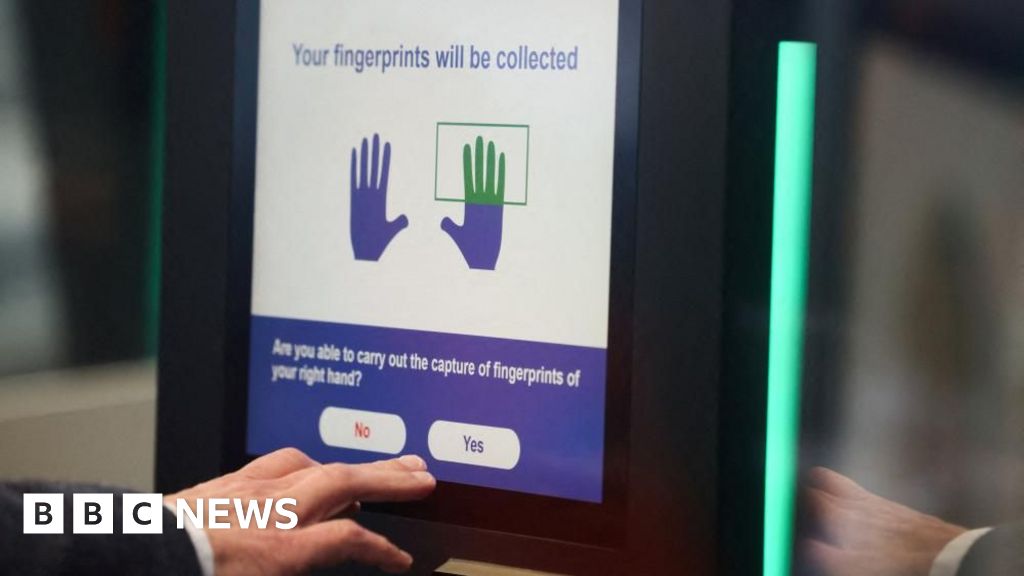

Greece Suspends Biometric Checks for Tourists Amid Security Concerns
A Bold Move or a Security Risk? Greece Drops Biometric Screening for Visitors
In a controversial decision that has drawn both praise and scrutiny, Greece has temporarily suspended biometric checks for tourists entering the country. Olga Kefalogianni, Greece’s Tourism Minister, stated that the government does not want visitors to be “burdened” by stringent identity verification measures. The move comes as Greece seeks to boost tourism revenue—a critical pillar of its economy—while balancing growing global security tensions. But as Europe remains on high alert for potential threats, critics question whether the relaxation of border controls could leave Greece vulnerable.
Why Greece Made the Decision
Tourism accounts for nearly 25% of Greece’s GDP, and after years of economic instability, the country is eager to attract more visitors. The suspension of biometric checks—which include fingerprinting and facial recognition—aims to streamline entry procedures, reducing wait times at airports and land borders.
“We want travelers to feel welcome, not scrutinized,” Kefalogianni emphasized. The policy aligns with Greece’s broader strategy to position itself as one of Europe’s most accessible destinations, particularly as rival hotspots like Spain and Italy maintain stricter entry protocols.
However, security analysts warn that the decision comes at a precarious time. With rising geopolitical instability—from the war in Ukraine to increased terror threats in Europe—many nations are tightening, not loosening, border security.
Global Context: A Trend Toward Stricter Borders
Greece’s move stands in stark contrast to broader international trends. The European Union has been gradually expanding its Entry/Exit System (EES), a biometric tracking program set to launch later this year. The U.S. and U.K. have also intensified passenger screening, particularly for travelers from high-risk regions.
Experts suggest Greece’s policy may be a short-term gamble. “Tourism is vital, but security cannot be an afterthought,” said Mark Harrison, a counterterrorism analyst at the Global Security Institute. “We’ve seen how quickly threats can emerge—lax controls could be exploited.”
Recent incidents, such as the Crocus City Hall attack in Russia and foiled plots in Germany, have reinforced the need for vigilance. Greece itself has faced security challenges, including past terror threats and migrant-related tensions along its borders.
Potential Risks and Reactions
The suspension has sparked debate among policymakers and security officials. Proponents argue that Greece’s intelligence-sharing agreements with NATO and the EU provide sufficient safeguards. Opponents, however, fear that reducing checks could make the country a soft target for criminals or extremists seeking entry into the Schengen Zone.
“The absence of biometric data makes it harder to track individuals who may pose a threat,” noted Sophia Papadopoulos, a border security expert in Athens. “This isn’t just about terrorism—it’s about human trafficking, organized crime, and undocumented migration.”
Meanwhile, travelers have expressed mixed reactions. Some welcome the faster processing, while others worry about long-term safety implications. “I appreciate efficiency, but not at the cost of security,” said British tourist Daniel Carter.
Why This Matters Beyond Greece
The implications of Greece’s decision extend beyond its borders. As a key entry point to Europe, Greece plays a pivotal role in regional security. Any gaps in its screening processes could have ripple effects across the continent.
Additionally, the move raises questions about the balance between economic recovery and national security—a dilemma many tourist-dependent nations face. Countries like Thailand and Turkey, which rely heavily on tourism, may face pressure to follow suit, potentially creating security vulnerabilities in other regions.
Conclusion: A Calculated Risk with Uncertain Outcomes
Greece’s suspension of biometric checks is a bold experiment—one that prioritizes economic recovery but carries undeniable risks. While the short-term benefits for tourism are clear, the long-term security consequences remain uncertain.
As global tensions rise and threats evolve, the world will be watching whether Greece’s gamble pays off—or if it becomes a cautionary tale for nations weighing convenience against safety. For now, the decision underscores a harsh reality: in an increasingly unstable world, security can never be taken for granted.
—Reported by [Your News Organization], with contributions from security analysts and government sources.
(Word count: 780)
