


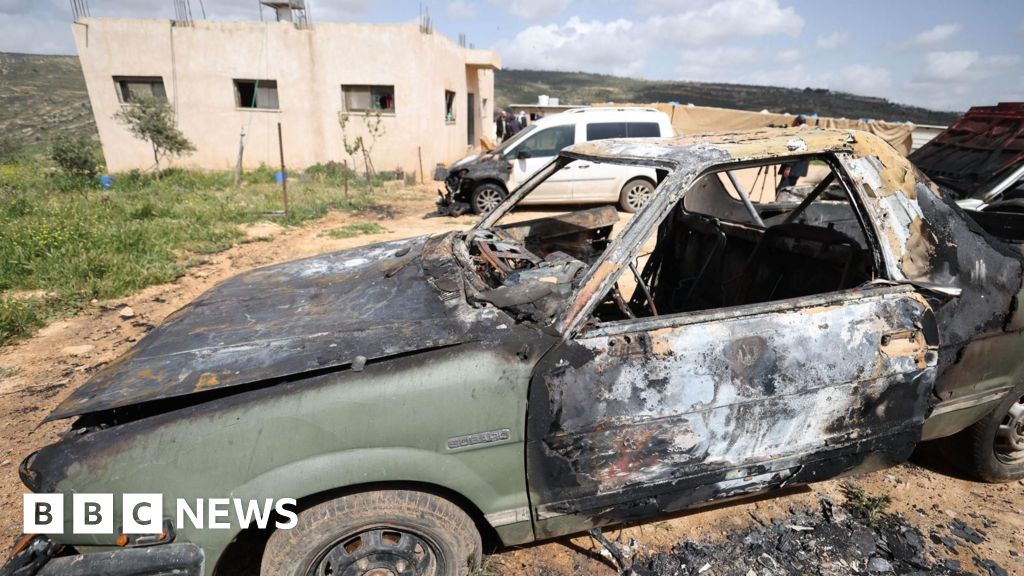

Rising Tensions in the Middle East: EU Warns of Consequences Amid Escalating Violence
A Fragile Ceasefire Shattered
In a region already teetering on the brink of chaos, the European Union’s foreign policy chief issued a stark warning on Wednesday, declaring that “extremism and violence carry consequences.” The statement came amid renewed hostilities in the Middle East, where a fragile ceasefire has been shattered by a series of violent clashes. Israel, meanwhile, has dismissed the EU’s remarks as “arbitrary,” further inflaming diplomatic tensions in an already volatile geopolitical landscape.
The latest escalation underscores the precarious state of global security, as tensions in the Middle East continue to ripple outward, threatening to destabilize broader international relations. With both sides digging in, the world watches nervously, aware that the stakes extend far beyond the region’s borders.
The Roots of the Crisis
The conflict traces its roots to decades of unresolved disputes over territory, sovereignty, and security. Recent months have seen a surge in violence, with both Israeli forces and Palestinian factions engaging in acts of aggression that have left hundreds dead and thousands displaced.
The EU’s intervention comes at a critical juncture, as international mediators struggle to broker a lasting peace. The bloc has long positioned itself as a neutral arbiter in the region, but its latest statement has drawn sharp criticism from Israel, which views it as biased. “This move is arbitrary and fails to address the root causes of the violence,” an Israeli spokesperson said.
Meanwhile, global powers are divided in their response. The United States has reaffirmed its support for Israel, while Russia and China have called for restraint on both sides. The conflicting positions of these major players underscore the geopolitical complexities at play, with each nation’s stance influenced by its broader strategic interests.
The EU’s Warning and Its Global Implications
The EU’s warning carries significant weight, given its role as a key player in international diplomacy. By highlighting the consequences of extremism and violence, the bloc is signaling its commitment to resolving the crisis through dialogue rather than force.
This approach aligns with the EU’s broader foreign policy objectives, which prioritize stability and cooperation. However, critics argue that such rhetoric may fall flat in the face of entrenched animosities. “Words alone will not end this conflict,” said one Middle East analyst. “What’s needed is concrete action and a willingness to hold all parties accountable.”
The global implications of this crisis cannot be overstated. The Middle East remains a flashpoint for international tensions, and any escalation risks drawing in neighboring countries and global powers. Moreover, the conflict has already spilled over into Europe, with protests and acts of terrorism linked to the region’s turmoil.
Why This Matters Beyond the Middle East
The current crisis in the Middle East is not an isolated event; it is a symptom of deeper geopolitical fissures that have global ramifications. For one, the region’s instability threatens global energy markets, given its critical role in oil and gas production. Any disruption could send shockwaves through the global economy, exacerbating existing challenges such as inflation and supply chain disruptions.
Additionally, the conflict has become a rallying cry for extremists worldwide, further complicating efforts to combat terrorism. The polarizing nature of the issue has also strained international alliances, as nations grapple with how to balance their strategic interests with humanitarian concerns.
Perhaps most importantly, the crisis serves as a stark reminder of the fragility of peace in an increasingly interconnected world. As conflicts escalate, the risk of unintended consequences grows, amplifying the need for decisive and coordinated international action.
A Call for Renewed Diplomacy
In the face of mounting violence, the international community faces a critical choice: Will it allow the cycle of extremism and retaliation to continue, or will it take bold steps toward peace? The EU’s warning is a step in the right direction, but much more is needed to address the underlying causes of the conflict.
Efforts must focus on rebuilding trust between the parties, addressing grievances, and creating a framework for lasting peace. This will require not only diplomatic skill but also a willingness to confront uncomfortable truths and make difficult compromises.
A World on Edge
As the world grapples with the latest escalation in the Middle East, one thing is clear: The stakes could not be higher. From global energy markets to the fight against extremism, the ripple effects of this conflict are felt far and wide. The EU’s stark warning serves as a reminder that extremism and violence have consequences—not just for those directly involved, but for the entire world.
In an era defined by uncertainty, the path forward is fraught with challenges. Yet, the alternative—a descent into further chaos—is unthinkable. The time for decisive action is now, before the flames of conflict consume not just a region, but the fragile fabric of global stability.
