



Escalating Israel-Hezbollah Conflict Threatens Regional Stability as Casualties Mount
A Grim Milestone in a Spiraling Conflict
The fragile ceasefire between Israel and Hezbollah has been shattered by a surge in violence, marking one of the deadliest periods since hostilities reignited earlier this year. Cross-border strikes have intensified, with both sides exchanging rocket fire and airstrikes, raising fears of a full-scale war that could destabilize the Middle East and draw in global powers. The latest escalation comes amid stalled diplomatic efforts, leaving civilians on both sides trapped in a cycle of retaliation with no clear path to de-escalation.
Ceasefire in Name Only: Rising Death Toll and Destruction
Despite a nominal truce agreed in March, clashes between Israel and Hezbollah have steadily worsened. Lebanese officials report over 300 deaths, including civilians, while Israeli airstrikes have flattened entire villages in southern Lebanon. On the Israeli side, rocket attacks have killed dozens and displaced thousands near the northern border.
The conflict has taken a particularly brutal turn in recent weeks, with Hezbollah deploying advanced drones and precision-guided missiles, while Israel has conducted deep-strike operations inside Lebanon. The humanitarian toll is mounting, with hospitals overwhelmed and aid agencies warning of a looming catastrophe if fighting spreads further.
Global Implications: Why This Conflict Matters Beyond the Region
The Israel-Hezbollah conflict is not just a localized struggle—it risks igniting a broader regional war with global consequences. Hezbollah, backed by Iran, serves as a key proxy in Tehran’s geopolitical strategy, while Israel’s military actions enjoy strong U.S. support. Any major escalation could pull in other actors, including Syria, Hamas, and even Western powers.
The conflict also threatens global energy markets. Lebanon’s proximity to key Mediterranean gas fields means prolonged fighting could disrupt energy supplies, exacerbating inflation and economic instability worldwide. Additionally, the war has reignited debates over U.S. and European foreign policy, with some nations calling for restraint while others push for stronger military backing for Israel.
Failed Diplomacy and the Risk of Wider War
International efforts to mediate have so far failed. The U.S., France, and the UN have attempted to broker de-escalation, but neither Israel nor Hezbollah appears willing to back down. Israel insists it will not tolerate Hezbollah’s military presence near its border, while the Lebanese group vows retaliation for every Israeli strike.
Analysts warn that miscalculations could quickly spiral out of control. A single major attack—such as a strike on a high-profile Israeli city or an assassination of a Hezbollah leader—could trigger an uncontrollable chain reaction. The 2006 Israel-Hezbollah war serves as a grim precedent, demonstrating how quickly clashes can escalate into a full-blown conflict.
Human Cost: Civilians Bear the Brunt
As with most modern wars, civilians are paying the highest price. Southern Lebanon has seen entire communities flee under heavy bombardment, while northern Israeli towns remain under constant threat of rocket fire. Humanitarian organizations report severe shortages of food, water, and medical supplies, with many trapped in conflict zones unable to escape.
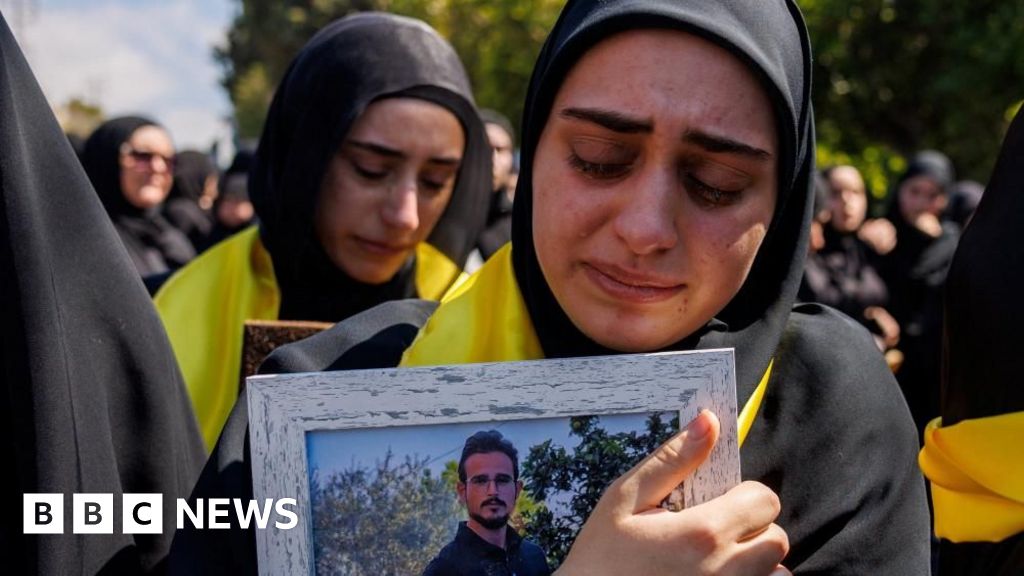
The psychological toll is equally devastating. Families on both sides live in fear of sudden airstrikes, and children are growing up amid the trauma of war. With no political solution in sight, the cycle of violence shows no sign of ending.
What Comes Next?
The world watches nervously as the Israel-Hezbollah conflict edges closer to all-out war. Diplomatic channels remain open, but time is running out to prevent a catastrophic escalation. The stakes are high—not just for the Middle East, but for global security, energy markets, and the future of international conflict resolution.
If history is any guide, wars in this region rarely stay contained. The international community must act decisively before another spark ignites an inferno that no one can control. For now, the people of Lebanon and Israel are left waiting—hoping for peace, but bracing for the worst.
