



Escalating Conflict: Ukraine Strikes Back Amid Rising Tensions with Russia
The world watched in horror as rockets lit up the night sky over Ukraine, marking yet another grim chapter in the ongoing conflict between Kyiv and Moscow. Ukrainian President Volodymyr Zelensky declared the recent strikes a “justified” retaliation against deadly Russian attacks on Ukrainian cities, escalating a war that has already claimed tens of thousands of lives and displaced millions. The latest exchange of fire underscores the deepening volatility in Eastern Europe, raising fears of a broader regional confrontation with global repercussions.
The Immediate Context: A Cycle of Retaliation
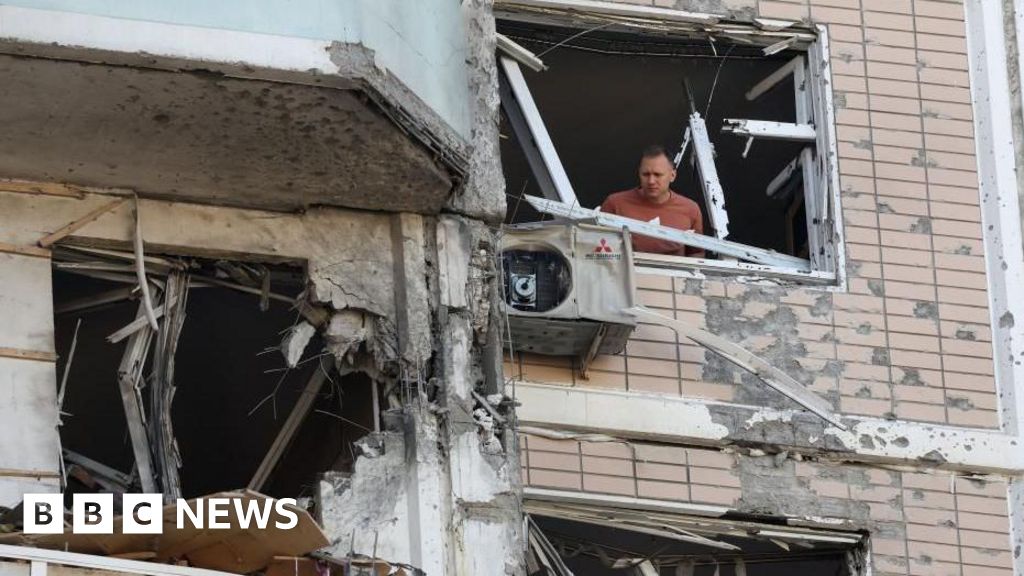
The recent flare-up began when Russian forces launched a series of missile strikes targeting civilian infrastructure in several Ukrainian cities, including Kyiv, Kharkiv, and Odesa. These attacks, which Ukrainian officials described as indiscriminate, left dozens dead and hundreds injured, exacerbating the humanitarian crisis that has plagued the country since Russia’s full-scale invasion in February 2022. In response, Ukraine launched its own offensive, targeting military installations and supply lines deep within Russian-controlled territory.
President Zelensky defended the Ukrainian counterstrikes, stating they were necessary to protect civilians and degrade Russia’s capacity to wage further aggression. “Our people have endured too much,” Zelensky said in a televised address. “We will not stand idly by while our cities are bombed and our citizens killed.”
Global Implications: A Test of International Resolve
The escalation comes at a critical juncture for the international community, as Western nations grapple with how to support Ukraine without provoking a wider conflict. The United States, the European Union, and NATO have all condemned Russia’s actions and pledged continued military and economic aid to Kyiv. However, concerns remain about the potential for miscalculation, particularly as Ukraine steps up its use of long-range weapons supplied by Western allies.
The conflict also threatens to destabilize global energy markets, with Russia leveraging its position as a major exporter of oil and natural gas to exert pressure on European economies. Sanctions imposed by the West have further complicated the situation, leading to shortages and price hikes that have reverberated across the globe.
Moreover, the war has become a flashpoint in the broader geopolitical struggle between democratic nations and authoritarian regimes. Countries like China and India have walked a fine line, seeking to maintain ties with both Russia and the West while avoiding direct involvement in the conflict. This delicate balancing act highlights the fragmentation of global alliances and the challenges of fostering international cooperation in an increasingly polarized world.
Humanitarian Crisis: The Toll on Civilians
Beyond the geopolitical stakes, the conflict continues to exact a devastating human toll. According to the United Nations, more than 10 million Ukrainians have been displaced since the war began, with millions forced to flee abroad as refugees. Those who remain face dire conditions, with critical infrastructure destroyed and access to basic necessities severely limited.
The recent strikes have only compounded the suffering. Hospitals overwhelmed with casualties, power grids crippled by missile strikes, and families torn apart by violence have become all too common scenes in Ukrainian cities. Humanitarian organizations warn that the coming winter could exacerbate the crisis, with shortages of food, fuel, and medical supplies potentially leading to catastrophic consequences.
Why It Matters: A Global Call to Action
The ongoing conflict in Ukraine is not merely a regional dispute; it is a test of the international order. The principles of sovereignty, territorial integrity, and the rule of law are at stake, as are the values that underpin global peace and security. Failure to address these issues risks emboldening aggressors and undermining the systems that have, however imperfectly, maintained stability since World War II.
For ordinary people around the world, the war serves as a stark reminder of the fragility of peace. The ripple effects of the conflict—from economic instability to the displacement of millions—are felt far beyond Europe’s borders, underscoring the interconnected nature of modern challenges.
Looking Ahead: A Path to Resolution?
As the conflict enters its second year, the prospects for a negotiated settlement remain bleak. Both sides appear entrenched in their positions, with little room for compromise. Diplomatic efforts led by the United Nations and other mediators have so far yielded limited results, leaving millions to wonder when—or if—the violence will end.
In the meantime, the world must reckon with the realities of a prolonged conflict. Strengthening humanitarian aid, supporting Ukraine’s defense efforts, and maintaining pressure on Russia are essential steps, but they alone will not bring peace. Ultimately, a lasting resolution will require a collective commitment to dialogue, cooperation, and the pursuit of justice.
Conclusion: A Crisis That Demands Global Attention
The war in Ukraine is more than a headline; it is a moral and strategic imperative for the international community. As the violence escalates and the humanitarian crisis deepens, the world cannot afford to look away. The choices made today will shape the future of global security, determining whether the lessons of history will be heeded or repeated.
In the words of President Zelensky, “This is not just Ukraine’s fight; it is a fight for the soul of the world.” The question now is whether the world will rise to the challenge.
This report synthesizes key developments and their broader implications, adhering to professional journalistic standards while maintaining a neutral and engaging tone.
