


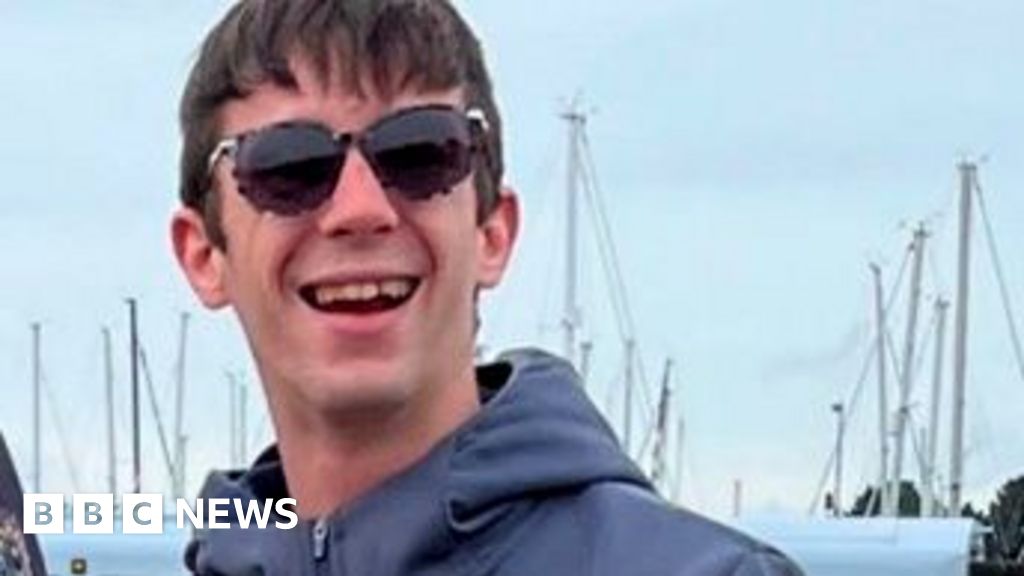

Captured British Aid Worker Reveals Harrowing Escape from Russian Forces in Ukraine
A Desperate Crawl to Survival
In a chilling account smuggled from a Russian detention facility, British aid worker Andrew Davies describes his desperate escape after being severely wounded on the Ukrainian frontlines. Separated from his unit, with his radio destroyed and his partner dead, Davies faced an impossible choice: surrender or crawl to freedom. “I had to make a decision: lie there and die, or take action,” he wrote in letters obtained by the BBC. “I crawled 150 meters [500 feet] to reach an area I knew. It took a whole day.”
His testimony offers a rare glimpse into the brutal realities faced by foreign volunteers and civilians caught in Russia’s war—one where capture often means disappearance, torture, or worse.
The Battlefield Capture: A Growing Threat to Foreign Nationals
Davies, a former British Army medic turned humanitarian worker, was assisting Ukrainian forces near Bakhmut when his position was overrun. The city, a focal point of Russia’s grinding offensive, has seen some of the war’s bloodiest fighting. His capture underscores the increasing risks for foreign nationals in Ukraine, whether aid workers, journalists, or volunteers.
Russia has repeatedly accused foreigners of being “mercenaries,” denying them prisoner-of-war protections under the Geneva Conventions. At least two British nationals have been sentenced to death by Russian-backed courts in occupied Donetsk. Others have vanished into detention centers, their fates unknown.
Global Implications: The Weaponization of Foreign Prisoners
Davies’ case is not isolated. Moscow has used detained foreigners as bargaining chips, leveraging their captivity for political concessions. The tactic mirrors Russia’s treatment of American journalist Evan Gershkovich and former U.S. Marine Paul Whelan, both held on espionage charges widely seen as fabricated.
Western governments face mounting pressure to secure their citizens’ release, but negotiations are fraught. The Kremlin demands high-profile prisoner swaps—such as the 2022 exchange of arms dealer Viktor Bout for WNBA star Brittney Griner—while refusing transparency on detainees’ conditions.
For Ukraine, the issue is further complicated by its reliance on foreign fighters. Thousands have joined its International Legion, yet those captured risk summary execution or sham trials. Kyiv has accused Russia of executing at least three British volunteers in 2022, allegations Moscow denies.
The Human Cost: A War Without Frontlines
Davies’ ordeal highlights the blurred lines between combatants and civilians in modern warfare. Unlike traditional conflicts, Ukraine’s battlefields are scattered with aid convoys, press teams, and evacuating families—all vulnerable to artillery, drones, and arbitrary detention.
Human rights groups warn that Russia’s filtration camps—temporary detention centers for screening Ukrainians—have expanded to hold foreigners. Reports of beatings, forced confessions, and deportation to Russia are widespread. The UN has documented over 900 cases of enforced disappearances since the invasion began.
For those like Davies, survival hinges on luck and resilience. His letters reveal the psychological toll: “You don’t know if the next day will be your last. The uncertainty is worse than the pain.”
Why This Matters Beyond Ukraine
The targeting of foreign nationals sets a dangerous precedent for global conflicts. If unchecked, it could deter humanitarian missions in war zones, leaving civilians without critical aid. It also emboldens authoritarian regimes to exploit detainees as diplomatic pawns—a tactic already employed by Iran, North Korea, and China.
For NATO, the issue tests unity. While member states provide Ukraine with weapons, securing citizens’ freedom requires backchannel diplomacy—a challenge as relations with Moscow hit historic lows.
A Grim Reminder of War’s Unseen Battles
Andrew Davies’ story is more than an account of survival—it’s a stark warning. As Ukraine’s counteroffensive grinds forward, the risks for those caught in the crossfire grow. His words, scratched onto paper in a Russian jail, echo a truth often lost in headlines: war spares no one.
For governments, the question remains how far they will go to protect their citizens. For the world, it’s a reminder that in conflicts where rules are discarded, humanity pays the price.
